Fed Chair Kevin Warsh Signals Rate Hike Risk as Inflation Remains Above 2% Target
Fed Chair Kevin Warsh’s Jackson Hole remarks could keep inflation and interest-rate expectations at the center of the market narrative. With U.S. price pressures still above the Federal Reserve’s 2% objective, investors may remain cautious about expecting aggressive rate cuts in the near term. A more hawkish policy outlook could support Treasury yields and the U.S. dollar while creating short-term pressure on equities, gold and cryptocurrencies. However, a sustained improvement in inflation could eventually give the Fed more flexibility to ease monetary policy. Markets will now closely monitor upcoming U.S. inflation, employment and economic-growth data for clearer signals on the Fed’s next move. The direction of interest-rate expectations could remain a major catalyst for stocks, bonds, Bitcoin and the broader risk-asset market.
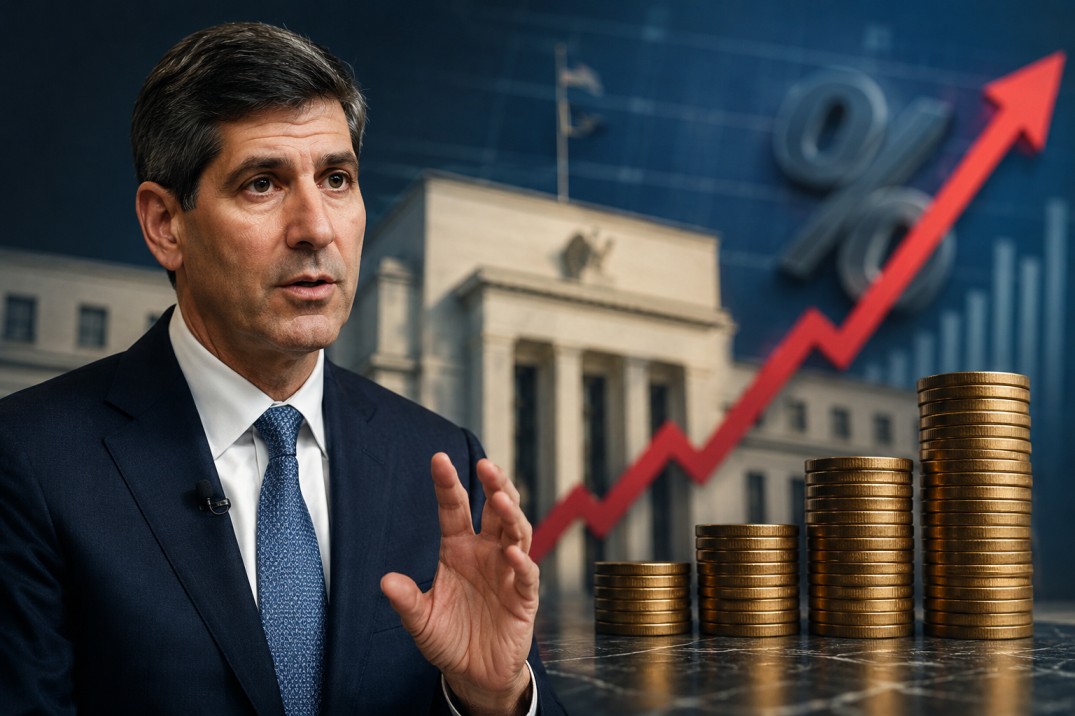
The Federal Reserve is once again facing a difficult inflation challenge as Chair Kevin Warsh signals that higher interest rates could remain on the table if U.S. inflation fails to move convincingly toward the central bank’s 2% target.
Speaking at the Jackson Hole Economic Policy Symposium, Warsh placed inflation at the center of the Federal Reserve’s policy debate, warning that policymakers still have work to do if underlying price pressures remain elevated. His comments have revived expectations that the Fed could keep monetary policy restrictive for longer, while the possibility of another rate increase remains a key risk for financial markets.
Kevin Warsh Puts Inflation Back in Focus
Warsh’s Jackson Hole appearance comes at a particularly important moment for the U.S. economy. Investors have been trying to determine whether the Federal Reserve is moving toward a more accommodative interest-rate policy or whether persistent inflation could force policymakers to maintain or even tighten financial conditions.
The latest inflation data continue to provide a reason for caution. July core PCE inflation was reported at around 3.3% year over year, remaining well above the Federal Reserve’s 2% inflation target.
That gap is important because the Personal Consumption Expenditures Price Index, particularly core PCE, remains one of the most closely watched inflation indicators for Fed policymakers.
Warsh’s message therefore suggests that the Federal Reserve is not prepared to declare victory over inflation yet.
Fed Rate Hike Risk Returns
The biggest market implication from Warsh’s comments is the renewed possibility of a Fed rate hike.
Markets had increasingly focused on the possibility of lower interest rates, but persistent inflation complicates that outlook. Several Federal Reserve officials have already indicated that higher rates could become necessary if inflation remains stubborn.
Warsh's comments reinforce the idea that the next phase of Fed policy will depend heavily on incoming economic data.
For investors, this creates a two-sided scenario.
If inflation continues to cool, the Fed could eventually gain more flexibility to reduce borrowing costs. However, if inflation remains sticky, policymakers may choose to keep rates higher for longer or consider additional tightening.
That makes upcoming CPI inflation, PCE inflation, core PCE, employment data and wage growth particularly important for the market.
What Warsh’s Speech Means for Interest Rates
The Federal Reserve's interest-rate outlook is now becoming increasingly data-dependent.
Rather than providing aggressive forward guidance, Warsh has emphasized watching economic developments and maintaining flexibility. This approach could produce greater volatility because traders may need to continuously adjust their expectations following each major economic release.
The current debate is therefore not simply about whether the Fed will cut or hike rates.
The bigger question is whether inflation is moving fast enough toward the 2% Fed target to justify easier monetary policy.
If inflation remains elevated, Treasury yields could stay under upward pressure. A stronger yield environment can also support the U.S. dollar while creating headwinds for risk-sensitive assets.
Treasury Yields and the U.S. Dollar
The bond market is likely to remain one of the most important indicators following Warsh’s Jackson Hole speech.
Higher expectations for Federal Reserve interest rates generally increase the appeal of U.S. Treasury yields. If investors begin pricing a greater probability of another rate hike, short-term Treasury yields could move higher.
The dollar could also benefit from a more hawkish Fed outlook.
A stronger U.S. dollar often creates pressure on commodities and international risk assets because dollar-denominated assets become relatively more attractive.
Markets were already watching elevated Treasury yields ahead of Warsh’s speech, with the 10-year Treasury yield recently trading around historically high levels for the current cycle.
Stock Market Outlook After Jackson Hole
For the stock market, Warsh’s inflation warning creates a more complicated environment.
Technology and growth stocks are particularly sensitive to interest-rate expectations because higher discount rates can reduce the present value investors assign to future earnings.
If Treasury yields rise following stronger Fed tightening expectations, sectors such as technology, growth stocks and speculative equities could face additional volatility.
On the other hand, a meaningful decline in inflation could improve the outlook for equities by reducing pressure on interest rates.
This means investors should watch the relationship between inflation, Treasury yields, Fed policy and corporate earnings rather than focusing on the Fed statement alone.
Bitcoin and Crypto Market Impact
The Federal Reserve’s policy direction is also important for Bitcoin and cryptocurrency markets.
Bitcoin and other risk assets have historically been sensitive to changes in global liquidity and interest-rate expectations. A hawkish Fed can reduce risk appetite by increasing the attractiveness of cash and fixed-income assets.
If markets begin pricing a higher probability of a Fed rate hike, Bitcoin, Ethereum and high-beta altcoins could experience short-term volatility.
Conversely, if future inflation data show a sustained decline, expectations for easier monetary policy could return. That could improve liquidity conditions and potentially support Bitcoin price, Ethereum price and the broader crypto market.
For crypto traders, the key variables are therefore not just Warsh’s comments but also the next series of U.S. inflation reports, Fed decisions, Treasury yields, dollar strength and liquidity conditions.
What Investors Should Watch Next
The Jackson Hole speech does not provide a guaranteed path for the next Federal Reserve decision. Instead, it reinforces the importance of incoming economic data.
The market will likely focus on:
*Core CPI inflation
*PCE price index
*Core PCE inflation
*Nonfarm payrolls
*Unemployment rate
*Average hourly earnings
*Consumer spending
*Retail sales
*GDP growth
*Treasury yields
*U.S. dollar index
*Fed meeting expectations
*FOMC rate decision
*Federal Reserve policy outlook
A combination of stronger inflation and resilient economic activity could strengthen the case for restrictive monetary policy.
However, weaker inflation combined with softer labor-market conditions could eventually give policymakers more room to consider rate cuts.
Market Analysis: Bullish or Bearish for Risk Assets?
From a short-term market perspective, Warsh’s comments are more hawkish than dovish.
That does not automatically mean stocks or crypto markets will enter a prolonged decline. Instead, it increases the probability of higher volatility as traders reassess interest-rate expectations.
The most important signal is that the Fed remains highly focused on inflation.
Until inflation moves sustainably toward the 2% target, investors may need to accept that the era of easy monetary policy is not returning quickly.
For Bitcoin and other cryptocurrencies, liquidity will remain a major driver. For equities, Treasury yields and earnings will be critical. For the dollar, relative interest-rate expectations could remain supportive.
Bottom Line
Kevin Warsh’s Jackson Hole speech has put inflation and the possibility of higher interest rates back at the center of the market narrative.
The Federal Reserve still wants convincing evidence that inflation is heading toward its 2% target. Until that happens, traders should not completely rule out a Fed rate hike, a prolonged period of restrictive monetary policy or higher-for-longer interest rates.
The next major market catalyst will be incoming U.S. economic data.
If inflation continues to decline, markets could gradually price a more dovish Federal Reserve. But if inflation remains sticky, Treasury yields and the U.S. dollar could stay elevated while stocks and cryptocurrencies face additional volatility.
For investors, the message from Jackson Hole is clear: the inflation fight is not over, and Fed policy remains data-dependent.