U.S. CPI Inflation Holds at 3.4%: What It Means for the Fed and Markets
U.S. CPI inflation remained elevated at 3.4% year over year in July 2026, easing slightly from 3.5% in June. Core CPI, which excludes food and energy, increased 2.5% annually, highlighting that underlying price pressures are still above the Federal Reserve’s 2% target. The inflation data could keep Fed interest-rate expectations, Treasury yields and the U.S. dollar in focus. Investors will closely watch upcoming CPI and economic data for clues on whether the Federal Reserve can move toward easier policy or needs to maintain restrictive rates for longer.
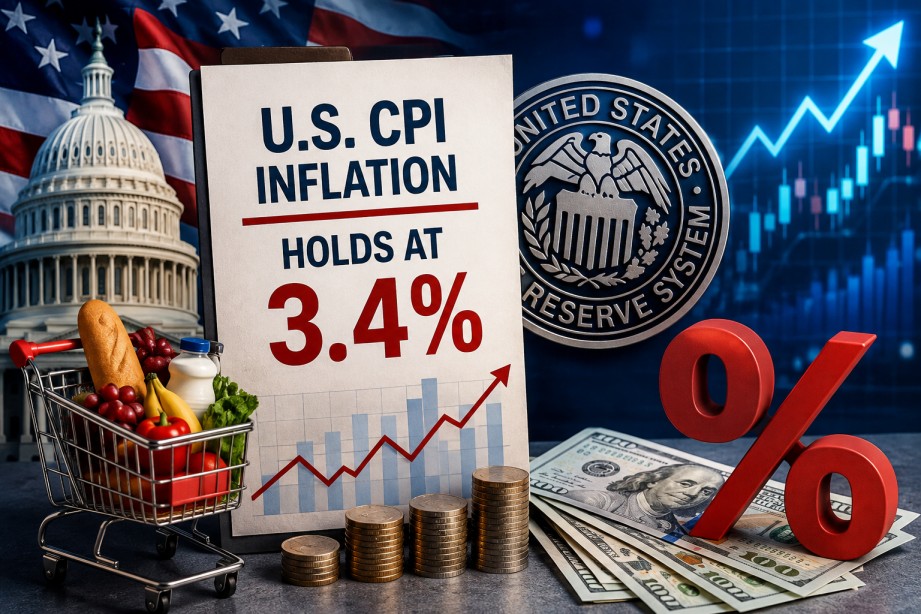
The latest U.S. CPI inflation data show that price pressures remain above the Federal Reserve’s 2% target, keeping monetary policy and interest-rate expectations firmly in focus.
According to the latest data, the Consumer Price Index increased 0.1% in July 2026, following a 0.4% decline in June. On a yearly basis, U.S. headline inflation reached 3.4%, while shelter remained one of the major contributors to the monthly increase. Energy prices, meanwhile, declined during the month.
Inflation Remains a Key Fed Risk
Although the July CPI report showed relatively modest monthly price growth, annual inflation remains significantly above the Fed's 2% target. This leaves policymakers with a difficult balance between controlling inflation and avoiding excessive pressure on economic growth.
The latest CPI reading could therefore influence expectations around the Federal Reserve's next interest-rate decisions. If upcoming inflation reports show renewed acceleration, markets could increase bets on a more restrictive Fed policy. Conversely, continued moderation in consumer prices could strengthen expectations for eventual monetary easing.
Market Impact
For financial markets, the direction of U.S. inflation remains one of the most important macroeconomic signals.
Persistent inflation could keep Treasury yields and the U.S. dollar supported while creating pressure on rate-sensitive stocks and other risk assets. Bitcoin and cryptocurrencies could also experience volatility as traders adjust expectations for Fed liquidity and interest rates.
The next major focus will be the August CPI report, scheduled for September 11, 2026.
Bottom Line
The July CPI report suggests that inflation is moving at a relatively moderate monthly pace, but the 3.4% annual rate remains well above the Federal Reserve's 2% objective. Markets will now watch upcoming inflation and employment data closely for clues about whether the Fed will maintain restrictive policy or eventually move toward lower interest rates.