
US Targets $1 Billion in Iranian Crypto Assets as Washington Intensifies Economic Sanctions
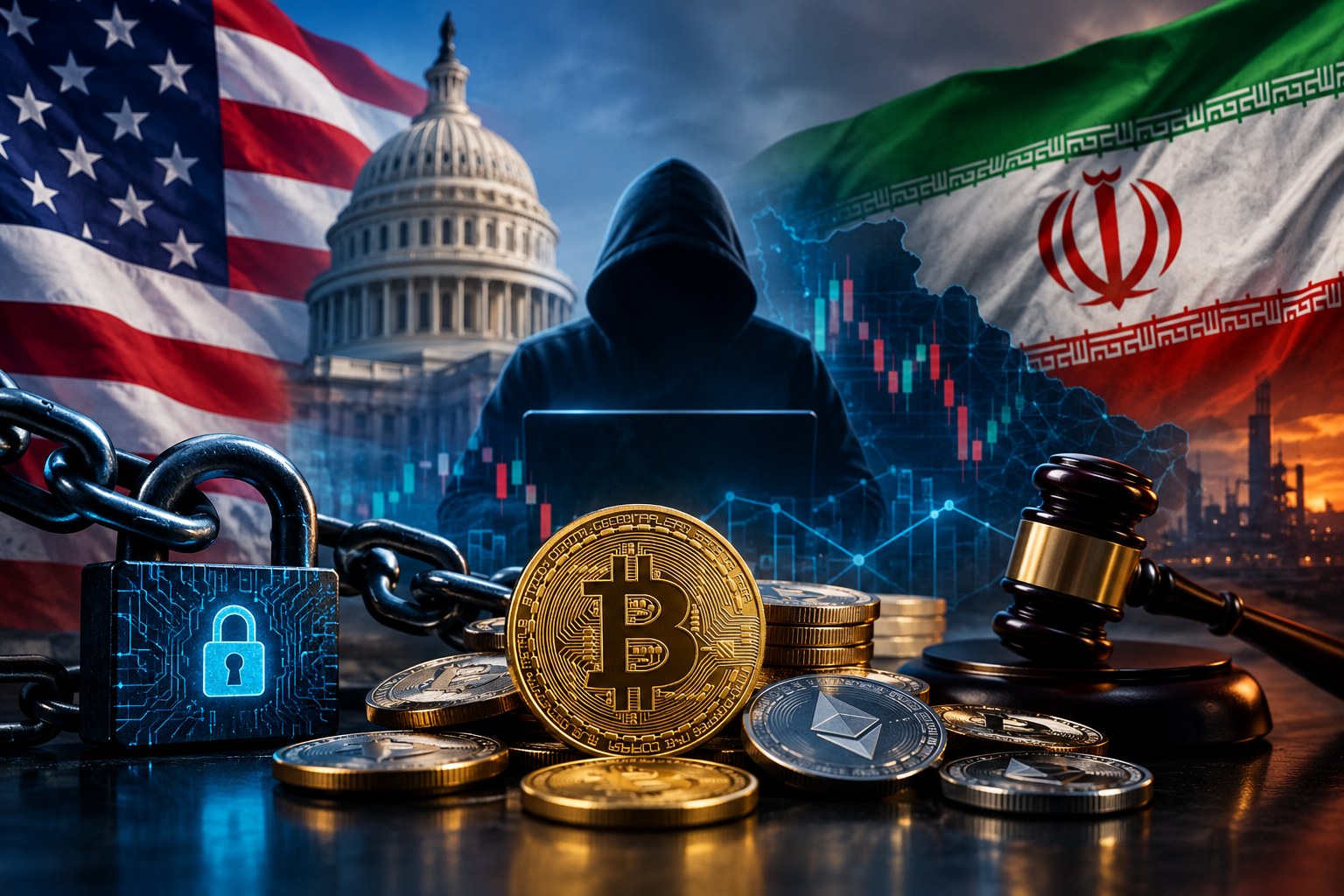
The US has reported seizing approximately $1 billion in Iranian crypto assets as Washington expands financial sanctions. The crackdown on Iran-linked digital asset platforms highlights growing regulatory pressure on crypto exchanges and could influence market sentiment, although its direct impact on Bitcoin prices remains uncertain.
Primary Keyword: Iran crypto assets
Secondary Keywords: US crypto sanctions, Iran cryptocurrency crackdown, Bitcoin market news, crypto market analysis, US sanctions on Iran, digital asset regulation, cryptocurrency news today.
US Intensifies Crackdown on Iran-Linked Crypto Assets
The United States is increasing pressure on Iran’s financial networks, bringing cryptocurrency exchanges and digital asset transactions under closer scrutiny. The campaign reflects Washington’s growing focus on how digital currencies can be used to move funds outside traditional financial channels.
On May 29, 2026, US Treasury Secretary Scott Bessent said the government had seized approximately $1 billion in Iranian crypto assets, according to reporting by The Block. The statement followed an earlier estimate of nearly $500 million in frozen assets. "Source: The Block" (https://www.theblock.co/news/markets/2026-05-29-us-has-seized-nearly-1-billion-in-crypto-from-iran-bessent-says-403075)
The developments form part of a broader sanctions strategy targeting financial networks allegedly used to evade restrictions and move funds internationally. For the cryptocurrency industry, the situation raises important questions about exchange compliance, wallet monitoring, and the growing role of governments in regulating digital assets.
Why Is the US Targeting Iranian Cryptocurrency?
Cryptocurrency can enable rapid cross-border transfers without relying entirely on conventional banking infrastructure. However, transactions recorded on public blockchains can also provide investigators with a trail to follow when digital wallets are linked to sanctioned entities.
According to the US Treasury Department, Iranian digital asset platforms have been used in transactions associated with sanctions evasion and networks connected to the Islamic Revolutionary Guard Corps (IRGC).
In June 2026, the Treasury Department sanctioned Nobitex and three other Iranian digital asset exchanges. Officials said Nobitex handled more than half of Iran's digital asset inflows in 2025. In September, the department also targeted BitBank and entities associated with Iranian financier Babak Zanjani.
These actions demonstrate that US crypto sanctions are increasingly focused on the infrastructure supporting transactions, rather than only on individual wallets or conventional financial institutions. "Source: US Treasury Department" (https://home.treasury.gov/news/press-releases/sb0519) | "Source: US Treasury Department, September 17" (https://home.treasury.gov/news/press-releases/sb0632)
How Could the Iran Crypto Crackdown Affect the Crypto Market?
1. Bitcoin Price and Market Sentiment
The immediate impact of sanctions on Bitcoin (BTC) is not necessarily negative. Crypto markets respond to several factors, including liquidity, interest rates, investor positioning, and broader geopolitical developments.
However, an escalation in US-Iran tensions could encourage some traders to reduce risk exposure. If investors become concerned about a wider economic or geopolitical conflict, selling pressure could emerge across Bitcoin and other cryptocurrencies.
For price analysis, traders should watch whether BTC breaks key support levels, whether trading volume expands during a decline, and whether the price recovers after an initial reaction.
2. Altcoins Could Face Higher Volatility
Altcoins may experience sharper price movements when market participants become more cautious and liquidity weakens. Nevertheless, the impact will depend on broader market conditions rather than the sanctions announcement alone.
Traders should avoid assuming that every geopolitical headline will trigger an immediate crypto market crash. Confirmation from price action, volume, and market structure remains important.
3. Crypto Exchanges Face Stronger Compliance Pressure
The crackdown could increase pressure on centralized exchanges to strengthen Know Your Customer (KYC) procedures, transaction monitoring, and sanctions screening.
Platforms operating internationally may need to review their exposure to restricted entities and improve controls around suspicious transactions. Such developments could increase compliance costs while reinforcing the importance of regulatory transparency across the digital asset industry.
4. Stablecoins and Cross-Border Transfers Remain in Focus
Stablecoins are widely used for transfers and trading because their values are generally linked to traditional currencies. Their ability to move across blockchain networks makes them relevant to regulators examining international financial flows.
The US campaign highlights that digital assets are not automatically beyond the reach of financial enforcement. Depending on the asset, issuer, exchange, and wallet infrastructure involved, authorities may have different ways to restrict access or identify transactions.
What Should Crypto Traders Watch Next?
For traders following Bitcoin price movements and the wider cryptocurrency market, several indicators deserve attention:
- Bitcoin support and resistance: Watch for confirmed breakouts or breakdowns instead of reacting to headlines alone.
- Trading volume: Increasing volume during a price move can help assess whether the move has broader participation.
- Market liquidity: Thin liquidity can amplify volatility during unexpected geopolitical developments.
- Regulatory announcements: Further sanctions against exchanges, service providers, or financial networks could affect sentiment.
- Broader macroeconomic conditions: Interest-rate expectations, the US dollar, and global risk appetite may have a larger market impact than a single enforcement announcement.
The key question is whether the news produces a measurable change in market positioning or remains a regulatory development with limited direct influence on crypto prices.
Is This a Bearish Signal for Bitcoin?
The reported seizure of Iranian crypto assets is not, by itself, sufficient evidence of a bearish Bitcoin trend. Enforcement actions can influence sentiment, but they do not automatically change Bitcoin's supply, network fundamentals, or long-term adoption trajectory.
A more reliable assessment requires examining the prevailing BTC trend, liquidity conditions, derivatives positioning, and whether important support levels hold.
If geopolitical concerns coincide with a broader risk-off environment, cryptocurrencies could face additional selling pressure. If the market absorbs the news without significant changes in price or volume, the direct effect may remain limited.
For investors, distinguishing between a headline-driven reaction and a sustained market trend is essential.
Conclusion
The US crackdown on Iranian crypto assets highlights the growing intersection between cryptocurrency, international sanctions, and financial regulation. The reported $1 billion seizure estimate, together with subsequent actions against Iranian digital asset platforms, signals continued scrutiny of crypto-related financial networks.
For the broader crypto market, the implications will depend on how the situation develops and whether it affects investor confidence, exchange operations, or global liquidity.
Bitcoin and altcoin traders should monitor confirmed price action alongside regulatory developments instead of treating the headline as an automatic signal to buy or sell.
Disclaimer: This article is for informational and educational purposes only and does not constitute financial or investment advice. Cryptocurrency markets are volatile, and readers should conduct their own research before making investment decisions.