
What Happens When All 21 Million Bitcoin Are Mined? The Truth About Bitcoin's Future
When all 21 million Bitcoin are mined around 2140, miners will no longer earn block rewards and will rely entirely on transaction fees to secure the network. Bitcoin’s long-term sustainability will depend on adoption, transaction volume, technological evolution, and market dynamics, not just scarcity.

Here's something that keeps crypto enthusiasts up at night: Bitcoin has a hard cap of 21 million coins. No more will ever exist. We're already past 19.6 million mined. So what happens when we hit that limit? Does the network just stop working?
Let me walk you through what actually happens. Spoiler: it's not as dramatic as you might think.
When Will the Last Bitcoin Be Mined?
The last Bitcoin won't be mined until around the year 2140, over a century from now.
Why so long? Bitcoin has "halving" built into its code. Every four years, the reward miners get for adding blocks to the blockchain gets cut in half. Right now in 2026, miners earn 3.125 BTC per block. In 2028, that drops to 1.5625 BTC. It keeps halving until the reward becomes essentially zero.
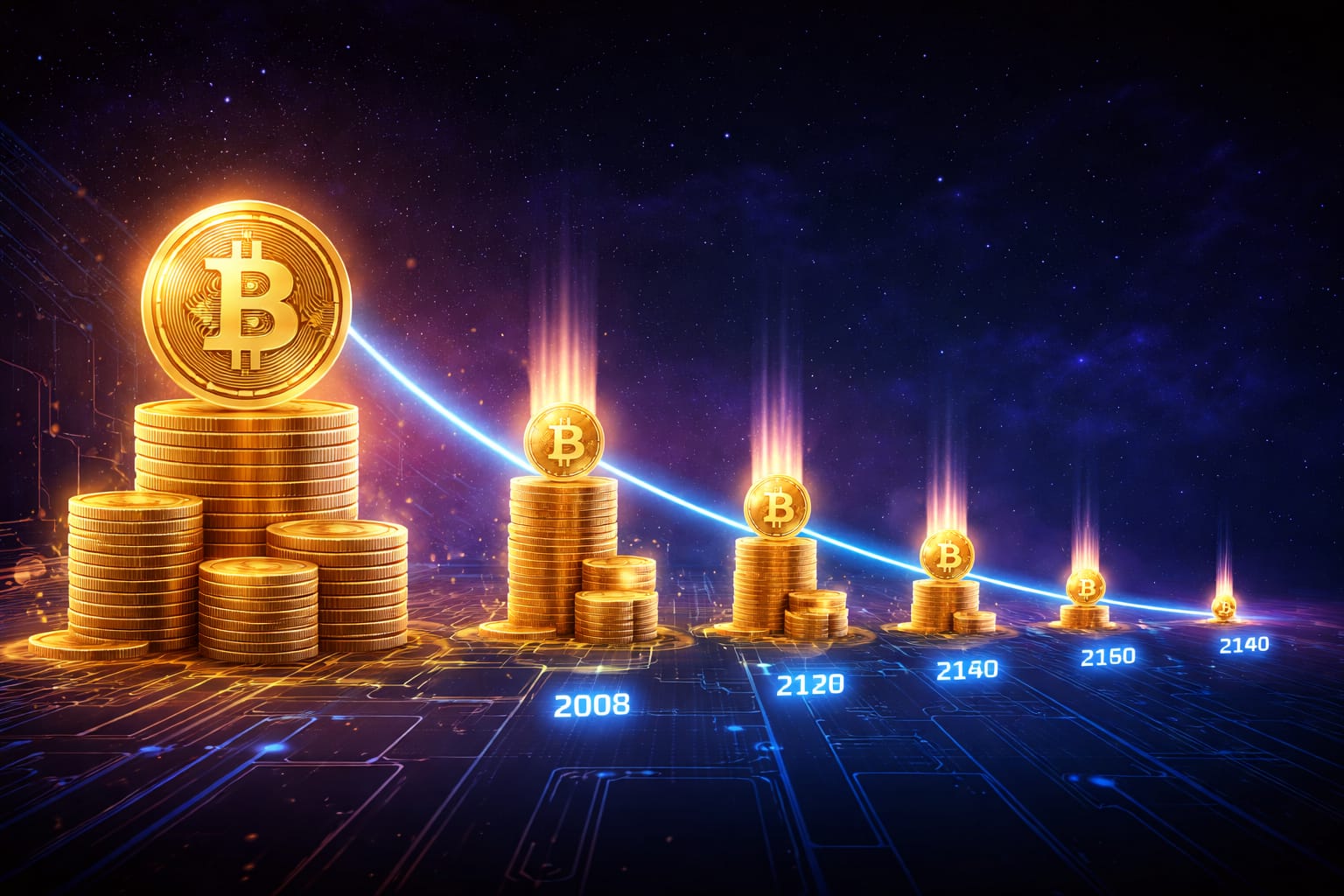
The last fractions of Bitcoin will trickle out incredibly slowly, mining 0.00000001 BTC at a time in the final years.
What Miners Actually Do
To understand what happens when mining rewards disappear, you need to know what miners do. They're not just creating new Bitcoin, they're securing the network.
Every time you send Bitcoin, miners bundle your transaction into a "block" and add it to the blockchain. This requires massive computing power, and miners get paid two ways:
Block rewards (new Bitcoin created)
Transaction fees (paid by users)
Right now, block rewards are the main incentive. But as rewards shrink, transaction fees become more important.

The Transition to Fee-Based Mining
Here's what actually happens: as block rewards decrease, transaction fees gradually become miners' primary income.
Right now, miners earn maybe 95% from block rewards and 5% from fees. Every halving shifts that balance. By 2140, it'll be 0% block rewards and 100% transaction fees.
Is this sustainable? For it to work, one of two things needs to happen:
Option 1: Bitcoin's value increases enough that small transaction fees (in BTC terms) are worth a lot in dollars. If Bitcoin hits $1 million per coin, a 0.0001 BTC fee would be worth $100, making mining profitable.
Option 2: Transaction volume increases dramatically, so miners process way more transactions per block, earning more total fees even if individual fees stay small.

What If Fees Aren't Enough?
This is the scary scenario. If transaction fees don't provide enough incentive, miners might drop off. Fewer miners means less security, potentially making Bitcoin vulnerable to attacks.
Why most experts aren't panicking:
We have over 100 years to figure this out. Technology will change. Bitcoin can be updated if needed. Market dynamics will evolve. Predicting 2140 from 2026 is like someone in 1926 predicting the internet.
The market will self-correct. If miners drop off, security decreases, users worry, and they'll pay higher fees. Basic economics.
Layer 2 solutions might change everything. The Lightning Network lets people make thousands of transactions off-chain, then settle on the main blockchain. This could create entirely new fee structures.
What About Bitcoin's Value?
Some think Bitcoin hitting its 21 million cap will cause prices to skyrocket due to scarcity. Others think it won't matter much since most Bitcoin doesn't actively trade anyway.
Truth? Nobody knows. Bitcoin's value depends on many factors, supply is just one piece. Demand, adoption, regulation, and competing cryptocurrencies all play roles.
What we know: scarcity is priced in. Everyone knows there will only be 21 million Bitcoin. This isn't a surprise hitting the market in 2140.
The Bottom Line
When the last Bitcoin is mined around 2140, the network won't collapse. Miners will continue securing the blockchain, paid entirely through transaction fees instead of block rewards.
Will this work long-term? Probably, though specifics depend on Bitcoin's value, transaction volume, and technological developments we can't predict.
Bitcoin was designed with this endpoint in mind. Satoshi Nakamoto knew there would be 21 million coins and planned for it. The gradual reduction through halvings gives the network over a century to adapt.
Could there be problems? Sure. But we've got plenty of time to solve them. Given how much Bitcoin has already overcome in its relatively short life, betting against it finding solutions seems premature.
The last Bitcoin won't be mined in your lifetime, and by the time it is, crypto will look nothing like it does today.