
Crypto Market Volatility Returns: What’s Driving Bitcoin and Altcoins?
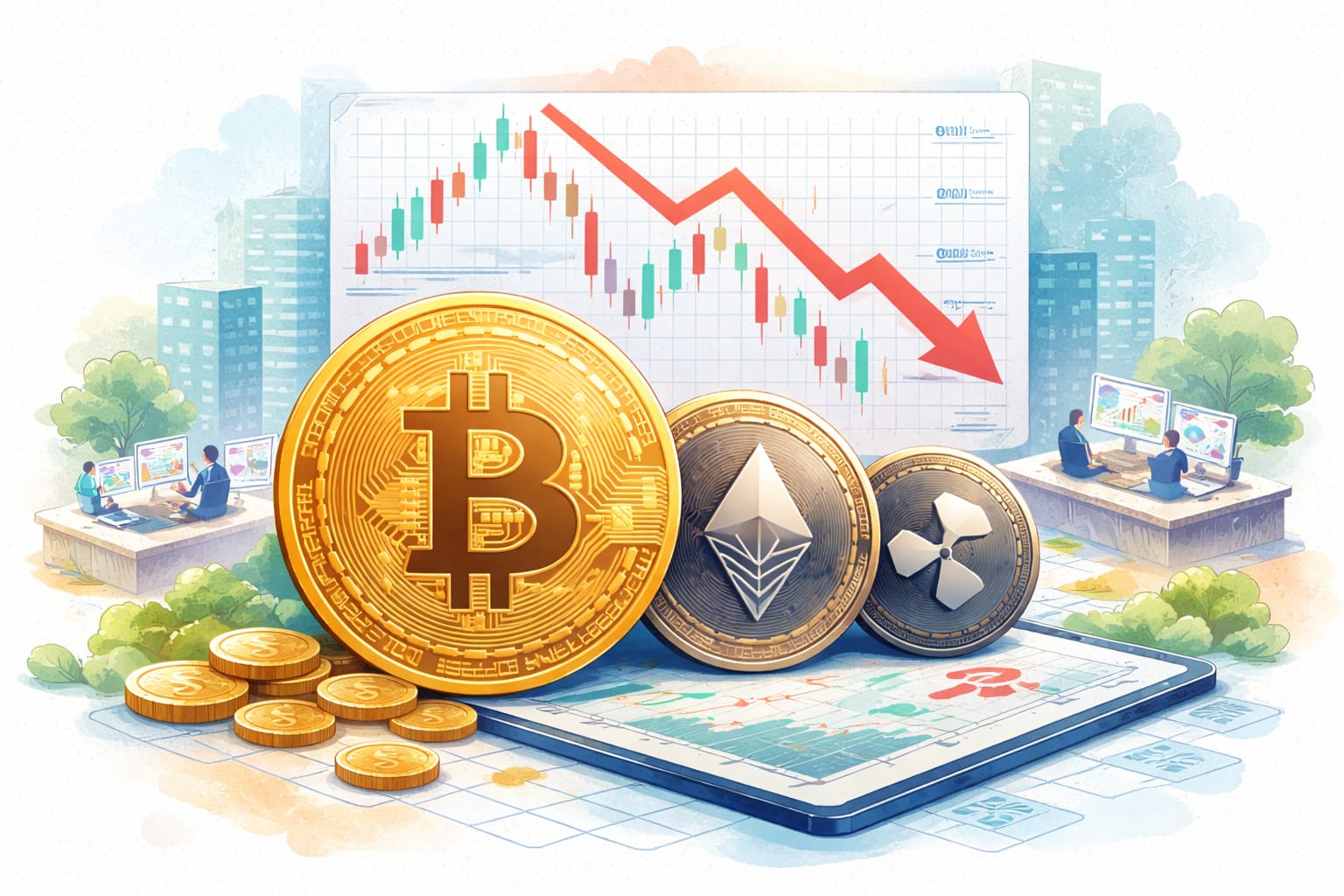
The crypto market has re-entered a volatile phase as Bitcoin tests key support levels, with altcoins mirroring its movement amid macroeconomic uncertainty and derivatives-driven liquidations.
1. Introduction
The cryptocurrency market has once again entered a phase of heightened volatility, attracting the attention of traders, investors, and financial analysts around the world. After a period of relative calm, Bitcoin and major altcoins have experienced noticeable price swings. While such movements are common in digital asset markets, they often renew discussions about risk exposure, market cycles, and the broader forces influencing this rapidly evolving sector. Volatility remains one of the most defining characteristics of cryptocurrencies, setting them apart from many traditional assets.
Unlike conventional financial markets that operate within fixed trading hours, cryptocurrency markets function continuously. This 24/7 structure allows prices to respond immediately to global events, investor sentiment shifts, and technical trading signals. As a result, price discovery can occur rapidly, sometimes leading to sharp short-term fluctuations.
2. Bitcoin and Key Support Levels
Bitcoin, the largest digital asset by market capitalization, recently tested an important psychological price level before attempting to stabilize. Support zones play a crucial role in technical analysis. When prices approach these areas, buyers often step in with renewed interest, while sellers assess whether further declines are likely.
Trading volume increased during the recent downturn, indicating active repositioning among participants. Some investors appear to be accumulating at lower price levels, viewing corrections as strategic entry points. Others are exercising caution by reducing exposure amid uncertainty. The balance between these opposing forces will likely shape the near-term trend.
If Bitcoin maintains stability above its recent support range, confidence may gradually rebuild. However, a decisive break below key levels could trigger additional downside momentum, particularly if accompanied by elevated liquidation activity.
3. Altcoins and Market Correlation
Altcoins, including Ethereum and several other large-cap tokens, have largely mirrored Bitcoin’s movement. During volatile periods, correlation across the crypto market typically strengthens. Even fundamentally strong projects may experience price fluctuations driven more by overall market sentiment than by project-specific developments.
Ethereum continues to show steady network usage and development progress despite price turbulence. Meanwhile, mid-cap and smaller digital assets have displayed sharper percentage swings. Lower liquidity and higher speculative activity often magnify movements within these segments of the market.
4. Influence of Macroeconomic Conditions
Global economic conditions remain an important influence on cryptocurrency prices. Changes in interest rate expectations, inflation trends, and international trade discussions can all impact investor appetite for risk-oriented assets. Cryptocurrencies are frequently categorized as higher-risk investments, making them particularly sensitive to shifts in global sentiment.
When traditional markets turn cautious, capital may flow away from speculative sectors, including digital assets. Conversely, periods of strong liquidity and positive economic outlooks can support renewed interest in cryptocurrencies. This growing interconnectedness highlights the integration of crypto markets within the broader financial ecosystem.
5. Derivatives and Liquidation Dynamics
The derivatives market plays a significant role in amplifying volatility. Leveraged trading enables participants to control larger positions with smaller capital outlays. However, this leverage can magnify losses as well as gains. When prices move sharply, automated liquidations may accelerate the prevailing trend.
Recent activity indicates elevated liquidation volumes during the downturn. As leveraged positions were closed automatically, price declines intensified. Once liquidation pressure eased, markets began to show tentative signs of stabilization. Funding rates across major exchanges have since moderated, suggesting more balanced positioning among traders.
6. Long-Term Perspective and Industry Development
Despite short-term price movements, the broader cryptocurrency ecosystem continues to evolve. Developers are advancing scaling solutions, enhancing network security, and building decentralized applications. Innovations in decentralized finance and tokenized assets demonstrate the ongoing experimentation within the sector.
Institutional participation remains an important theme. Financial organizations are exploring blockchain-based infrastructure, digital asset custody services, and tokenization strategies. These initiatives indicate sustained interest in the underlying technology beyond daily market volatility.
7. Conclusion
The return of volatility underscores the dynamic and rapidly changing nature of cryptocurrency markets. Price movements are influenced by technical levels, macroeconomic signals, derivatives positioning, and investor psychology. While uncertainty can dominate short-term narratives, corrections are historically part of broader market cycles.
Participants navigating this environment should prioritize disciplined risk management and informed decision-making. Whether the current phase evolves into renewed upward momentum or extended consolidation will depend on emerging catalysts and the overall direction of global financial conditions.
Disclaimer
This document is for informational purposes only and does not constitute financial, investment, or trading advice. Cryptocurrency markets are highly volatile and involve substantial risk. Readers should conduct independent research and consult qualified professionals before making financial decisions.