Deutsche Bank Enters Crypto Custody: Why Traditional Banks Are Moving Into Digital Assets
Deutsche Bank is preparing to launch a digital-asset custody service, highlighting how traditional financial institutions are building infrastructure for Bitcoin, Ethereum and future blockchain-based financial products.
Deutsche Bank’s Crypto Custody Plan
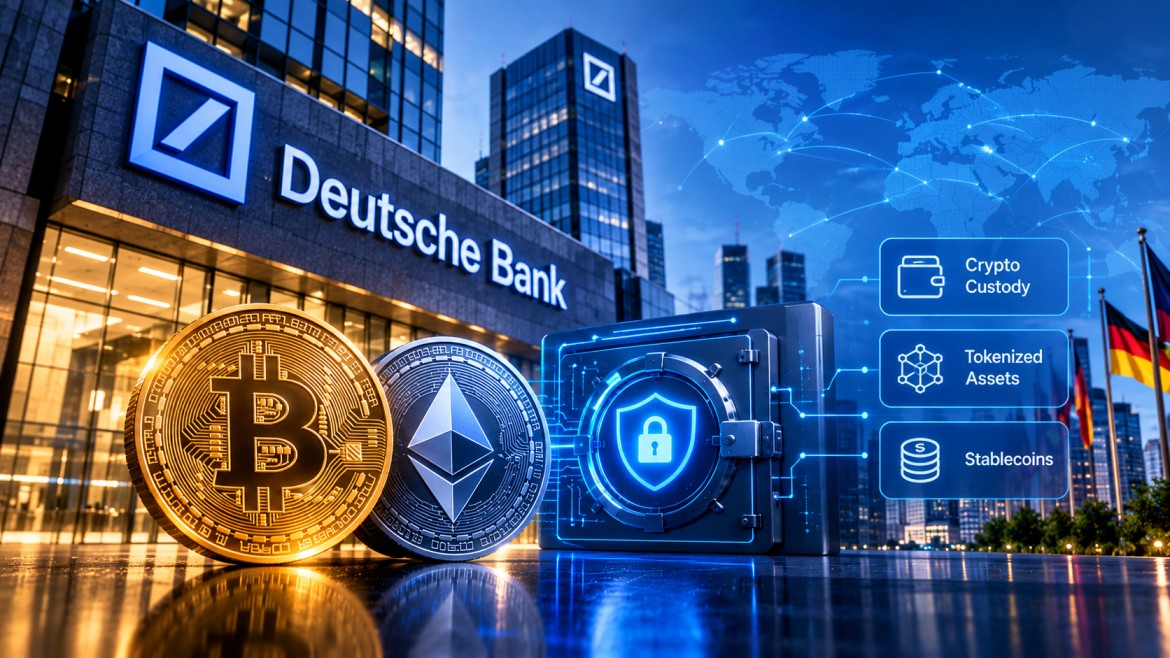
Traditional banking and digital assets are becoming increasingly connected. Deutsche Bank is preparing to launch its first digital-asset custody service in Germany, with expansion into major Asian financial centres planned for 2027.
The initial service is expected to support major cryptocurrencies such as Bitcoin and Ethereum. The bank also plans to expand into services involving stablecoins, tokenized deposits and blockchain-based securities.
This move highlights an important change in the financial industry: banks are increasingly exploring ways to support digital assets alongside their existing financial services rather than treating blockchain as a separate market.
What Is Crypto Custody?
Crypto custody refers to the secure storage and management of digital assets. Unlike traditional bank deposits, cryptocurrencies are controlled through cryptographic keys, making secure key management a critical part of the process.
Institutional investors often require custody services with strong operational controls, access management, reporting and compliance procedures before they can participate in digital-asset markets at scale.
A bank-backed custody service could help address some of these requirements. However, custody does not eliminate every risk. Investors still need to understand the provider's security arrangements, legal responsibilities, fees and policies for handling losses or service disruptions
Why Are Banks Exploring Blockchain Infrastructure?
There are several reasons financial institutions are investing in digital-asset infrastructure.
Institutional demand: Asset managers, companies and professional investors may need regulated or institutionally designed ways to hold digital assets.
Stablecoin services: Stablecoins can support blockchain-based transfers and settlement. Their usefulness depends on issuer reliability, redemption arrangements and applicable regulations.
Tokenized financial products: Banks are also exploring blockchain-based representations of deposits, bonds and other financial instruments. These products could potentially improve settlement efficiency and enable new financial workflows.
Deutsche Bank's planned expansion suggests that custody may be only the first stage of a broader digital-finance strategy.
What Could This Mean for Bitcoin and Ethereum?
Institutional custody can make it easier for eligible clients to hold digital assets within established financial-service arrangements. Over time, this may support wider participation by organizations that require formal security and operational processes.
However, a bank launching custody services does not automatically mean that Bitcoin or Ethereum prices will rise. Market prices continue to depend on demand, liquidity, regulation, macroeconomic conditions and investor sentiment.
Readers can also explore our RWA crypto and tokenization guide to understand how blockchain infrastructure is expanding beyond cryptocurrencies into traditional financial assets.
What Comes Next?
The next important milestones will be the actual service launch, supported assets, availability in different countries and any expansion into stablecoin or tokenized-security services.
For the broader crypto industry, Deutsche Bank's move is another development to watch as traditional financial institutions build digital-asset capabilities. The long-term impact will depend on adoption, regulation, security and whether these services deliver practical value to clients.
Disclaimer: This article is for informational and educational purposes only and does not constitute financial or investment advice. Cryptocurrency and digital-asset services involve market, regulatory, custody and operational risks. Always conduct independent research before making financial decisions.