
Bull and Bear Markets. The Real Truth Every Investor Needs to Know
Bull and bear markets are not just about prices going up or down, they are about psychology, leverage, and cycles that most investors misread every single time. The crypto market hit an all-time high of $109,350 in January 2025 before entering a painful correction that confused even experienced investors. Understanding what these cycles actually are, and what nobody tells you about them, is the difference between panic selling at the bottom and buying when everyone else is afraid.
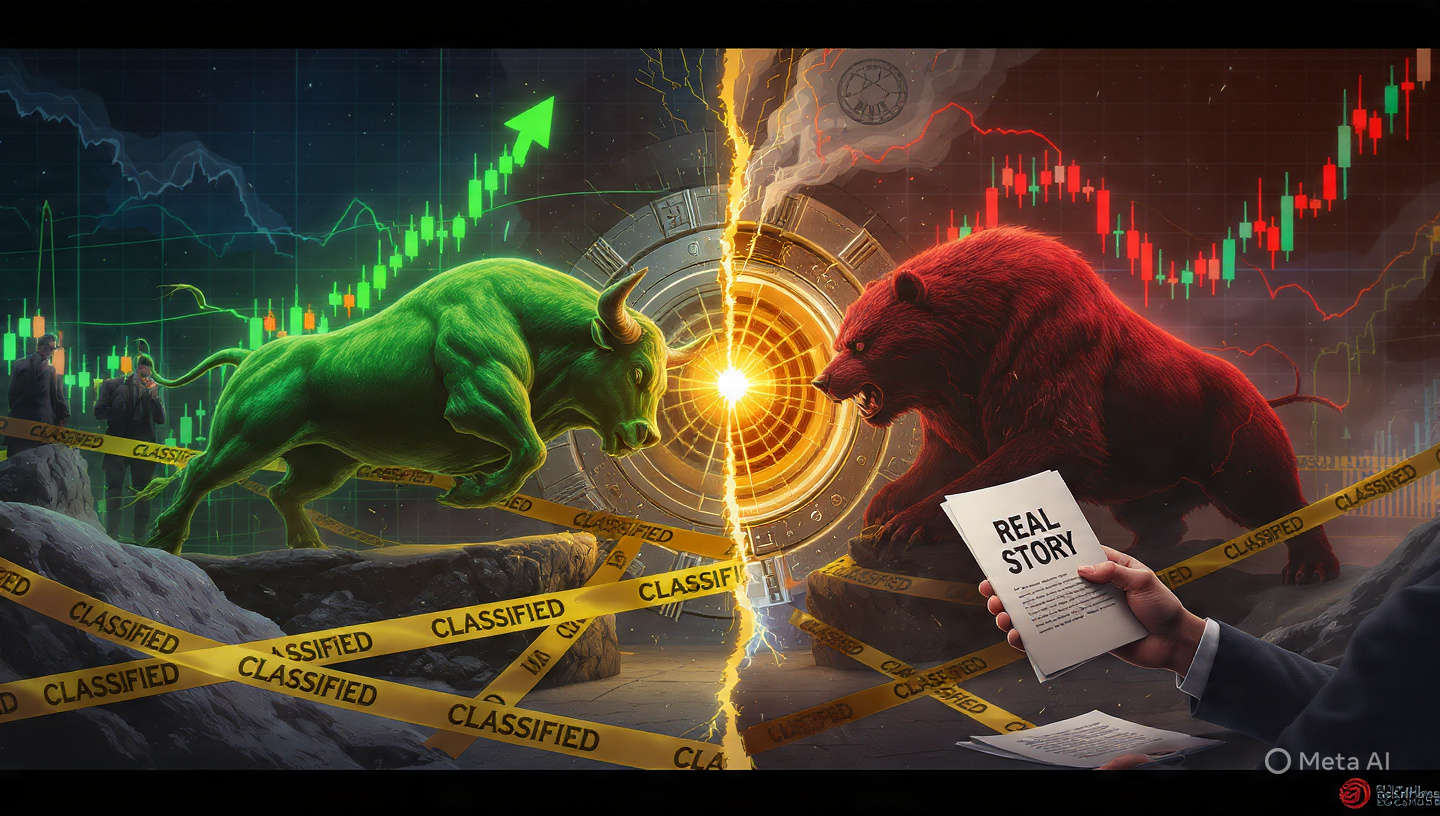
Most investors misread bull and bear markets every single cycle. Here is the real truth about how they work, what triggers them, and how to stop losing money when the market turns.
Introduction
Everyone thinks they know what a bull and bear market is. Prices go up, that is a bull. Prices go down, that is a bear. Simple, right?
Wrong.
That surface-level understanding is exactly why most people buy at the top and sell at the bottom, every single cycle, without fail. The real mechanics of bull and bear markets are far more interesting, and far more useful, than the definition you find in a textbook. Here is what nobody actually explains.
What a Bull and Bear Market Really Means
A bear market is technically defined as a drop of 20% or more from a recent high. A bull market is a sustained rise of 20% or more from a recent low. But those numbers alone tell you almost nothing useful.
What they do not tell you is the psychology underneath. Bear markets are not just falling prices. They are periods of forced selling, fear, leverage unwinding, and the slow destruction of confidence. Bull markets are not just rising prices. They are periods of expanding belief, increasing participation, rising leverage, and eventually, irrational euphoria.
The price move is the symptom. The psychology is the disease, or the cure, depending on which direction you are going.
The Myth of the Clean Cycle
Most people imagine market cycles as neat, predictable waves. Up for a while, then down for a while, then up again. Reality is far messier.
Bitcoin's four-year cycle has been one of the most referenced frameworks in crypto, with bull market tops forming in November 2013, December 2017, and November 2021. If the cycle held perfectly, the next top would have occurred around October 2025, at just above $126,200. And remarkably, Bitcoin did hit an all-time high of around $109,350 in January 2025, close enough to make the model look credible.
But here is what the cycle model does not explain. Bitcoin ended 2025 down 5.7%, with a brutal fourth-quarter sell-off of 23.7%, its worst Q4 performance since 2018. A year that was supposed to be a clean bull run turned into confusion, with crypto portfolios bleeding while stock markets roared higher. The cycle happened, but not the way anyone expected.
A growing number of analysts now argue the traditional four-year cycle may no longer be the most effective framework. Market dynamics have shifted significantly following the approval of spot Bitcoin ETFs and the growing presence of institutional capital. From here, the driving factors are likely to be macroeconomic and geopolitical in nature, not time-based.
What Actually Triggers a Bear Market
Bear markets do not just appear out of nowhere. They are usually born out of one or more of the same recurring causes.
Excess leverage. The trigger is almost always leverage hiding somewhere it should not be. A new safe-yield product, an algorithmic stablecoin that works until it does not, or an exchange running a fractional reserve scheme behind the scenes. When leverage collapses, it cascades.
Macro conditions turning hostile. Elevated interest rates, global liquidity tightening, geopolitical tensions, and credit market stress all pour pressure onto crypto specifically because it is treated as a risk asset. When traditional markets sneeze, crypto catches pneumonia.
Sentiment collapse. Between late December 2025 and early 2026, global search interest for the phrase "Bitcoin bear market" surged to its highest level in five years, even higher than during the 2021 crash and the 2022-23 bear market. That kind of fear is self-reinforcing. Scared investors sell, which pushes prices lower, which scares more investors.
Regulatory shocks. The SEC's delay of Ethereum Options ETF approvals in Q1 2025 added significant downward pressure on its own. A single regulatory headline can be enough to tip sentiment when the market is already fragile.
What Nobody Tells You About Bear Markets
Here is the part that most financial content skips.
Bear markets are where the next bull market is built. Every cycle, the investors who buy during the deepest fear and hold through the noise are the ones who capture the largest gains in the recovery. Bear markets are not the worst time to look for opportunity. They are often the best, if you are willing to plan ahead.
The bottom never feels safe. When Bitcoin fell 28% from its January 2025 high to around $78,000 by February 2025, the RSI dropped to 20, showing extreme pessimism among traders. Anything below 30 signals oversold conditions. Historically, those moments of maximum fear are closest to the bottom, but they never feel that way while you are living through them.
Not everything recovers equally. Bitcoin tends to fall less and recover faster than altcoins. In every bear market, the majority of smaller coins either lose 80-90% of their value or disappear entirely. The assets that survive and thrive on the other side are almost always the ones with genuine utility or the most liquid markets.
Volatility is the mechanism, not the enemy. Markets that never correct never reset. The pain of a bear market flushes out excess speculation, overvalued projects, and weak hands. That process is exactly what creates the foundation for the next real bull run. Without the bear, there is no genuine bull.
What Actually Triggers a Bull Market
Bull markets are born when fear turns to relief, and relief turns to greed.
The technical confirmation usually comes when Bitcoin reclaims its 200-day moving average, a widely watched boundary between bull and bear territory. But the real fuel is a combination of improving macro conditions, expanding liquidity, new narratives that bring in fresh participants, and institutional flows returning.
In the current cycle, stablecoins are emerging as a key indicator. Global crypto transaction volumes broke above $34 trillion in 2025, as governments, corporations, and financial institutions increasingly experiment with payments and settlements. In Q1 2026, a new wave of traditional finance platforms launched or explored stablecoin integrations. Meta announced plans to enable stablecoin payments across its platforms. That kind of mainstream adoption is exactly the type of narrative that historically fuels the early stages of a new bull market.
Where We Are Right Now in April 2026
The honest answer is that nobody knows for certain, and anyone who tells you otherwise is selling something.
What the data does suggest is that 2026 is shaping up as a period of structural consolidation rather than a binary bull or bear outcome. Excess leverage has been flushed. The underlying architecture, ETFs, corporate treasuries, and clearer policy frameworks, suggests any downturn is likely to establish a higher floor than previous cycles.
Bitcoin dropped as low as $60,132 in early 2026 before recovering toward the $74,000 range by April. Some analysts believe the February low may have been the bottom. Others anticipate further volatility before a durable recovery. Grayscale's head of research has said the firm does not see a crypto winter on the horizon. Amberdata's director of derivatives describes 2026 as a volatile mix, scary on the front end and potentially great on the back end for long-term holders.
The investors who tend to win in these conditions are not the ones who predict the exact bottom. They are the ones who position before the turn, not after it.
The One Thing to Remember
Bull markets make people feel smart. Bear markets reveal whether they actually are.
The cycle will continue. Prices will recover, overshoot, correct, and recover again. That has been true through every crash, every panic, every moment where the news made it feel like this time was different. It never is.
The truth about bull and bear markets that nobody explains is this: the market does not reward the loudest voices or the most confident predictions. It rewards the people who understand the cycle, stay patient during the fear, and do not confuse short-term pain with long-term failure.
Frequently Asked Questions
What is the simplest definition of a bull and bear market? A bull market means prices are rising 20% or more from a recent low; a bear market means prices have fallen 20% or more from a recent high.
How long does a crypto bear market typically last? Historically, crypto bear markets have lasted between 12 and 24 months before bottoming out and beginning recovery.
Is 2026 a bull or bear market for crypto? Most analysts describe 2026 as a consolidation or transition year, with Bitcoin recovering from early lows toward the $74,000 range as of April 2026.
Should you buy crypto during a bear market? Bear markets have historically been the best entry points for long-term investors, but only invest what you can afford to lose and focus on assets with genuine utility.
What is the biggest mistake investors make in market cycles? Buying during euphoria near the top and panic-selling near the bottom, which is the opposite of what the cycle rewards.
Disclaimer
For informational purposes only. Not financial or legal advice. Crypto markets are highly volatile and past cycles do not guarantee future results. Always DYOR and consult a financial professional before investing. Updated April 25, 2026.