Bitcoin Acting as a Safe Haven During Global Tensions
Bitcoin is increasingly viewed as a safe-haven asset during global tensions, with investors treating it as “digital gold” due to its scarcity and decentralized nature.
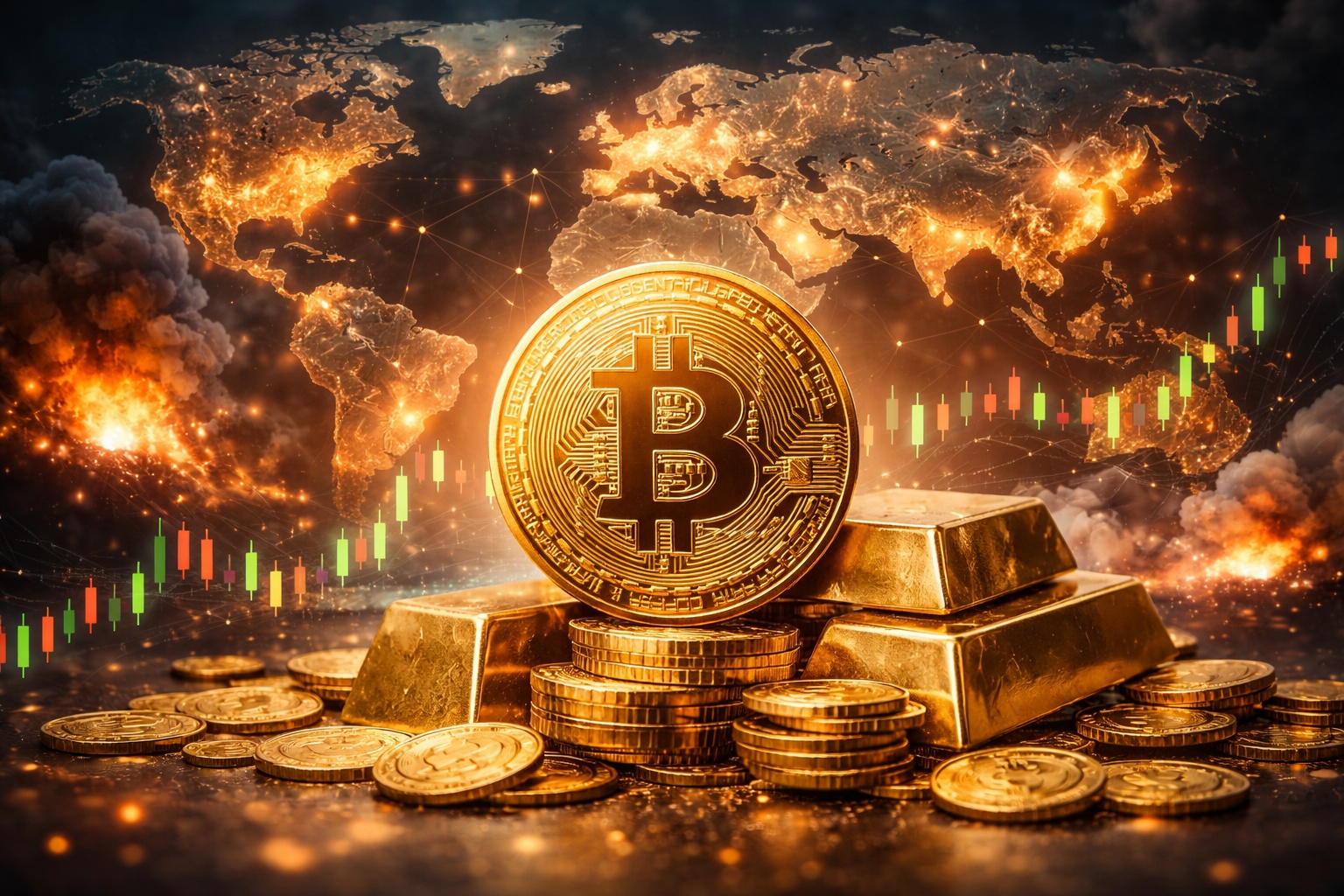
In times of global uncertainty, investors often seek assets that can preserve value and provide stability. Traditionally, gold, government bonds, and certain reserve currencies have served as safe-haven assets during geopolitical crises and financial instability. However, in recent years, Bitcoin has increasingly entered the conversation as a potential digital alternative to these traditional stores of value.
Recent geopolitical tensions around the world have once again pushed investors to reconsider where they place their capital during periods of instability. As markets reacted to rising uncertainty, Bitcoin showed signs of resilience and, in some cases, outperformed several traditional financial assets. This trend has renewed the debate about whether Bitcoin can truly function as a safe-haven asset similar to gold.
Understanding Safe-Haven Assets
A safe-haven asset is an investment expected to retain or increase in value during times of market turbulence. Investors typically move funds into such assets when geopolitical risks, economic downturns, or financial crises threaten traditional markets.
Gold has historically been the most prominent safe-haven asset because of its limited supply and global acceptance. Government bonds issued by stable economies also often attract investors during periods of uncertainty. However, the rise of digital assets has introduced a new contender into the safe-haven category: Bitcoin.
Bitcoin’s design shares several characteristics with traditional safe-haven assets. It has a fixed supply cap of 21 million coins, making it resistant to inflation caused by excessive monetary expansion. Additionally, Bitcoin operates on a decentralized blockchain network, meaning it is not controlled by any single government or central authority.
Recent Market Behavior During Global Tensions
Recent geopolitical developments have triggered volatility across global financial markets. Stock markets, commodities, and currencies have all experienced fluctuations as investors attempt to navigate uncertain economic conditions.
During this period, Bitcoin demonstrated notable resilience. In several instances, the digital asset held its value or even rose while traditional risk assets declined. This performance has attracted attention from analysts and institutional investors who are evaluating Bitcoin’s role in diversified portfolios.
Some investors view Bitcoin as a hedge against macroeconomic instability, particularly in situations where traditional financial systems face pressure. When geopolitical tensions escalate, capital often flows into assets perceived as independent from government control, and Bitcoin fits this narrative.
Institutional Interest in Bitcoin
Institutional investors have played a significant role in shaping the perception of Bitcoin as a store of value. Over the past few years, major financial institutions, hedge funds, and publicly traded companies have added Bitcoin to their balance sheets or investment portfolios.
Exchange-traded funds (ETFs) and other regulated financial products linked to Bitcoin have also increased accessibility for traditional investors. As a result, Bitcoin is gradually being integrated into the broader financial ecosystem.
Institutional adoption strengthens the argument that Bitcoin could function as a modern safe-haven asset. Large investors often analyze macroeconomic trends and allocate capital strategically during periods of global uncertainty. Their participation in the Bitcoin market signals growing confidence in the asset’s long-term potential.
Digital Gold Narrative
The comparison between Bitcoin and gold has become one of the most common narratives in the cryptocurrency industry. Supporters often refer to Bitcoin as “digital gold” because of its scarcity, decentralized nature, and resistance to monetary inflation.
Unlike physical gold, Bitcoin can be transferred globally within minutes and stored securely using digital wallets. This portability and accessibility give Bitcoin unique advantages in the digital age.
Furthermore, Bitcoin’s transparent supply schedule ensures that new coins are issued at a predictable rate through mining. Approximately every four years, the Bitcoin network undergoes a halving event that reduces the rate of new coin issuance. This mechanism reinforces Bitcoin’s scarcity and supports its long-term value proposition.
Challenges to the Safe-Haven Narrative
Despite its growing popularity, Bitcoin’s role as a safe-haven asset remains a topic of debate. Critics argue that Bitcoin’s price volatility makes it less reliable than traditional safe-haven investments.
While gold typically experiences moderate price fluctuations, Bitcoin’s value can change significantly within short timeframes. This volatility can make it difficult for conservative investors to rely on Bitcoin as a stable store of value during crises.
Regulatory uncertainty is another factor influencing Bitcoin’s safe-haven status. Governments around the world continue to develop policies regarding cryptocurrency regulation, taxation, and financial oversight. Changes in regulatory frameworks can impact investor sentiment and market behavior.
The Future Role of Bitcoin in Global Finance
As the cryptocurrency market matures, Bitcoin’s role in the global financial system may continue to evolve. Increased adoption, improved infrastructure, and clearer regulatory frameworks could enhance its credibility as a store of value.
Many analysts believe Bitcoin could eventually coexist with traditional safe-haven assets rather than replace them entirely. Investors may allocate portions of their portfolios to Bitcoin alongside gold and other defensive investments to achieve diversification.
If global economic uncertainty persists and institutional adoption continues to grow, Bitcoin’s reputation as a digital safe haven could strengthen significantly in the coming years.
Conclusion
Bitcoin’s performance during periods of geopolitical tension has sparked renewed discussion about its role as a potential safe-haven asset. While the cryptocurrency market remains volatile, Bitcoin’s scarcity, decentralization, and increasing institutional adoption have strengthened its narrative as a digital store of value.
Although challenges remain, particularly regarding volatility and regulatory developments, Bitcoin is gradually establishing itself as a meaningful component of the modern financial landscape. As global markets continue to evolve, the debate over Bitcoin’s status as digital gold and a safe haven is likely to intensify.
Disclaimer
This article is for informational and educational purposes only and should not be considered financial advice. Cryptocurrency markets are highly volatile, and investors should conduct their own research before
making investment decisions.