
What is Blockchain Abstraction? Making Web3 Actually Usable
Blockchain abstraction removes the technical complexity of Web3 by hiding chains, gas fees, and bridges from users. By simplifying the experience, it could be the key to bringing the next billion users into crypto.
Here's the truth about crypto: it's still way too complicated for normal people. I've watched friends give up on Web3 because they couldn't figure out which network to use or lost funds sending tokens to the wrong chain. That's where blockchain abstraction comes in it might be what finally makes crypto mainstream.
What Is Blockchain Abstraction?
Blockchain abstraction (also called chain abstraction) hides all the technical complexity from users. Think about email, you don't think about SMTP protocols, you just hit send. That's what abstraction does for crypto.
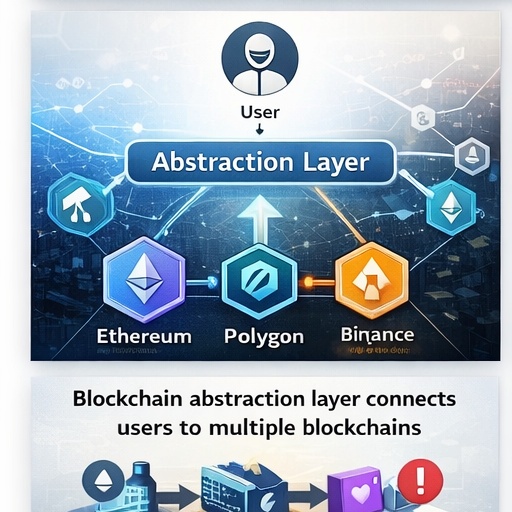
Right now, Web3 means juggling multiple blockchains, different wallets, bridge protocols, and gas fees in various tokens. Blockchain abstraction handles all that behind the scenes so you can just use the app.
The Problem It Solves
Picture this: You want to buy an NFT on Polygon, but your funds are on Ethereum. You need to bridge your ETH (paying fees), get MATIC for gas (more fees), switch wallet networks, and hope you didn't lose money in the process.
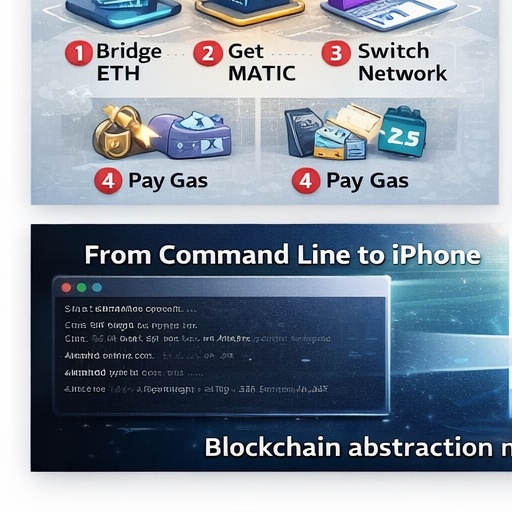
It's exhausting. No wonder mainstream adoption hasn't happened.
Chain abstraction fixes this by letting you interact with any blockchain app using whatever assets you have, wherever they are. The abstraction layer handles bridging, swapping, and routing automatically.
How It Works
There are several approaches:
Account Abstraction turns your wallet into a smart contract with superpowers like social recovery, gas sponsorship, and batch transactions. No more losing everything because you lost your seed phrase.
Chain Abstraction Protocols create unified liquidity across chains. You interact with one interface while the protocol figures out the optimal execution path even across multiple blockchains.
Intent-Based Systems let you specify what you want (like "buy this NFT") without worrying about how. Solvers compete to execute your intent most efficiently.
Why This Matters
Users don't care about chains. They care about applications. Just like you don't care which server runs your website, people shouldn't need to know which blockchain they're using.
It eliminates friction. Every extra step is where users get confused and give up. Abstraction removes those steps.
It improves security. When users don't manually bridge assets or switch networks, there are fewer opportunities for mistakes or scams.
It enables innovation. Developers can build on the best blockchain without fragmenting their user base.
Current State in 2026
Several projects are making chain abstraction real. Account abstraction (ERC 4337) is gaining traction on Ethereum. Cross-chain protocols are improving seamless routing. We're seeing the first apps that truly hide blockchain complexity.
Is it perfect? Not yet. Challenges remain around decentralization, security, and standardization. But we're close to a future where crypto feels as simple as any other app.
The Bottom Line
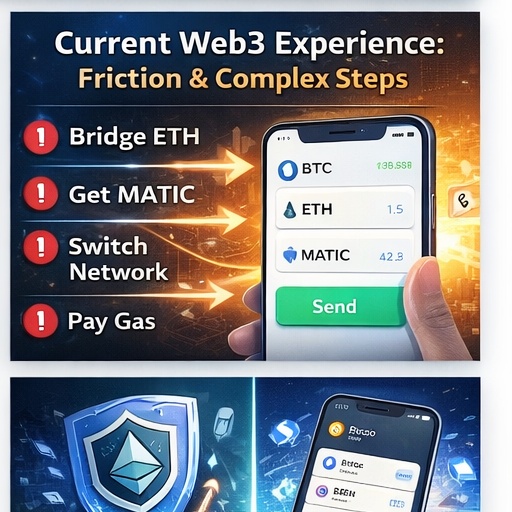
Blockchain abstraction is the difference between command line and iPhone. Both do the same things, but one is accessible to everyone.
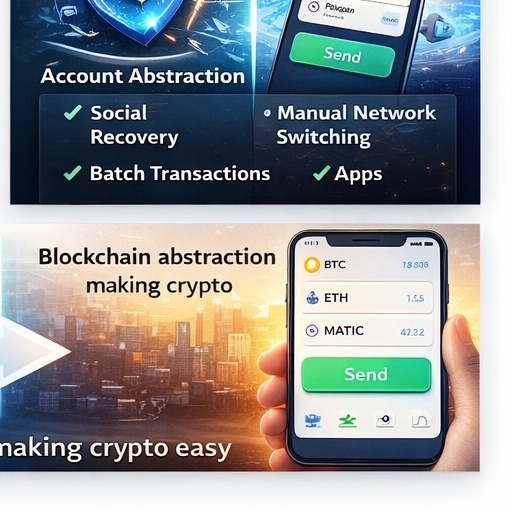
If crypto wants the next billion users, we need to stop making them think about gas fees, bridges, and which chain they're on. We need to abstract that complexity away.
That's what blockchain abstraction does. And honestly? It's about time.