Stablecoins September 2026: Why Banks Are Finally Embracing Crypto Payments
Stablecoins September 2026 are gaining attention as banks explore blockchain-based payments. Could stablecoins become the bridge between traditional finance and crypto?
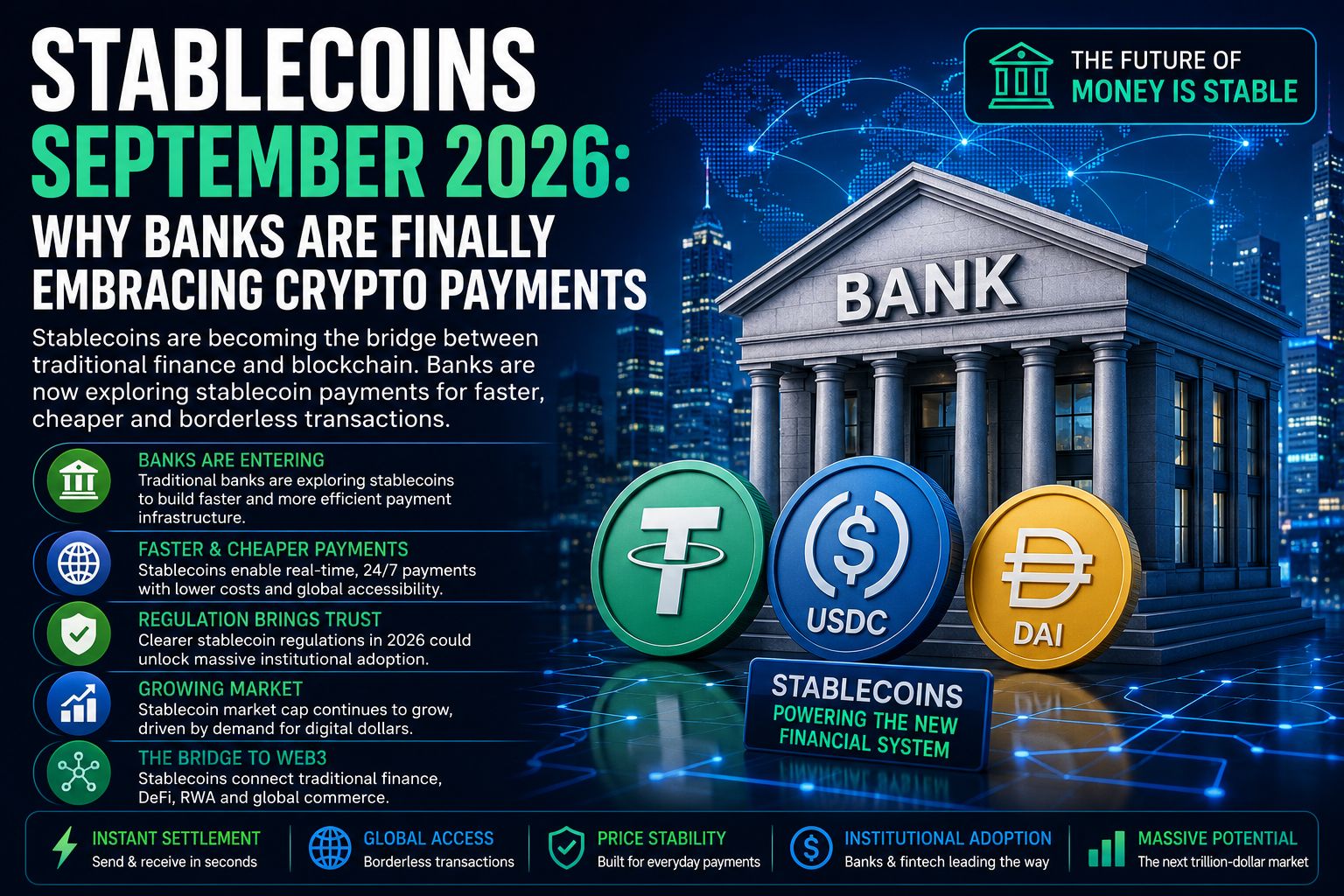
The stablecoins September 2026 narrative is gaining momentum as traditional financial institutions increasingly explore blockchain-based payments. What was once considered a niche part of the cryptocurrency industry is now becoming a serious area of interest for banks, fintech companies and global payment providers.
Stablecoins could play an important role in connecting traditional finance with the digital asset economy because they combine blockchain-based transactions with price stability.
Why Banks Are Looking at Stablecoins
Banks have traditionally been cautious about cryptocurrencies because of their volatility. Bitcoin and other digital assets can experience significant price movements, making them less practical for everyday payments.
Stablecoins are different. Assets such as dollar-backed stablecoins are designed to maintain a relatively stable value, allowing businesses and financial institutions to use blockchain rails without taking the same level of price risk.
This is one reason stablecoin adoption 2026 is becoming an important crypto-market narrative.
Stablecoin Payments Could Grow in September
The stablecoin payments 2026 market could expand further as financial institutions experiment with faster and more efficient payment infrastructure.
Blockchain networks can potentially allow transactions to settle around the clock, including outside traditional banking hours. This could make stablecoins particularly attractive for international transfers, business payments and digital commerce.
Lower transaction costs and faster settlement could also encourage more companies to explore stablecoin-based payment systems.
Regulation Could Be a Major Catalyst
Regulation will remain one of the biggest factors for the stablecoin market 2026.
Clearer rules could give banks and large financial institutions more confidence to launch stablecoin products and integrate blockchain technology into existing payment systems.
Greater regulatory clarity could also encourage new companies to enter the sector, increasing competition and potentially accelerating innovation.
For crypto investors, this makes stablecoin regulation 2026 an important trend to monitor throughout September.
Stablecoins and the Wider Crypto Market
Stablecoins are not only important for payments. They are already deeply connected to DeFi, cryptocurrency trading and tokenized assets.
As the RWA crypto sector expands, stablecoins could become an important settlement layer for tokenized financial products and real-world assets.
You can also read our RWA Crypto September 2026 analysis to see why tokenized assets are becoming another major blockchain narrative.
Similarly, growing stablecoin liquidity could benefit DeFi applications by providing users with easier access to digital dollars and other blockchain-based financial services
What Could Happen Next?
The biggest question is whether banks will move from testing stablecoins to using them at scale.
If financial institutions successfully integrate stablecoins into payment networks, the technology could become much more mainstream. This could increase transaction volumes, improve blockchain adoption and create new opportunities across the crypto industry.
September 2026 could therefore become another important period for tracking the development of institutional stablecoin adoption.
Final Thoughts
The stablecoins September 2026 narrative is becoming increasingly important as banks and financial institutions explore blockchain-based payments.
With regulation developing, institutional interest increasing and demand for faster digital payments growing, stablecoins could become one of the strongest bridges between traditional finance and crypto.
The next stage will depend on regulation, adoption and whether financial institutions can successfully turn stablecoin experiments into real-world payment products.
Disclaimer - This article is for informational and educational purposes only and does not constitute financial or investment advice. Cryptocurrency and digital asset markets involve significant risks. Always conduct your own research before making any investment decision.