
Record Weakness in U.S. Bitcoin Demand Signals Potential Market Volatility
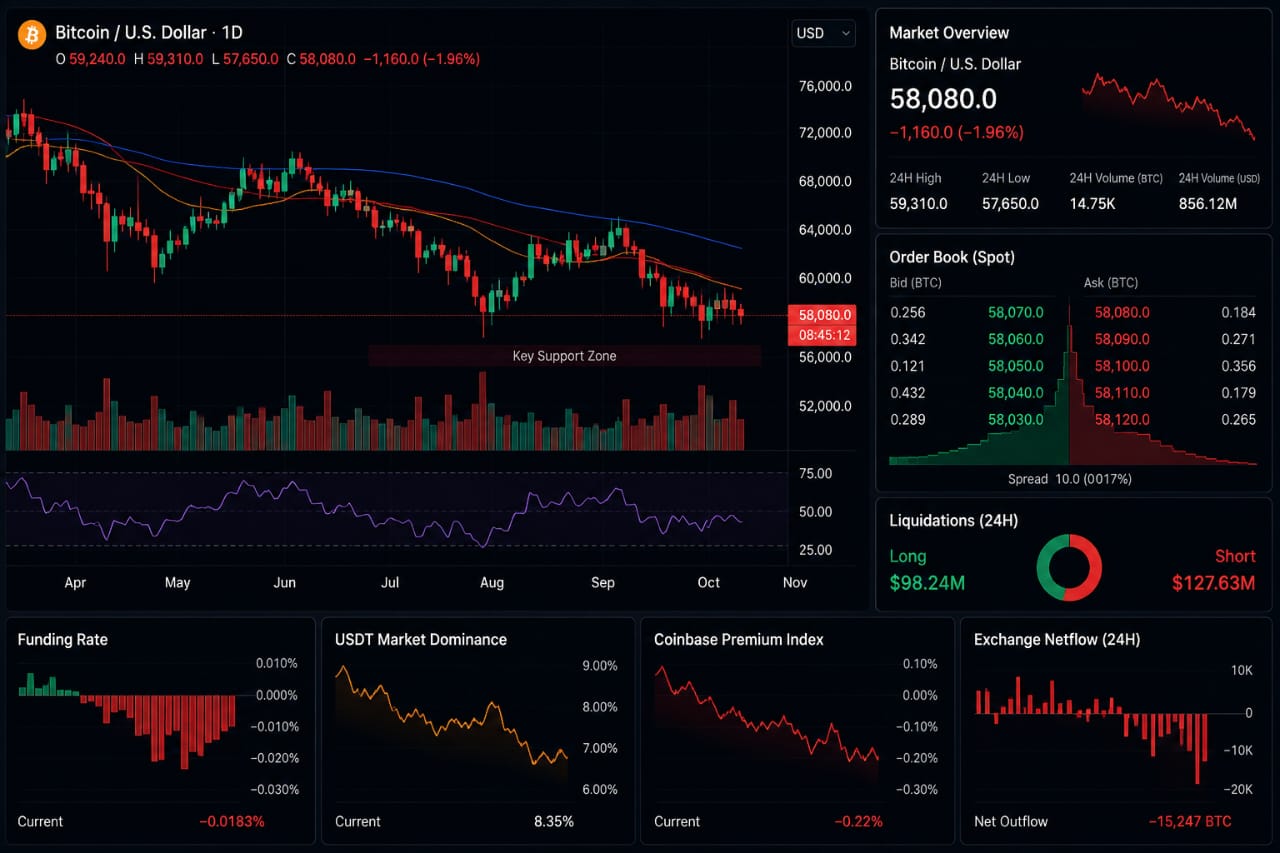
Record weakness in U.S. Bitcoin demand is raising concerns about potential market volatility. Recent data shows that buying interest from U.S. investors has fallen to some of the lowest levels seen in recent months, even as Bitcoin remains near key price levels. Lower demand from a major market like the United States can reduce liquidity and make Bitcoin more vulnerable to sharp price swings. Analysts suggest that if institutional and retail demand does not recover, Bitcoin could face increased downside pressure. However, some investors view the slowdown as a temporary pause rather than a long-term trend, especially with continued interest in Bitcoin ETFs and broader crypto adoption. Overall, weakening U.S. demand is being closely monitored as a potential signal of higher volatility ahead in the cryptocurrency market.

Bitcoin is facing renewed uncertainty as demand from U.S. investors shows signs of significant weakness, raising concerns about the cryptocurrency’s near-term price outlook. While Bitcoin continues to hold its position as the world's largest digital asset, recent market indicators suggest that investor sentiment in the United States has cooled considerably. This shift is drawing attention from traders, analysts, and institutional investors who view American demand as a crucial driver of Bitcoin price momentum.
As market participants navigate changing macroeconomic conditions, declining buying activity could create an environment where volatility increases and price swings become more aggressive.
Weak U.S. Bitcoin Demand Raises Red Flags
The United States remains one of the most influential markets in the cryptocurrency ecosystem. American institutional investors, crypto funds, retail traders, and Bitcoin ETF participants collectively contribute a significant portion of global Bitcoin trading volume.
Recent market data indicates that buying pressure from U.S.-based investors has weakened considerably. This trend has become visible through various on-chain metrics and exchange indicators that track investor activity. Reduced demand often signals a more cautious approach among investors, particularly when economic uncertainty and changing monetary policies dominate financial markets.
A slowdown in Bitcoin accumulation may not immediately trigger a price decline, but it can reduce market support during periods of increased selling pressure.
Why Bitcoin Market Volatility Could Increase
Market volatility often rises when demand weakens while uncertainty remains high. In Bitcoin’s case, lower buying activity means fewer market participants are willing to absorb selling pressure when prices fall.
This creates conditions where sudden price movements can become more pronounced. If large holders decide to take profits or institutions reduce exposure, the absence of strong buying demand may amplify downward moves.
At the same time, leveraged traders continue to play a major role in crypto markets. Significant liquidation clusters below key support levels could accelerate volatility and trigger rapid market reactions.
Bitcoin ETF Flows Remain Under Close Watch
The introduction of spot Bitcoin ETFs transformed the cryptocurrency landscape by providing traditional investors with easier access to digital assets. However, ETF inflows and outflows have become one of the most important indicators of market sentiment.
When ETF inflows remain strong, they often provide support for Bitcoin prices by creating consistent buying pressure. Conversely, declining inflows or rising outflows can signal weakening confidence among institutional investors.
Analysts are closely monitoring ETF activity as a potential indicator of Bitcoin's next major trend. Continued weakness in demand could keep prices under pressure in the coming weeks.
Macro Factors Continue to Influence Crypto Markets
Bitcoin no longer trades in isolation from traditional financial markets. Factors such as Federal Reserve interest rate decisions, inflation data, economic growth forecasts, and global liquidity conditions increasingly impact cryptocurrency valuations.
Higher interest rates generally make risk assets less attractive, encouraging investors to shift capital toward safer investments. If economic uncertainty persists, Bitcoin and other cryptocurrencies could experience additional volatility.
On the other hand, any signs of monetary easing or improving economic conditions may help restore investor confidence and reignite demand.
Long-Term Bitcoin Outlook Remains Intact
Despite short-term concerns, many industry experts remain optimistic about Bitcoin’s long-term prospects. Growing institutional adoption, expanding blockchain infrastructure, increasing corporate interest, and broader acceptance of digital assets continue to support the bullish case for Bitcoin.
Historically, periods of weak demand and market consolidation have often been followed by new growth cycles. However, investors should recognize that volatility remains an inherent characteristic of the cryptocurrency market.
Conclusion
Record weakness in U.S. Bitcoin demand is becoming an important signal for the broader cryptocurrency market. While the long-term fundamentals of Bitcoin remain strong, reduced investor participation could increase market volatility and create short-term challenges. Traders and investors should closely monitor ETF flows, macroeconomic developments, on-chain activity, and key technical support levels as Bitcoin navigates this critical phase.
Coingroww Disclaimer: Cryptocurrency investments are subject to market risks and high volatility. The information provided in this article is intended for educational purposes only and should not be interpreted as financial advice. Readers are encouraged to perform independent research and consult financial professionals before investing in digital assets.