
Visa Predicts Stablecoins Will Transform AI Agent Economy and Digital Payments
Visa believes stablecoins will become the core payment infrastructure for the emerging AI agent economy, enabling fast, secure, and low-cost digital transactions. As AI-powered agents begin handling tasks such as online purchases, subscriptions, and cross-border payments, blockchain-based stablecoins could support seamless automation. The development highlights the growing convergence of artificial intelligence, Web3, and digital finance, with stablecoins expected to play a major role in the future of global payments.
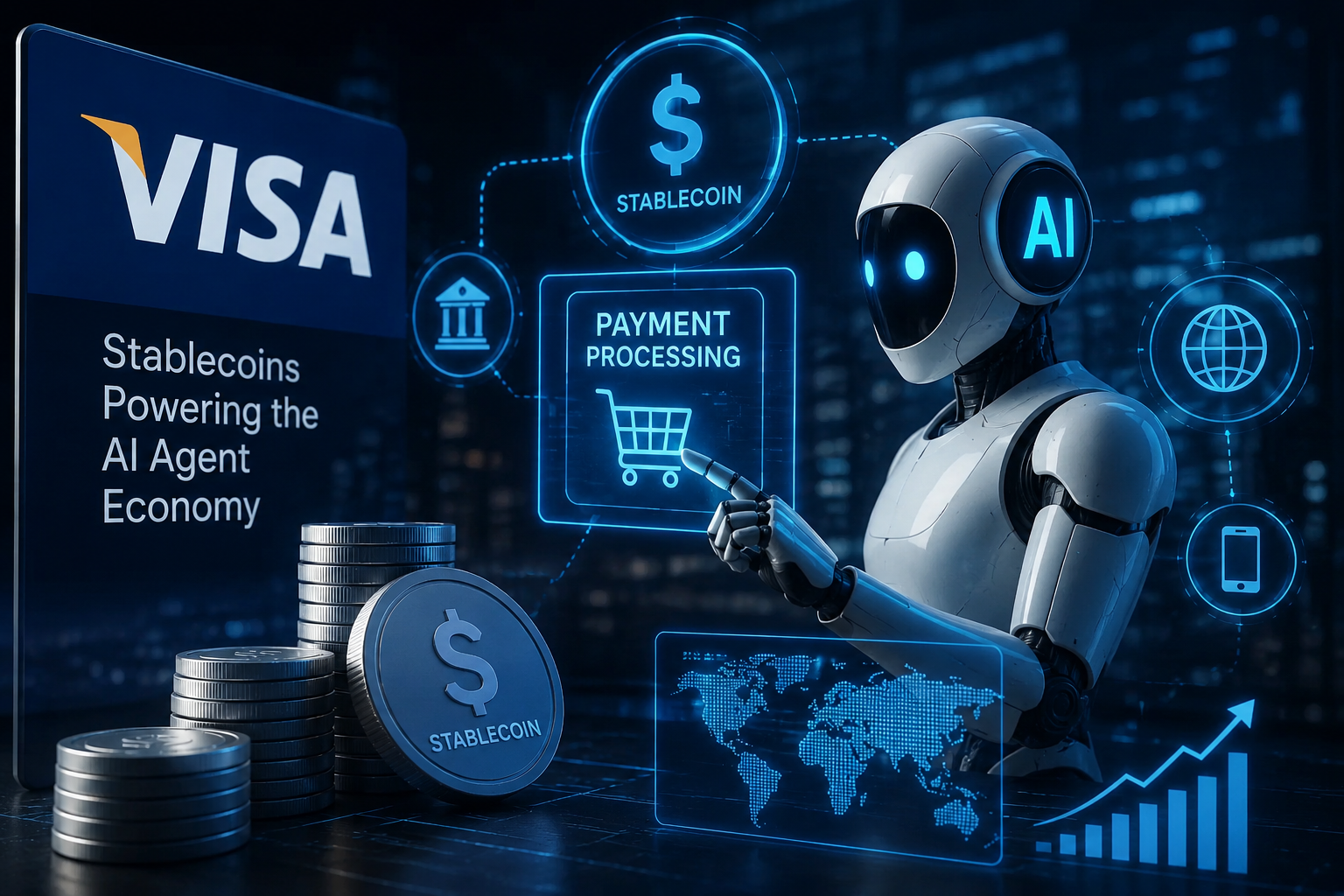
The future of digital payments may be powered by artificial intelligence and stablecoins, according to global payments giant Visa. As AI agents become more capable of handling financial tasks on behalf of users, Visa believes that stablecoins will serve as the preferred payment infrastructure, enabling faster, cheaper, and more secure transactions across the Web3 ecosystem.
The company's latest outlook highlights how AI-powered software could soon manage everything from online shopping and subscriptions to business payments and cross-border transfers. For this vision to become reality, Visa says programmable digital assets like stablecoins will play a central role in the next generation of financial services.
Stablecoins Could Become the Payment Layer for AI Agents
Artificial intelligence is evolving beyond chatbots and virtual assistants. The next phase involves AI agents—autonomous software capable of making decisions, completing tasks, and executing payments without constant human input.
Visa believes these AI agents will require a payment system that is available 24/7, settles transactions instantly, and operates across global markets. Traditional banking systems often involve delays, limited operating hours, and high international transfer costs.
Stablecoins address many of these challenges by providing blockchain-based digital currencies that maintain a stable value while enabling near-instant settlement. This combination makes them well suited for AI-driven financial activity.
Why Visa Is Betting on Stablecoins
Visa has spent the past several years exploring blockchain technology and digital assets. The company has already tested stablecoin settlement programs and partnered with crypto infrastructure providers to expand blockchain-based payment capabilities.
According to Visa, stablecoins offer several advantages for the AI economy:
- Instant global payments
- Lower transaction fees
- Programmable smart contract functionality
- 24/7 payment availability
- Improved cross-border settlements
- Greater transparency through blockchain networks
As businesses increasingly adopt AI-powered automation, these features could help simplify both consumer and enterprise payments.
AI Agents May Change the Way People Spend Money
Rather than manually completing every online purchase, consumers could soon authorize AI agents to handle financial decisions based on predefined preferences.
For example, an AI agent may:
- Renew subscriptions automatically
- Book flights and hotels at the best available price
- Purchase digital services
- Pay utility bills
- Manage recurring business expenses
- Execute crypto-based transactions
Stablecoins would allow these AI systems to move funds instantly while reducing payment friction across different countries and digital platforms.
Web3 Infrastructure Continues to Expand
The growing interest in Web3, decentralized finance (DeFi), and tokenized assets is creating demand for blockchain-native payment systems.
Stablecoins have already become one of the largest sectors within the cryptocurrency industry, processing billions of dollars in daily transaction volume. As more financial institutions embrace blockchain technology, experts expect stablecoin adoption to accelerate further.
Visa believes combining AI with blockchain infrastructure could unlock entirely new business models, including machine-to-machine payments, autonomous commerce, and decentralized financial services.
Institutional Adoption Strengthens the Stablecoin Market
Major financial companies are increasingly entering the stablecoin ecosystem. Banks, payment processors, fintech firms, and crypto companies are investing heavily in blockchain payment infrastructure.
This institutional interest is helping improve regulatory clarity, security standards, and real-world adoption of digital assets.
Industry analysts believe stablecoins could become a bridge between traditional finance and decentralized finance, allowing businesses to access faster settlement while maintaining price stability.
Challenges Still Remain
Despite growing momentum, several obstacles remain before AI-powered stablecoin payments become mainstream.
Regulatory frameworks continue to evolve across different countries, and policymakers are working on rules covering digital assets, consumer protection, and financial compliance.
Cybersecurity, wallet security, identity verification, and responsible AI governance will also play an important role in ensuring safe adoption.
However, many industry experts believe these challenges can be addressed through collaboration between regulators, financial institutions, and blockchain developers.
What This Means for the Crypto Industry
Visa's latest comments highlight the increasing convergence of artificial intelligence, blockchain technology, and digital payments. Rather than viewing cryptocurrencies solely as investment assets, major payment companies are increasingly focusing on their practical use in everyday commerce.
If AI agents become widely adopted over the coming years, stablecoins could emerge as one of the most important payment technologies supporting autonomous digital economies.
For the crypto market, this represents another strong signal that blockchain infrastructure is gradually moving into mainstream financial services.
Final Thoughts
Visa's vision suggests that stablecoins may become the backbone of the AI agent economy by enabling fast, secure, and programmable digital payments. As AI continues to automate financial decisions and Web3 infrastructure expands globally, stablecoins could play a critical role in reshaping how individuals and businesses transact online.
While regulatory developments and security considerations remain important, the combination of AI, blockchain, stablecoins, and digital payments could define the next phase of innovation in the global financial system.