Chainlink CCIP 2.0 Launches: Why Institutional Tokenized Assets Could Become More Interconnected
Chainlink has launched CCIP 2.0 to help institutions move tokenized assets across multiple blockchains. The upgrade could become an important piece of infrastructure for the growing institutional RWA market.
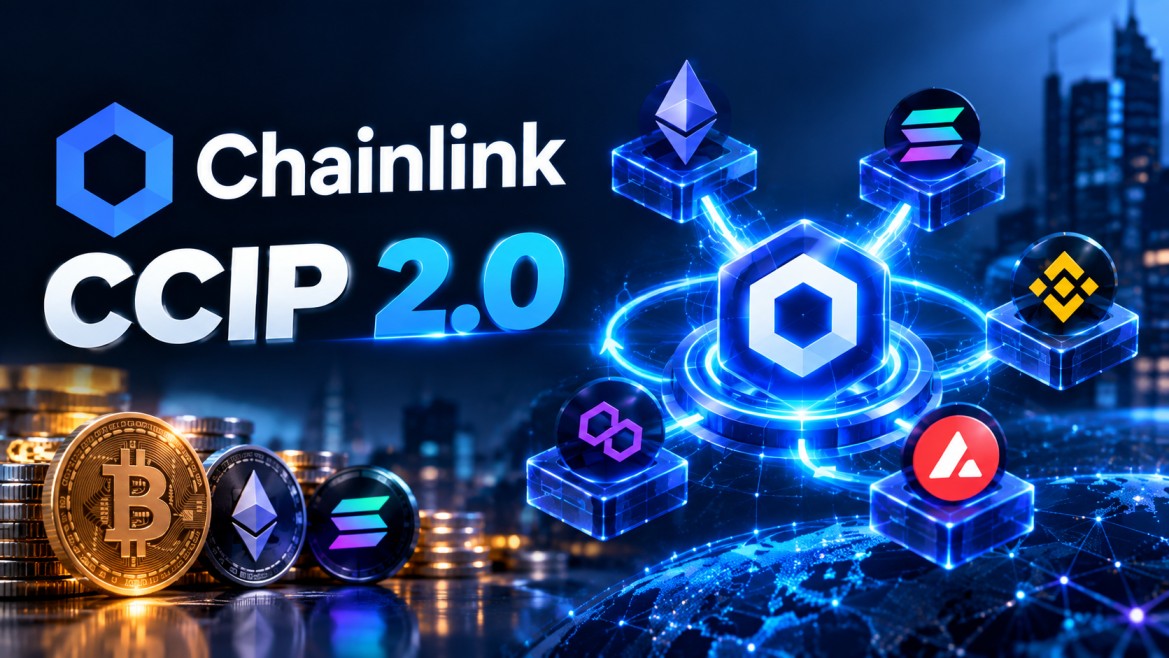
The Chainlink CCIP 2.0 launch is putting blockchain interoperability back into focus as financial institutions increasingly explore tokenized assets.
Chainlink says its upgraded Cross-Chain Interoperability Protocol is designed to help institutions distribute digital assets across different blockchain networks without completely rebuilding their existing technology infrastructure.
The development comes as tokenized funds, securities and other real-world assets continue moving toward multiple blockchain environments.
What Is Chainlink CCIP 2.0?
CCIP stands for Cross-Chain Interoperability Protocol. Its core purpose is to allow applications and digital assets to communicate across different blockchain networks.
This becomes increasingly important as the tokenization market expands.
Instead of having every financial institution build a completely separate system for each blockchain, interoperability infrastructure can provide a standardized way to move information and assets between networks.
CCIP 2.0 is designed specifically with institutional requirements such as security, compliance and scalability in mind.
Why Does Cross-Chain Tokenization Matter?
Tokenization is no longer limited to one type of blockchain.
Financial institutions are experimenting with tokenized funds, bonds, equities, private-market assets and other financial instruments. Different institutions may choose different blockchain networks depending on their technical and regulatory requirements.
That creates a major interoperability challenge.
If tokenized assets remain trapped inside isolated blockchain ecosystems, their usefulness can be limited.
Cross-chain infrastructure could allow these assets to interact with applications and markets operating on other networks.
Institutions Are Joining the Infrastructure Race
Chainlink's CCIP 2.0 launch includes support and participation from companies and financial institutions across technology and traditional finance.
The ecosystem mentioned alongside the launch includes Amazon Web Services, ANZ Bank, Deutsche Börse Group's Crypto Finance, Fidelity International, Google Cloud, SBI Digital Markets, Sygnum and other infrastructure providers.
This is significant because institutional blockchain adoption increasingly depends on infrastructure that can connect existing financial systems with public and private blockchain networks.
Could CCIP Help the RWA Market Grow?
The real-world asset market needs more than token creation.
Tokenized assets also require custody, compliance, settlement, liquidity and interoperability.
A cross-chain system could help connect tokenized assets with different financial applications and blockchain-based markets.
For example, a tokenized financial product issued on one network could potentially become usable within applications operating on another compatible network.
This could make blockchain-based financial markets less fragmented over time.
What Does This Mean for LINK?
Chainlink's native token, LINK, is closely connected to the broader Chainlink infrastructure ecosystem.
However, the growth of CCIP does not automatically mean that LINK's value must increase.
The more important development to watch is whether institutions actually adopt Chainlink's infrastructure at meaningful scale and whether cross-chain tokenization becomes a major part of financial markets.
The Bigger Blockchain Trend
CCIP 2.0 highlights a broader shift happening across crypto.
The industry is moving from isolated blockchain networks toward an interconnected digital-asset infrastructure.
Stablecoins, tokenized securities, RWA platforms and institutional financial applications will all require reliable ways to communicate and transfer value across different systems.
If that infrastructure develops successfully, interoperability could become one of the most important layers of the tokenized financial economy.
Final Thoughts
Chainlink CCIP 2.0 arrives at a time when institutional blockchain adoption is expanding beyond experimentation.
The next stage of RWA growth may depend not only on how many assets are tokenized, but also on whether those assets can move efficiently between different blockchain ecosystems.
For Chainlink, CCIP 2.0 puts interoperability at the center of that challenge and gives the project another important role in the rapidly developing institutional digital-asset market.
Disclaimer: This article is for informational and educational purposes only and does not constitute financial or investment advice. Crypto assets and blockchain infrastructure involve market, regulatory, technology and liquidity risks. Always conduct your own research before making any investment decision.