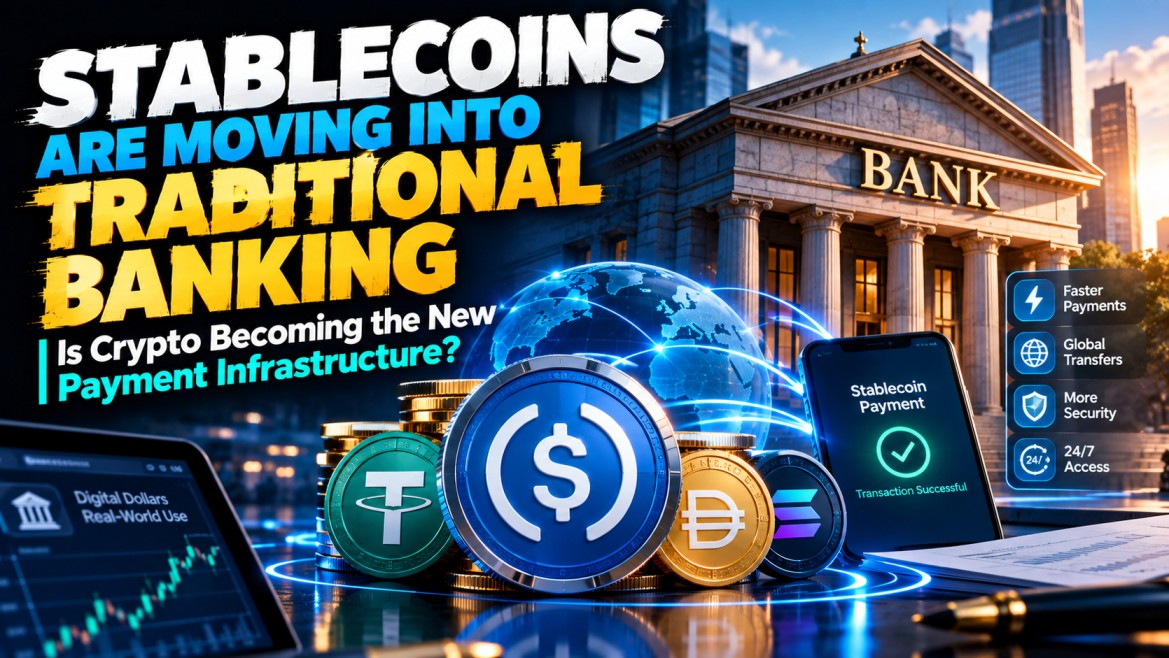
Stablecoins Are Moving Into Traditional Banking: Is Crypto Becoming the New Payment Infrastructure?
Stablecoins are moving deeper into traditional finance as regulated infrastructure expands. From corporate payments to banking services, dollar-backed digital assets are increasingly being positioned as a bridge between crypto and the global financial system.
Stablecoins Are Entering the Banking System
Stablecoins have evolved far beyond their original role as a way to move money between crypto exchanges.
Dollar-backed digital assets are increasingly being used for payments, settlement, treasury management and cross-border transfers. Their ability to operate 24/7 on blockchain networks is attracting attention from financial institutions and large businesses.
The latest development comes as stablecoin infrastructure provider Bastion received conditional approval for a national trust bank charter in the United States. The approval could allow the company to work more closely with banks and financial institutions while providing stablecoin-related infrastructure.
Why Are Banks Interested in Stablecoins?
Traditional payment systems often depend on multiple intermediaries and operating hours.
Stablecoins work differently.
A company can potentially transfer a dollar-backed digital asset at any time using blockchain infrastructure. This could make certain international payments and settlement processes faster and more programmable.
For businesses operating across different countries, stablecoins could also provide another way to move digital dollars without relying entirely on traditional banking rails.
This is one reason stablecoin infrastructure is becoming an important part of the broader crypto finance story.
Stablecoins Could Become More Than Crypto Trading Tools
The next stage of stablecoin adoption may have little to do with cryptocurrency trading.
Businesses could use stablecoins for supplier payments, employee payouts, treasury transfers and international settlements.
Financial institutions could also use them to build digital payment products while keeping traditional currencies at the center of the system.
This creates a potentially important bridge between traditional finance and blockchain technology.
Recent industry developments also show growing interest in using stablecoins as the settlement layer for digital payments and autonomous financial applications
Regulation Is Becoming a Major Factor
The growth of stablecoins also depends heavily on regulation.
Banks and large financial companies need clear rules around reserves, custody, compliance and customer protection before they can integrate digital assets into mainstream financial products.
Recent regulatory developments suggest that stablecoin infrastructure is receiving increasing attention from U.S. financial authorities.
For the industry, regulated infrastructure could help stablecoins move from crypto-native applications toward broader financial use cases.
What Could Happen Next?
The competition may increasingly shift from which stablecoin has the largest crypto market share to which companies can provide the infrastructure behind digital dollars.
Payment companies, banks, crypto firms and fintech platforms are all exploring different approaches.
If stablecoins continue gaining regulatory acceptance, they could eventually become an important settlement layer for global digital commerce.
That would represent a significant change in the crypto industry.
Final Thoughts
Stablecoins are increasingly becoming a connection point between cryptocurrency and traditional finance.
Their ability to combine digital-dollar stability with blockchain-based settlement makes them attractive for payments, treasury operations and financial infrastructure.
The banking sector's growing involvement could therefore become one of the most important developments shaping the next phase of crypto adoption.
Disclaimer: This article is for informational and educational purposes only and does not constitute financial or investment advice. Stablecoins and digital assets involve market, regulatory, technological and issuer-related risks.