
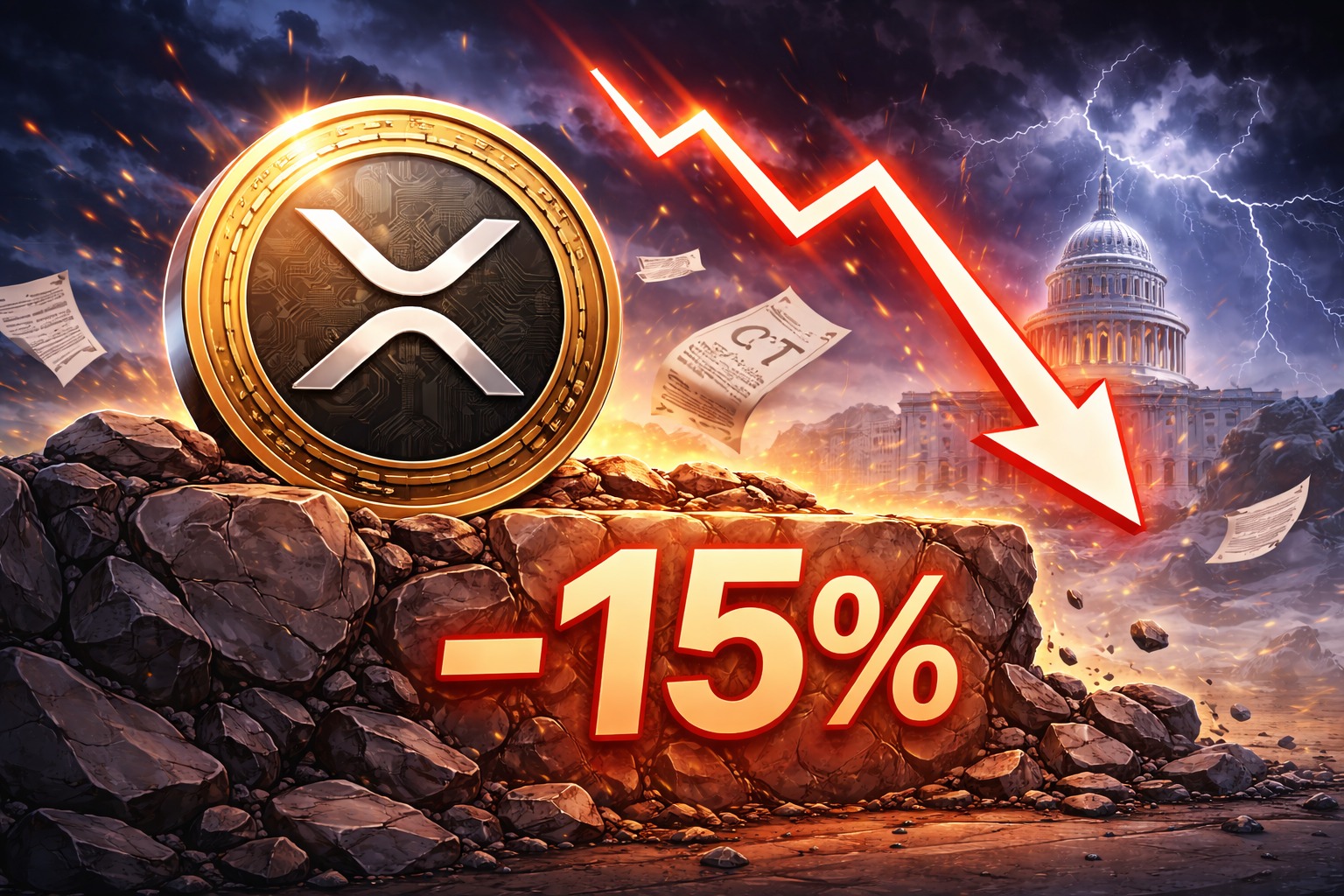
XRP Could Drop 15% Amid Falling CLARITY Act Expectations
XRP is facing bearish pressure as declining odds of the CLARITY Act passing have weakened market sentiment. Analysts warn that a breakdown in key support levels could trigger a potential 10–15% price drop.
Key Points
XRP faces downside risk as CLARITY Act approval odds decline.
Bearish technical signals suggest a possible 10–15% correction.
Regulatory sentiment remains a major driver of XRP price action.
XRP is facing renewed downside pressure as market sentiment weakens following a drop in the probability of the CLARITY Act passing, according to prediction data from Kalshi. The shift in expectations has sparked concerns among traders, with analysts warning of a potential 15% price correction in the near term.
Regulatory Uncertainty Weighs on XRP
The CLARITY Act, a proposed regulatory framework aimed at providing clearer guidelines for digital assets in the United States, has been closely watched by the crypto market—especially XRP, which has historically been sensitive to regulatory developments.
Recent data from Kalshi suggests declining confidence in the bill’s approval, triggering bearish sentiment. Investors had previously priced in optimism around regulatory clarity, and the reversal is now impacting XRP’s momentum.
Bearish Technical Signals Emerge
From a technical perspective, XRP is showing signs of weakness:
The price is struggling to hold above key support levels
Lower highs indicate fading bullish strength
Increased selling pressure is visible across short-term charts
Analysts suggest that if XRP fails to maintain its current support zone, it could drop by 10–15%, potentially testing lower levels in the coming sessions.
Market Sentiment Turns Cautious
The broader crypto market is also contributing to XRP’s uncertainty. With traders becoming more cautious amid regulatory doubts, risk appetite has declined.
XRP, often driven by legal and regulatory narratives, is particularly vulnerable to such sentiment shifts. The reduced likelihood of the CLARITY Act passing has removed a key bullish catalyst.
Key Levels to Watch
Immediate Support: Near-term levels that must hold to avoid further downside
Resistance Zone: Previous highs where selling pressure has increased
Breakdown Risk: A confirmed drop below support could accelerate losses
Traders are now closely monitoring these levels as XRP navigates a critical phase.
Outlook: Volatility Ahead
While a 15% crash is not guaranteed, the current setup suggests heightened volatility. If regulatory sentiment continues to weaken, XRP could face sustained downward pressure.
On the other hand, any positive developments regarding crypto regulation could quickly reverse sentiment and support a recovery.
FAQs
1. Why is XRP at risk of a price drop?
XRP is under pressure due to declining confidence in the CLARITY Act, which was expected to bring regulatory clarity.
2. What is the CLARITY Act?
It is a proposed U.S. bill aimed at defining clear rules for cryptocurrencies and digital assets.
3. How much can XRP fall?
Analysts suggest a potential downside of around 10–15% if key support levels break.
4. Can XRP recover from this situation?
Yes, positive regulatory developments or improved market sentiment could trigger a rebound.
Disclaimer: This article is for informational purposes only and does not constitute financial advice. Cryptocurrency markets are highly volatile; always conduct your own research before investing.