7 Major Crypto Projects Back SEC’s ‘Regulation Crypto Assets’ Framework: What It Means for XRP, ADA and LINK
Ripple has supported the SEC’s proposed Regulation Crypto Assets framework, while six blockchain organizations—Cardano, Chainlink, Hedera, Stellar, Aptos and Avalanche—are seeking stronger rule-based clarity for digital commodities. The proposals could help eligible crypto businesses navigate US regulations, but final adoption and the impact on individual tokens remain uncertain.
Crypto Industry Pushes for Clearer SEC Rules
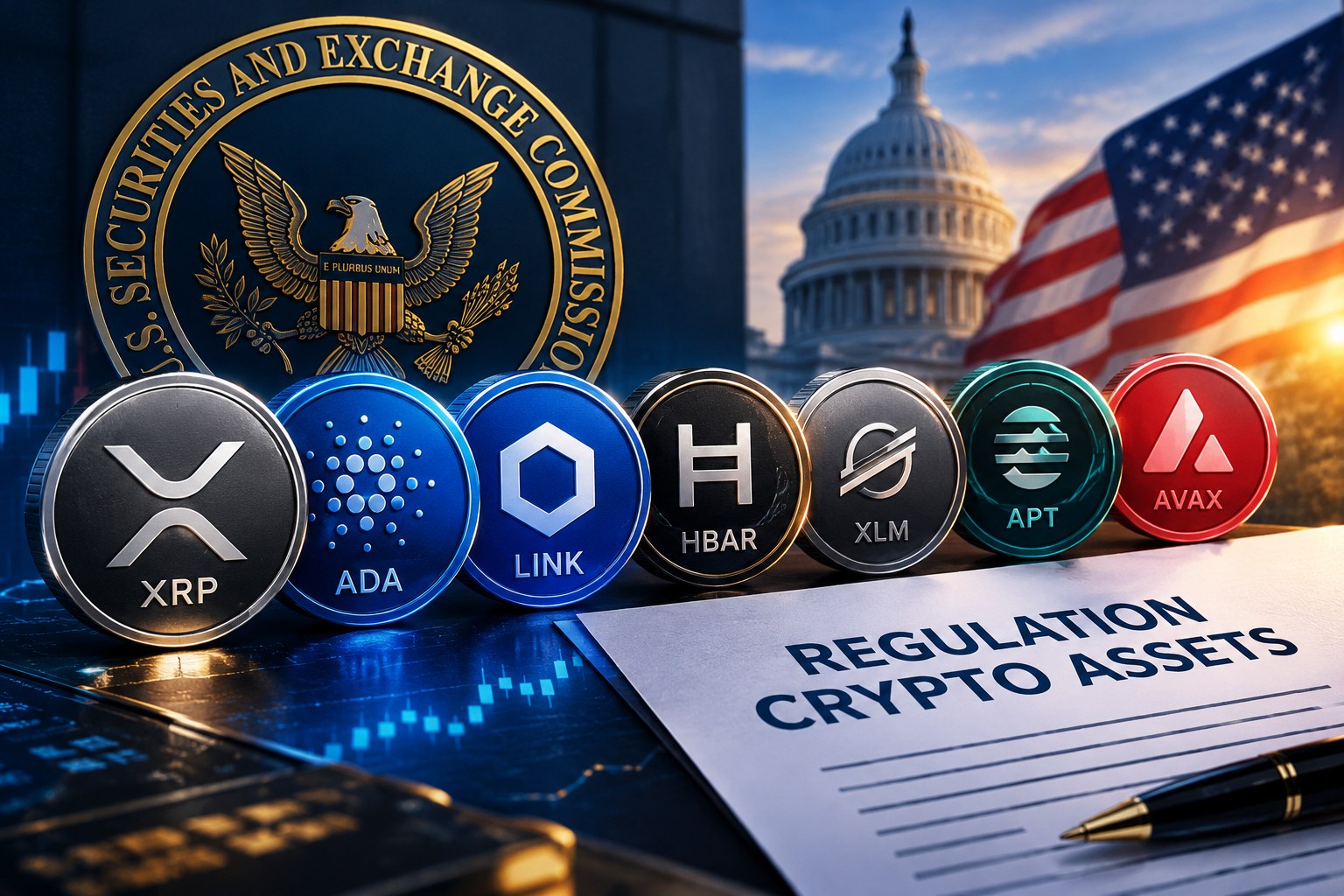
The US cryptocurrency industry is stepping up its push for clearer digital asset regulations, with major blockchain projects supporting efforts to establish a more predictable framework for crypto assets. Ripple has backed the US Securities and Exchange Commission’s (SEC) proposed Regulation Crypto Assets framework, while Cardano, Chainlink, Hedera, Stellar, Aptos and Avalanche are seeking stronger regulatory clarity around digital commodities.
The latest development highlights a central issue for the crypto industry: how regulators should distinguish between digital assets that function as part of blockchain networks and investment contracts that fall under securities laws.
The SEC proposed its Regulation Crypto Assets framework in August 2026, aiming to create a tailored system for certain fundraising activities involving crypto assets. The proposal could introduce new exemptions and a conditional safe harbor, potentially changing how eligible crypto projects raise capital in the United States. However, the rules remain subject to the SEC’s rulemaking process. "Source: SEC" (https://www.sec.gov/newsroom/press-releases/2026-76-sec-proposes-new-regulation-crypto-assets)
Why Ripple, Cardano and Other Blockchain Projects Support Regulatory Clarity
Ripple Chief Legal Officer Stuart Alderoty has expressed support for finalizing the proposed framework, arguing that the industry needs clearer and more consistent rules. Separately, Chainlink Labs, the Cardano Foundation, Hedera, the Stellar Development Foundation, Aptos Labs and Ava Labs have called on the SEC to strengthen its proposed treatment of digital commodities.
The six blockchain organizations want the definition of a digital commodity, along with its non-security status under the relevant framework, to be incorporated into the operative text of the proposed rules rather than remaining only in the proposal’s explanatory preamble.
This distinction matters. Language included directly in a final rule can provide a more durable regulatory foundation than explanatory guidance alone, although the exact legal consequences would depend on the wording of the adopted rules.
For blockchain developers, clearer classifications could help reduce uncertainty when designing networks, distributing tokens and planning fundraising activities. It could also help businesses assess their compliance obligations before expanding into the US market.
What Is the SEC’s Regulation Crypto Assets Proposal?
The SEC introduced Regulation Crypto Assets on August 18, 2026, as part of its broader effort to clarify how securities laws apply to certain crypto-related activities.
The proposal includes two potential fundraising exemptions:
- Startup exemption: Eligible offerings of up to $5 million over a four-year period.
- Fundraising exemption: Eligible offerings of up to $75 million during a 12-month period, subject to specified conditions and disclosure requirements.
The proposal also includes a conditional safe harbor related to the definition of an investment contract. These provisions are intended to create more tailored pathways for eligible crypto businesses while retaining important investor protections, including applicable antifraud and antimanipulation requirements.
Importantly, these are proposed provisions, not blanket exemptions for every token or crypto company. Their availability would depend on the final rules and whether an issuer meets the relevant conditions.
Digital Commodities and the Securities Debate
One of the biggest questions in US crypto regulation is whether a particular token should be treated as a security, a digital commodity or another type of crypto asset.
In March 2026, the SEC issued an interpretation outlining five categories: digital commodities, digital collectibles, digital tools, stablecoins and digital securities. The interpretation explained that an asset that is not itself a security may still be involved in an investment contract that qualifies as a security.
That distinction is particularly important for blockchain projects. A token’s classification does not automatically settle the legal status of every transaction involving it. The nature of an offering, the rights attached to the asset and the surrounding circumstances can all matter.
The latest industry push seeks to make the treatment of qualifying digital commodities more explicit and durable within the proposed regulatory framework.
What This Could Mean for XRP, ADA, LINK, HBAR, XLM, APT and AVAX
The regulatory discussion involves seven prominent crypto assets associated with the projects named in the headline.
- XRP (Ripple): Greater clarity around investment contracts could help businesses assess the regulatory requirements surrounding XRP-related offerings and transactions.
- ADA (Cardano): More predictable rules could support ecosystem development and help projects evaluate their compliance obligations.
- LINK (Chainlink): A clearer digital commodity framework could benefit businesses building blockchain applications that rely on external data services.
- HBAR (Hedera): Greater certainty could help developers and enterprises plan blockchain deployments and related commercial activities.
- XLM (Stellar): Clearer classifications could support businesses developing blockchain-based payments and financial services.
- APT (Aptos): More predictable rules could help developers assess token-related fundraising and ecosystem expansion plans.
- AVAX (Avalanche): A clearer framework could help projects building decentralized applications and blockchain infrastructure navigate US regulatory requirements.
These are potential industry implications, not guarantees of price appreciation or changes in the legal status of every token. Regulatory developments alone do not determine whether an asset will perform well in the market.
Will the New SEC Rules Be Bullish for the Crypto Market?
Clearer crypto regulations could be constructive for the broader digital asset industry if they reduce uncertainty and allow compliant businesses to plan for long-term growth. Institutional investors and traditional financial firms may also find a more predictable regulatory environment easier to evaluate.
However, the market impact will depend on the final framework, its implementation and how regulators apply the rules in practice.
For XRP, ADA, LINK and other altcoins, the development may influence investor sentiment as traders assess the potential implications for adoption, fundraising and US market access. Nevertheless, positive regulatory headlines do not necessarily translate into immediate price gains.
Investors should also consider broader market conditions, liquidity, Bitcoin’s price direction and macroeconomic developments when evaluating individual crypto assets.
What Happens Next?
The SEC will need to review feedback and determine whether to adopt the proposed framework, revise it or make other changes. The public comment deadline listed by the commission was October 20, 2026.
The central question is whether the final rules will incorporate a clear definition of digital commodities into binding regulatory text and establish practical conditions for eligible crypto fundraising.
If the final framework provides greater legal certainty while preserving investor protections, it could become an important development for the US blockchain industry. Until the rules are finalized, however, the precise benefits for individual projects remain uncertain.
CoinGroww Analysis
The latest push from Ripple and major blockchain organizations reflects a broader shift in the crypto industry’s regulatory priorities. Companies are seeking more than general assurances: they want clear definitions and rules that can guide business decisions over the long term.
For the market, the significance of Regulation Crypto Assets will depend less on the headline itself and more on the final wording, the eligibility requirements and how consistently the framework is applied.
Disclaimer: This article is for informational and educational purposes only and does not constitute financial or investment advice. Cryptocurrency markets are volatile, and regulatory developments do not guarantee price movements. Always conduct your own research before making investment decisions.