
White House to Meet Banks and Crypto Firms to Resolve US Crypto Legislation Deadlock
The White House will convene a high-stakes summit on February 2, 2026, to broker a compromise between major banks and crypto firms over the stalled CLARITY Act. The deadlock centers on "stablecoin rewards," as banks warn that crypto interest products could trigger a $500 billion exodus of traditional deposits by 2028.
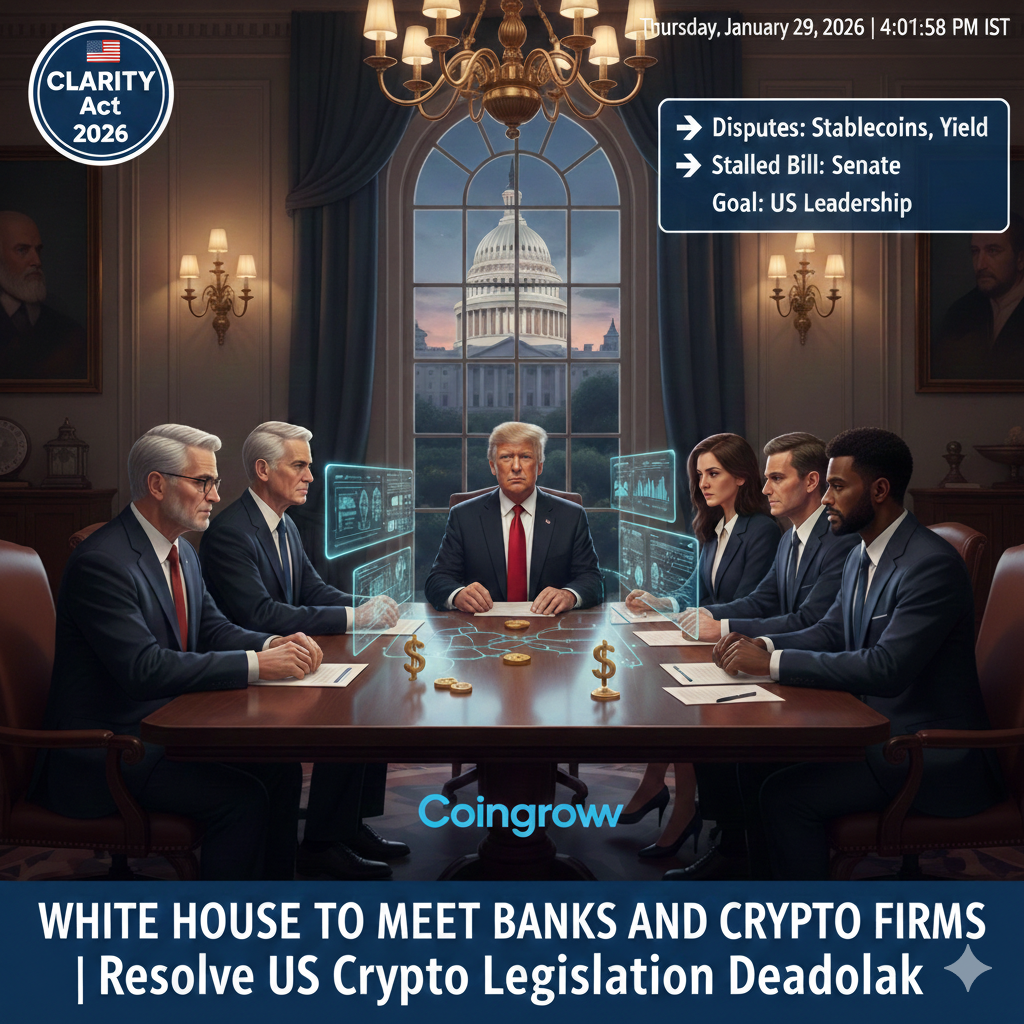
Washington, D.C.- The White House is set to host a high-level meeting with major banks, cryptocurrency companies, and industry trade groups next week in an effort to break the ongoing deadlock over US digital asset legislation. The move signals growing urgency from policymakers to establish a clear regulatory framework as stablecoins, tokenized assets, and blockchain finance continue to expand rapidly.
The meeting, organized by the White House crypto policy team, will bring together representatives from traditional financial institutions, crypto exchanges, stablecoin issuers, and industry advocacy groups to address disagreements that have stalled progress on key crypto bills in Congress.
Key Highlights
• The White House will mediate talks between banks and crypto firms over stalled US crypto laws
• Disputes center around stablecoins, yield products, and competition with bank deposits
• House-passed legislation remains blocked in the Senate due to regulatory concerns
• Industry leaders see the meeting as critical to restoring US leadership in digital assets
• Analysts warn unchecked stablecoin growth could disrupt traditional banking liquidity
Why the White House Is Stepping In
US lawmakers have struggled for over a year to finalize comprehensive crypto regulations despite growing institutional adoption and rising competition from regions such as the European Union, Singapore, and the UAE. The House of Representatives passed a market structure bill in 2025, but it stalled in the Senate due to concerns raised by banking groups and regulators.
The White House is now attempting to bridge the divide by convening leaders from both sides to reach a workable compromise on digital asset oversight, particularly around stablecoin issuance, custody rules, and yield-generating products.
The Core Conflict Between Stablecoins and Banks
At the center of the dispute is how stablecoins, cryptocurrencies pegged to fiat currencies like the US dollar, should be regulated and whether issuers should be allowed to offer interest-bearing products.
Crypto firms argue that yield-bearing stablecoins enhance competition, improve financial inclusion, and modernize payment systems. Banks, however, warn such products could draw large volumes of deposits away from traditional institutions, potentially weakening lending capacity and financial stability.
Industry reports cited by Reuters suggest stablecoins could divert hundreds of billions of dollars from bank deposits by 2028 if current growth trends continue.
Who Will Attend the Meeting
The meeting is expected to include major US and international banks, leading crypto exchanges and stablecoin issuers, blockchain advocacy groups such as the Blockchain Association and the Digital Chamber, and senior policy advisors from financial regulatory agencies.
Summer Mersinger, CEO of the Blockchain Association, confirmed participation and said the group hopes the talks will help advance durable, bipartisan market structure legislation for the crypto industry.
Legislative Background
The stalled legislation aims to clarify which digital assets qualify as securities versus commodities, how stablecoin issuers should be licensed and supervised, consumer protection standards for crypto platforms, and custody and disclosure requirements for digital asset service providers.
Although the House approved its version of the bill, Senate Banking Committee members delayed further action due to unresolved concerns raised by regulators, consumer advocates, and the banking sector.
Why This Matters for Crypto Markets
Analysts say the outcome of these discussions could reshape the future of crypto regulation in the US and determine whether the country remains competitive in blockchain innovation.
Clear legislation could unlock institutional investment, accelerate tokenized asset adoption, reduce regulatory uncertainty for startups, improve consumer protections, and strengthen stablecoin infrastructure. Failure to reach consensus could push innovation offshore to more crypto-friendly jurisdictions.
Industry Reaction
Crypto executives have welcomed the White House’s intervention, calling it a positive step toward long-overdue regulatory clarity. One executive familiar with the talks said the meeting could mark a turning point for digital assets in the US.
Banking groups continue to stress the importance of maintaining financial stability and ensuring crypto products do not expose consumers to hidden risks.
What Comes Next
The meeting is expected to take place early next week, with lawmakers closely watching the outcome. If compromise language emerges, it could reopen Senate debate and unlock the first major US crypto legislation package, potentially reshaping stablecoin markets, exchanges, and institutional adoption across the blockchain ecosystem.
Disclaimer: This content is for informational purposes only and not financial, legal, or investment advice. Readers should do their own research before making decisions.