Ethereum for Beginners! What's New in 2026
Ethereum in 2026 is faster, cheaper, and more user-friendly, powered by smart contracts, staking, and Layer 2 scaling solutions. With lower gas fees and improved wallets, it has evolved from an experiment into core infrastructure for DeFi, NFTs, DAOs, and Web3 apps.
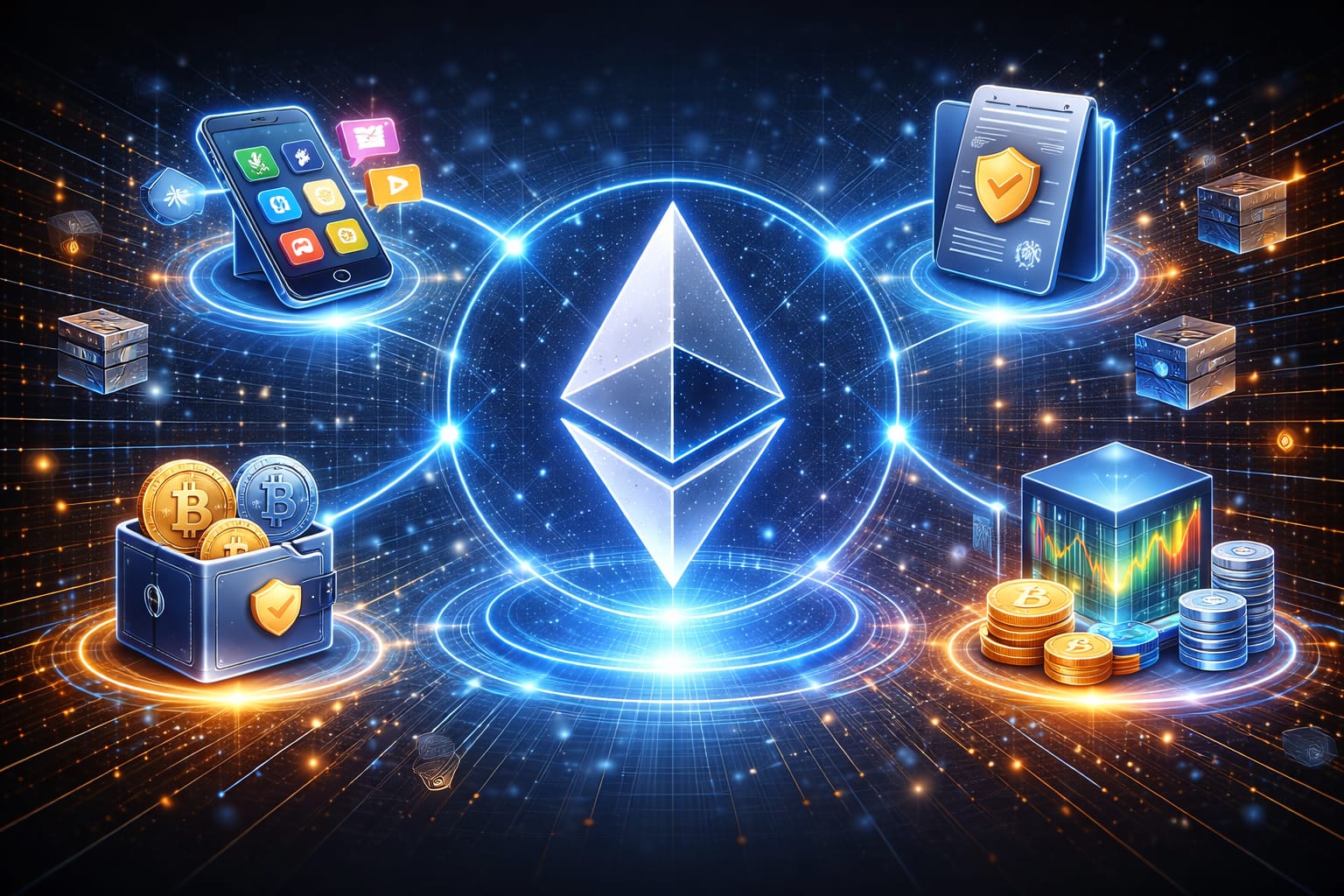
If you're trying to understand Ethereum and keep seeing terms like "smart contracts" and "gas fees" without anyone explaining them, you're in the right place. Let me break down what Ethereum is and what's changed in 2026.
What Is Ethereum, Really?
Ethereum is a blockchain,a digital ledger that records transactions. But unlike Bitcoin, which is mainly digital money, Ethereum is more like a global computer that anyone can use.
Think of it this way: Bitcoin is a calculator that does one thing well,transfers value. Ethereum is a smartphone that runs thousands of different apps, games, and financial services. All run on Ethereum's blockchain without needing companies or middlemen.
The currency powering Ethereum is called Ether (ETH). You need ETH to pay for transactions and use apps. It's like paying for gas to drive your car, which is why these are called "gas fees."
Smart Contracts: The Magic Behind It
Smart contracts are self-executing agreements written in code. When conditions are met, they automatically execute.
Example: "If Person A sends $100, automatically send concert tickets." No ticket company needed. No payment processor taking a cut. The code just runs.
You're probably using smart contracts if you've swapped tokens, bought NFTs, or used DeFi apps. You just didn't realize it.
What's Changed in 2026?
Gas Fees Are Way Lower
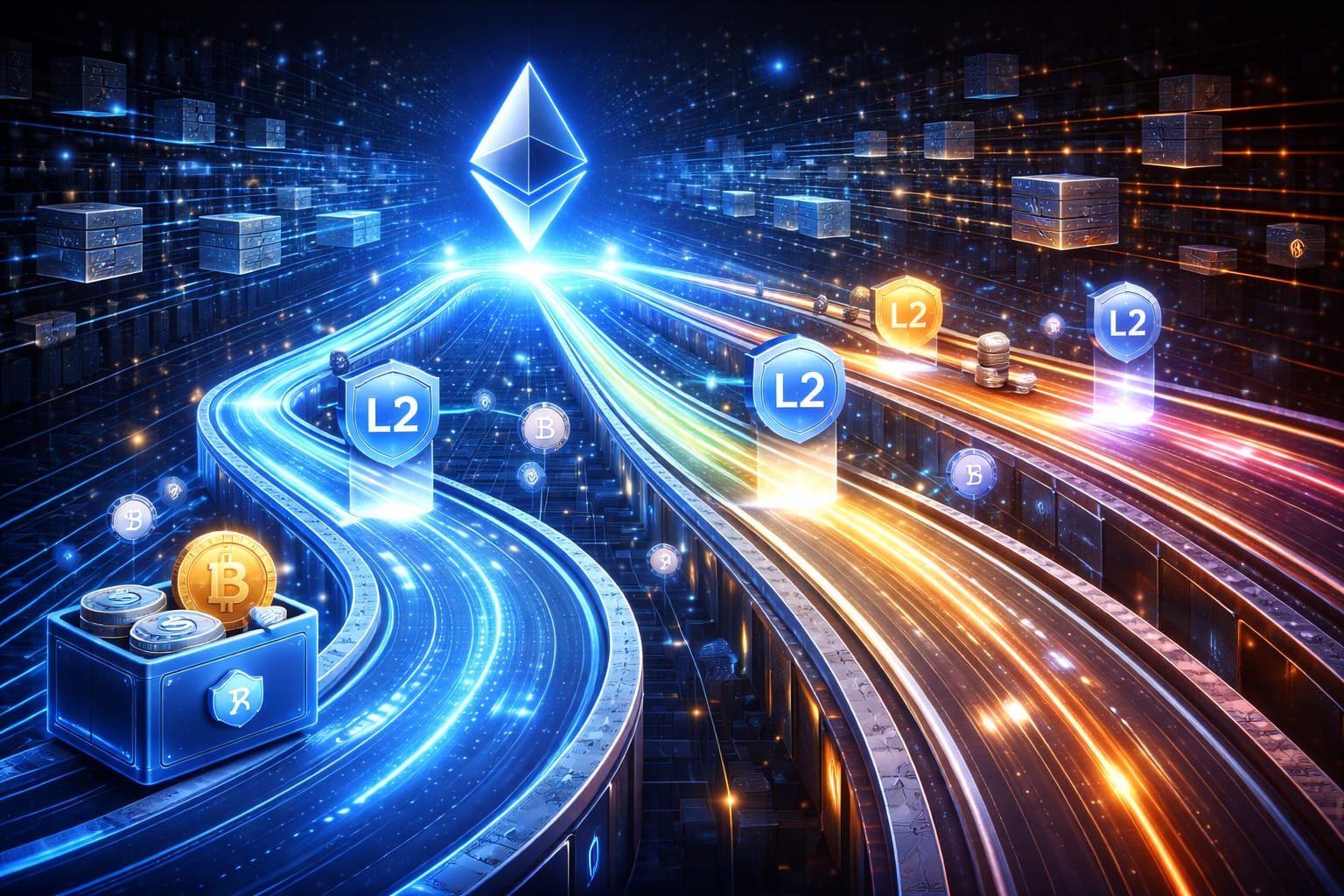
Remember $50+ transactions on Ethereum? Those days are mostly gone. Thanks to layer 2 solutions like Arbitrum, Optimism, and Base, transactions now cost pennies.
Layer 2s are express lanes built on Ethereum. They process transactions faster and cheaper, then settle back to the main chain. You get Ethereum's security without painful fees.
Faster Transactions
Ethereum processes transactions much faster now. What took minutes (or longer during busy times) now happens in seconds on layer 2 networks.
Better Wallet Experience
Wallets have improved dramatically. Account abstraction means you can recover your wallet if you lose your password, pay gas with any token (not just ETH), and even have someone else pay your fees.
Staking Is Easier
After Ethereum's 2022 upgrade ("The Merge"), it moved to proof-of-stake. You can now earn passive income by "staking" your ETH,locking it up to help secure the network.
You used to need 32 ETH (tens of thousands of dollars). Now platforms let you stake any amount and earn around 3-5% annually. It's like a savings account for crypto.
What Can You Do With Ethereum?
DeFi: Lend money, borrow, trade,all without banks. Apps like Aave and Uniswap let you be your own bank.
NFTs: Buy digital art, collectibles, or tokenized real-world assets. The market has matured from 2021 hype.
DAOs: Join decentralized organizations where members vote on decisions. No bosses, just community governance.
Gaming: Play games where you actually own in-game items and can sell them.
Identity: Store verified credentials, diplomas, or identity information that can't be faked.
Should You Care About Ethereum?
Here's my honest take: Ethereum has moved from experimental to actual infrastructure. It's not perfect,there are technical challenges, competition, and regulatory uncertainty.
But if you're interested in finance, technology, or how the internet might evolve, Ethereum is worth understanding. It's become the foundation for applications that do things traditional companies can't or won't.
You don't need to become a crypto expert or invest thousands. Just understand the basics: Ethereum runs applications without middlemen, powered by smart contracts, secured by people staking ETH.
Getting Started
Want to try it? Start small. Get a wallet like MetaMask. Buy $20 of ETH on Coinbase. Try a simple app on a layer 2 where fees are cheap.
The best way to understand Ethereum is to use it. Just don't invest more than you can lose, and watch for scams (they're everywhere in crypto).
Ethereum in 2026 is faster, cheaper, and easier than ever. Whether it becomes the "world computer" people dream about remains to be seen. But it's definitely not going anywhere.