Middle East Crisis Deepens, Triggering Global Energy Shock and Market
Escalating tensions in the Middle East have triggered a sharp rise in global oil prices, crossing $100 per barrel and causing volatility in financial markets. Concerns over disruptions in the Strait of Hormuz have intensified fears of a global energy crisis, with investors shifting toward safer assets. Experts warn the situation could impact inflation, economic growth, and fuel costs worldwide, including in India, if the conflict continues.
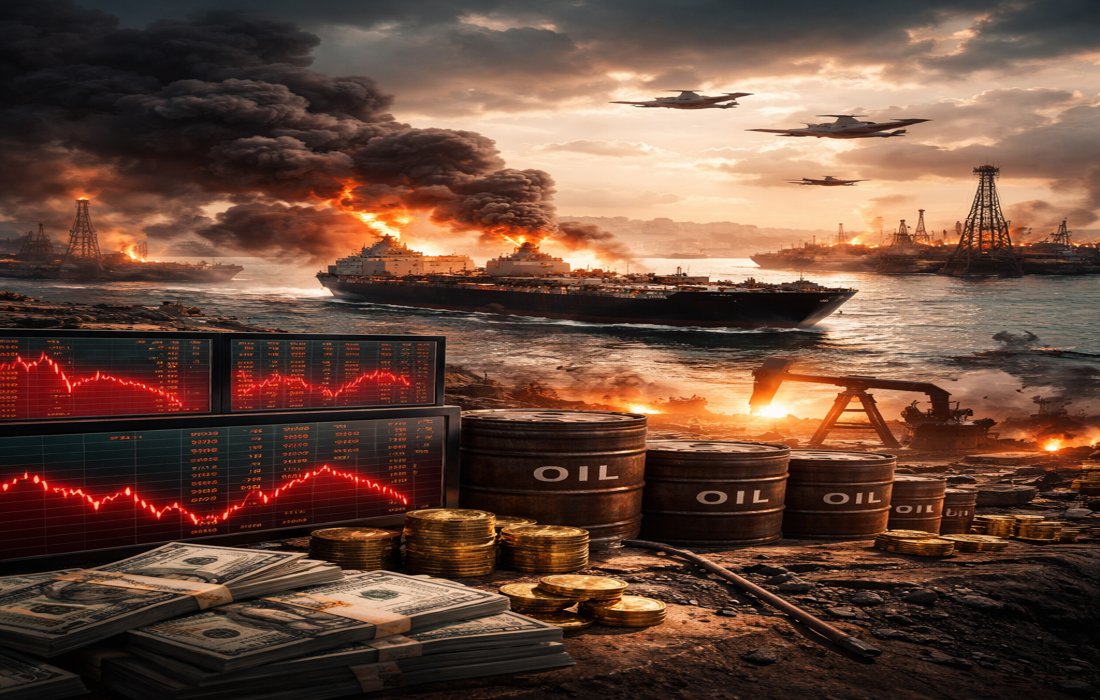
A rapidly escalating conflict in the Middle East has pushed global markets into a state of uncertainty, triggering a sharp rise in oil prices and raising fears of a prolonged economic crisis. The situation, involving heightened tensions between the United States, Israel, and Iran, has become one of the most critical geopolitical flashpoints of 2026.
At the center of the crisis lies the strategic Strait of Hormuz, a narrow but vital passage through which nearly a fifth of the world’s oil supply flows. Reports of potential disruptions and security threats in the region have already impacted global energy supply chains. Even the possibility of partial blockages has been enough to send oil markets into turmoil.
Crude oil prices surged past the $100 per barrel mark during early trading hours, marking one of the sharpest increases in recent years. Energy analysts warn that if tensions continue to escalate, prices could rise even further, intensifying inflationary pressures worldwide. Countries heavily dependent on oil imports, including India and several European nations, are expected to face increased economic strain in the coming weeks.
Stock markets across the globe reacted negatively to the developments. Major indices in Asia and Europe saw notable declines, while U.S. markets opened on a cautious note. Investors are increasingly shifting their portfolios toward safer assets such as gold and government bonds, reflecting a broader risk-off sentiment. The volatility highlights how sensitive global markets remain to geopolitical instability, especially when it affects energy supply.
The International Energy Agency (IEA) has issued a stark warning, suggesting that the current situation could evolve into an energy crisis comparable to the oil shocks of the 1970s. Such a scenario could disrupt industries, increase transportation costs, and slow down global economic growth. Manufacturing sectors, already dealing with supply chain challenges, may face additional pressure due to rising fuel costs.
Beyond economic implications, the geopolitical risks are also intensifying. Military activity in the region has increased, with reports of strategic deployments and heightened alert levels. Diplomatic channels remain active, but progress has been limited so far. Global leaders, including representatives from the United Nations and major world powers, have called for immediate de-escalation to prevent further destabilization.
The crisis also comes at a time when the global economy is still recovering from previous shocks, including inflationary cycles and technological disruptions. The added pressure from rising energy costs could slow down recovery efforts and affect consumer spending. For developing economies, the impact may be even more severe, potentially leading to currency volatility and fiscal challenges.
In India, the situation is being closely monitored by policymakers. A sustained increase in oil prices could affect fuel costs, transportation, and overall inflation, placing pressure on both businesses and consumers. The government may need to consider policy measures to cushion the impact, such as adjusting fuel taxes or increasing strategic reserves.
Despite the uncertainty, some experts believe that the crisis could accelerate the global shift toward renewable energy. Rising fossil fuel prices often encourage investment in alternative energy sources, which may help reduce dependence on volatile regions in the long term. However, such transitions take time and are unlikely to offset immediate challenges.
As the situation continues to evolve, markets are expected to remain volatile, with investors closely watching developments in the Middle East. The coming days will be crucial in determining whether diplomatic efforts can ease tensions or if the crisis will deepen further.
Disclaimer: This article is for informational purposes only and does not constitute financial, investment, or political advice.