Securitize Launches Tokenized Stocks on Solana: Could Blockchain Change Stock Trading?
Securitize has launched tokenized versions of major U.S. stocks on Solana, connecting traditional equities with blockchain infrastructure. The move could support more flexible trading and faster settlement as tokenized finance expands.
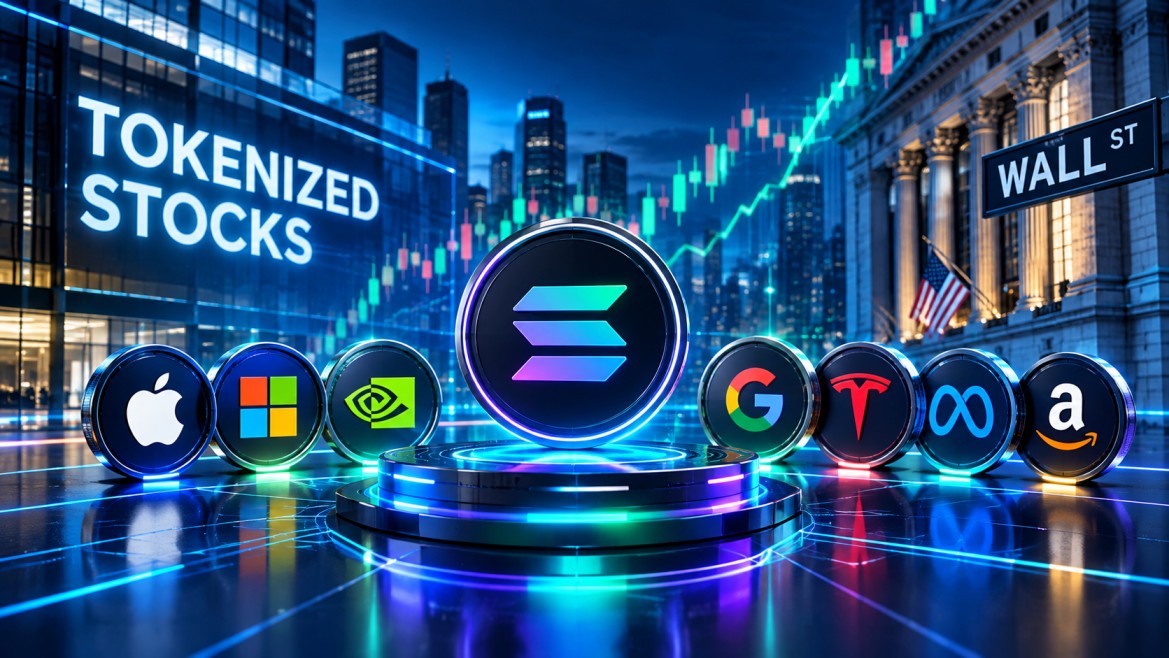
Securitize Brings Major U.S. Stocks On-Chain
Tokenized stocks are gaining momentum as financial companies explore ways to represent traditional securities on blockchain networks. In a notable development, Securitize announced the launch of tokenized U.S. stocks on Solana in October 2026.
The initial offering includes tokens linked to major companies such as Apple, Microsoft, Nvidia, Alphabet, Tesla, Meta and Amazon. The product is designed to connect blockchain-based trading with traditional share ownership through Securitize's brokerage infrastructure.
The launch marks another step in the convergence of traditional finance and decentralized technology. Rather than treating blockchain only as a platform for cryptocurrencies, financial firms are increasingly exploring it as infrastructure for securities and settlement.
How Do Tokenized Stocks Work?
A tokenized stock is a blockchain-based representation of a share or an economic interest linked to a publicly traded company. The exact rights depend on how the product is structured.
In Securitize's announced offering, the tokens are designed to be backed by underlying shares held through its regulated brokerage arrangements. The structure aims to preserve the relevant ownership and economic rights associated with those shares.
However, not every product marketed as a tokenized stock provides direct share ownership. Some tokens simply track a stock's price through a derivative or another contractual arrangement. Investors should check the issuer, custody structure, redemption terms, voting rights and dividend treatment before buying any product.
Why Is Solana Being Used?
Solana offers a blockchain environment designed for high transaction throughput and relatively low transaction costs. Those characteristics can be useful for applications that require frequent transfers and efficient settlement.
For tokenized securities, blockchain infrastructure may help streamline the movement and recording of assets. Stablecoins can also support on-chain settlement, potentially connecting stock-related transactions with digital payment rails.
Still, using Solana does not automatically make a token risk-free or guarantee round-the-clock liquidity. Availability depends on the product, platform rules, regulatory requirements and the presence of buyers and sellers.
Could Tokenized Stocks Trade 24/7?
One potential attraction of tokenized securities is the possibility of trading beyond conventional stock-market hours. Traditional exchanges operate on defined schedules, while blockchain networks can process transactions throughout the day.
Financial institutions, exchanges and digital-asset platforms are exploring ways to extend access to tokenized securities. But continuous blockchain activity does not mean every token can be traded at all times. Market access, liquidity, settlement arrangements and regulatory permissions still determine what investors can actually do.
What Does This Mean for RWA Crypto?
Tokenized stocks broaden the real-world asset, or RWA, sector beyond tokenized Treasuries, private credit and property-related products. Public equities could become another major category of blockchain-based financial assets.
If adoption grows, tokenization could create new connections between traditional securities, stablecoins and blockchain applications. Nevertheless, regulatory compliance, custody, investor protection and reliable liquidity remain important challenges.
Final Thoughts
Securitize's Solana launch highlights how blockchain infrastructure is increasingly being tested for conventional financial products. Tokenized stocks may offer new ways to access and transfer securities, but their benefits depend on the legal rights and protections attached to each token.
For crypto investors, the key development is not simply that familiar stock names appear on a blockchain. It is whether tokenized securities can provide transparent ownership, dependable settlement and appropriate investor protections at scale.
Disclaimer: This article is for informational and educational purposes only and does not constitute financial or investment advice. Tokenized securities and crypto assets involve market, liquidity, custody and regulatory risks. Conduct independent research before making investment decisions.