The Great Efficiency Shift: How Bitcoin Mining Is Reinventing Itself After the Halving
As rising energy costs and the 2024 Bitcoin halving reshape the economics of mining, the industry is undergoing a quiet but profound transformation. The race for raw computing power is giving way to a new priority: efficiency. From ultra-efficient hardware and renewable energy partnerships to advanced cooling and grid-balancing strategies, miners are reinventing their operations to survive in a tighter, more competitive environment. The result is a leaner, more disciplined mining sector ,and a Bitcoin network that may be stronger and more sustainable than ever.
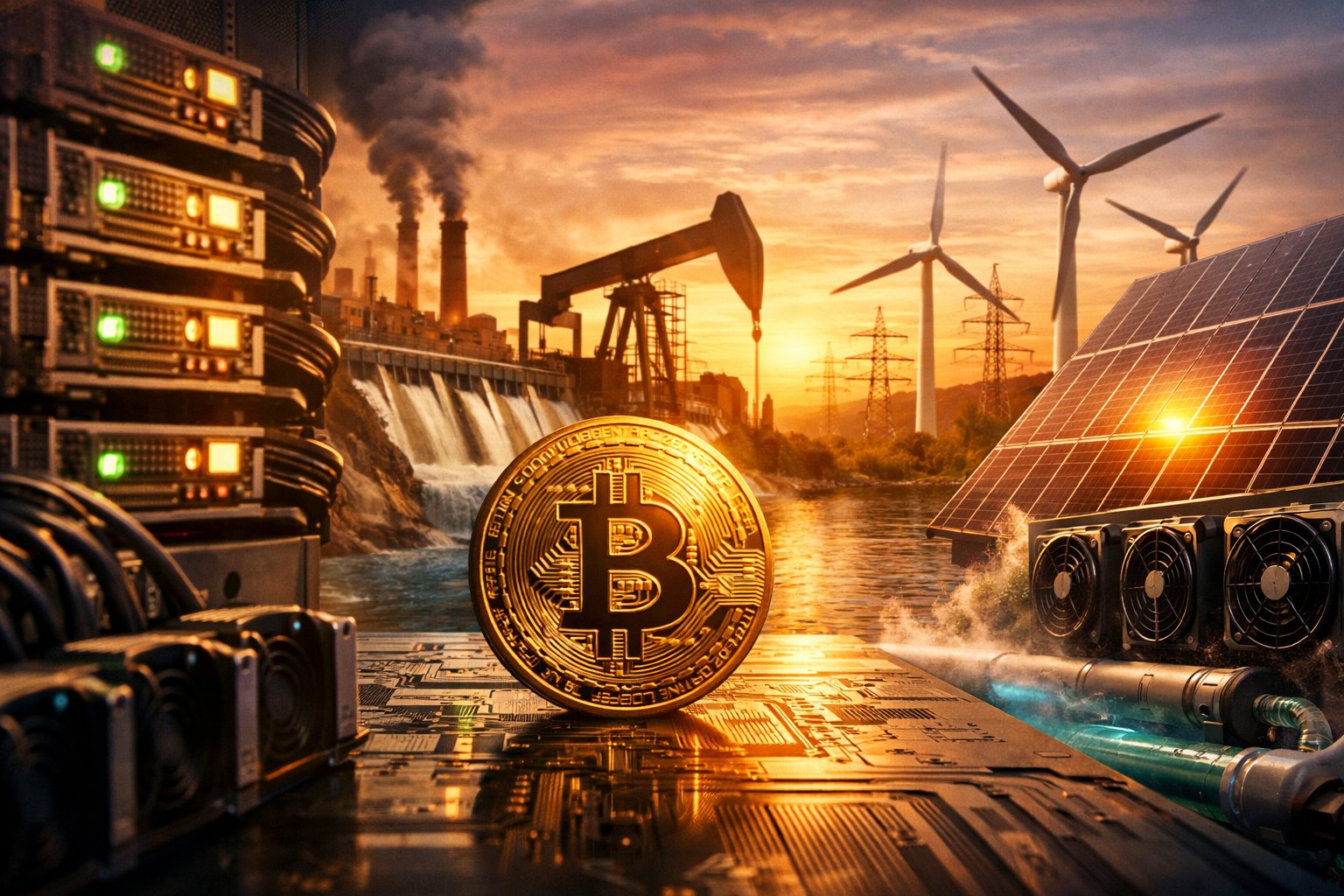
For more than a decade, Bitcoin mining has been defined by a single obsession: more hashrate. Bigger facilities, louder fans, faster chips - all in pursuit of brute computational power.
But in 2025, that era is quietly ending.
In the aftermath of Bitcoin’s April 2024 halving and amid persistently high global energy prices, the mining industry is undergoing a fundamental transformation. The new race is no longer for raw speed, but for efficiency , measured not in terahashes alone, but in joules, dollars, and long-term sustainability.
What is emerging is a leaner, more disciplined mining sector, shaped as much by power contracts and cooling systems as by silicon.
A Post-Halving Reality Check
Bitcoin’s fourth halving, completed in April 2024, cut the block reward from 6.25 BTC to 3.125 BTC. Overnight, miners saw their primary revenue stream reduced by 50 percent.
At the same time, the network’s total computing power rebounded quickly after the event, pushing mining difficulty back toward record levels. More competitors were chasing fewer coins.
The result: margins tightened dramatically.
In today’s environment, profitability depends less on scale and more on precision. Operators who once survived on volume alone now face a stark choice — modernize or shut down.
Energy: The New Center of the Mining Equation
Electricity has always been a major cost for miners, but it is now the dominant factor determining survival.
In many regions, industrial power prices have risen sharply due to inflation, grid constraints, and geopolitical pressures. For miners paying more than a few cents per kilowatt-hour, even modern hardware struggles to remain profitable.
This has triggered a global migration toward cheap and flexible power.
Large operators are increasingly:
Partnering directly with hydroelectric, wind, and solar producers
Locating facilities near stranded or underutilized energy sources
Participating in grid-balancing programs, where miners power down during peak demand and earn credits in return
In some markets, mining has become less a computing business and more an advanced energy-management operation.
The Hardware Reset
At the heart of the efficiency shift is a rapid hardware upgrade cycle.
Older ASIC miners, once industry standards, are now being retired en masse. In their place are next-generation machines capable of producing far more hashes per unit of electricity.
Modern rigs such as Bitmain’s Antminer S21 series and MicroBT’s immersion-cooled WhatsMiner models can operate below 17 joules per terahash — a level of efficiency unimaginable just a few years ago.
For miners, this is no longer optional.
With block rewards halved and competition intense, outdated machines simply cannot generate enough revenue to justify their power consumption. Fleet modernization has become a prerequisite for survival.
Cooling, Software, and the Quiet Revolution
Efficiency gains are not coming from hardware alone.
Behind the scenes, mining operations are deploying increasingly sophisticated systems:
Immersion cooling to stabilize temperatures and extend machine lifespans
AI-driven energy management software to optimize load in real time
Hedging strategies to lock in long-term electricity prices
These changes rarely make headlines, but they are reshaping the economics of mining more profoundly than any single chip release.
The modern mining facility looks less like a warehouse of machines and more like a hybrid of data center, power plant, and financial trading desk.
A Leaner Industry Emerges
This efficiency pressure is acting as a natural filter.
Smaller operators with expensive power or aging hardware are exiting the market. In their place, well-capitalized firms with access to cheap energy and modern infrastructure are consolidating market share.
While painful for some participants, the process is strengthening the network.
A mining ecosystem built on efficient, profitable operators is:
More secure, as attacking the network becomes increasingly expensive
More stable, with fewer forced shutdowns during price or energy shocks
More sustainable, as renewables and wasted energy play a growing role
In an ironic twist, economic necessity is accelerating the industry’s environmental transition faster than regulation ever could.
What This Means for Investors
For investors, the efficiency shift changes how mining businesses should be evaluated.
Key metrics now include:
Cost per kilowatt-hour and long-term power contracts
Average fleet efficiency (joules per terahash)
Upgrade cadence and hardware replacement strategy
Exposure to energy market volatility
In this new phase, mining success depends less on speculative expansion and more on disciplined operations.
The winners will not necessarily be the largest miners — but the most energy-savvy.
Conclusion: From Hashrate to Discipline
Bitcoin mining is entering a more mature phase.
The halving has forced a reckoning. Rising energy costs have removed any margin for waste. And relentless competition has made efficiency the ultimate differentiator.
What remains is a leaner, smarter industry — one that treats electricity as its primary asset and engineering discipline as its core advantage.
The race for hashrate is not over.
But in 2025, it is unmistakably a race for efficiency.
Disclaimer
This article is for informational purposes only and does not constitute financial, investment, or legal advice. Bitcoin mining involves significant financial risk, including price volatility, regulatory uncertainty, hardware obsolescence, and energy cost fluctuations. Readers should conduct their own research and consult qualified professionals before making any investment or operational decisions.