Fed Policy in Focus: What It Could Mean for Gold Price Today, Bitcoin, and Global Markets
The upcoming July 29 Federal Reserve meeting is expected to play a crucial role in determining the direction of global financial markets. In this article, we examine how the Fed's interest rate decision could influence the gold price today, the gold price chart, gold price per ounce, gold price per gram, and broader market sentiment. We also explain why inflation, Treasury yields, and the U.S. dollar remain the key drivers of gold prices ahead of the meeting. Additionally, the article explores the potential impact on Bitcoin, global stock markets, and investor behavior, helping readers understand what to expect before and after one of the most important economic events of the year.
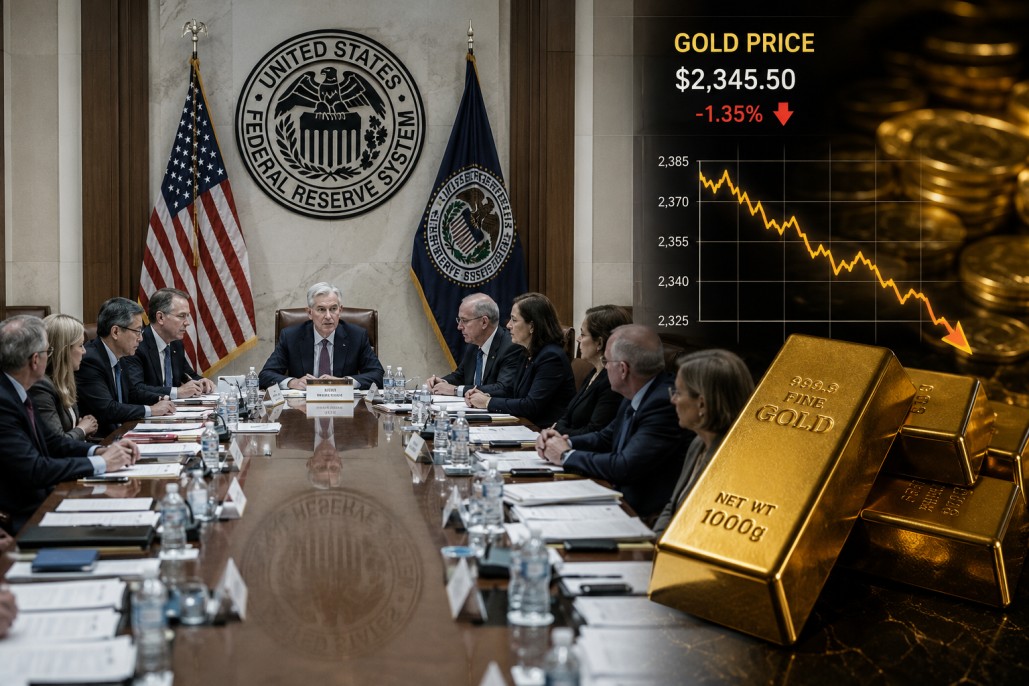
The upcoming U.S. Federal Reserve meeting on July 29 is one of the most closely watched events in global financial markets. Investors across the world are preparing for the central bank's policy decision because it has the potential to influence everything from the gold price today and Bitcoin to stock markets, bond yields, and the strength of the U.S. dollar.
Although the Federal Reserve is responsible for monetary policy in the United States, its decisions often create ripple effects across international markets. Every change in interest rates or guidance on future economic policy can quickly impact commodities, currencies, cryptocurrencies, and investor confidence worldwide.
In recent weeks, traders have been closely monitoring the gold price chart, inflation data, and economic indicators as they attempt to predict the Fed's next move. With uncertainty surrounding future interest rates, both gold and Bitcoin have experienced increased volatility, making the July 29 meeting one of the most important market events of the year.
Why Is the Federal Reserve Meeting Important?
The Federal Reserve plays a critical role in maintaining economic stability by managing inflation, employment, and interest rates.
During every Federal Open Market Committee (FOMC) meeting, policymakers evaluate
several key economic indicators, including:
-Inflation
-Employment growth
-Consumer spending
-GDP growth
-Financial market conditions
Based on this assessment, the Fed decides whether to raise, lower, or maintain its benchmark interest rate.
While these decisions primarily affect the U.S. economy, they also influence global capital flows because the U.S. dollar remains the world's dominant reserve currency.
As a result, investors in Europe, Asia, the Middle East, and other regions closely monitor every statement released by the Federal Reserve.
Why Does the Fed Affect the Gold Price Today?
One of the biggest reasons financial markets pay attention to every Fed meeting is its relationship with the gold price today.
Unlike stocks or government bonds, gold does not generate interest income. Instead, investors purchase gold primarily as a store of value and a hedge against inflation or economic uncertainty.
When the Federal Reserve raises interest rates, government bonds and savings accounts usually offer higher returns. This often reduces the attractiveness of gold because investors can earn income elsewhere.
However, when the Fed signals that interest rates may fall in the future, investors often increase their exposure to gold since the opportunity cost of holding a non-yielding asset becomes lower.
This is why the gold price frequently experiences sharp movements before and after every Federal Reserve announcement.
Gold Price Today: What Is Driving the Market?
Several factors are influencing the gold price for today, making the precious metal one of the most actively traded assets ahead of the July 29 Fed meeting.
1. Inflation Expectations
Inflation remains one of the biggest drivers of gold demand.
If inflation stays elevated, investors typically seek safe-haven assets to preserve purchasing power. Gold has historically served as one of the most reliable inflation hedges.
However, if the Federal Reserve signals confidence that inflation is coming under control, investor demand for gold could weaken in the short term.
2. U.S. Dollar Strength
Since international gold trading takes place in U.S. dollars, movements in the dollar directly affect gold prices.
A stronger dollar usually makes gold more expensive for overseas buyers, reducing demand.
Conversely, a weaker dollar often supports higher gold prices because investors can purchase more gold using foreign currencies.
This inverse relationship between the dollar and the gold price today is one of the most closely watched indicators in financial markets.
3. Treasury Bond Yields
Another important factor affecting the gold price is U.S. Treasury yields.
Higher bond yields provide investors with attractive fixed-income returns.
Because gold does not pay interest, rising yields can reduce investor demand for precious metals.
If Treasury yields continue climbing after the July 29 Fed meeting, analysts believe gold could face additional selling pressure.
Gold Price Chart Shows Investors Are Waiting
Technical analysts are carefully watching the latest gold price chart as prices trade within an important range before the Federal Reserve meeting.
The current chart reflects a market that is waiting for confirmation regarding future monetary policy.
If the Fed delivers a dovish message suggesting future interest rate cuts, the gold price chart could show a bullish breakout above recent resistance levels.
On the other hand, a more hawkish outlook could strengthen the U.S. dollar and trigger a temporary decline in gold prices.
Because of this uncertainty, many institutional investors are limiting aggressive positions until the Fed provides greater clarity.
Gold Price Per Ounce Remains the Global Benchmark
Professional traders and institutional investors primarily monitor the gold price per ounce because it serves as the international benchmark for gold trading.
Commodity exchanges, including COMEX, quote gold prices in U.S. dollars per troy ounce, making this measurement the standard reference for global markets.
Every significant movement in the gold price per ounce reflects changing expectations regarding inflation, interest rates, central bank policy, and investor demand.
If the Federal Reserve surprises markets with a dovish stance, analysts expect the gold price per ounce to move higher as investors increase allocations to safe-haven assets.
Gold Price Per Gram: Why Retail Investors Should Watch It
While institutional traders focus on ounce-based pricing, retail investors often follow the gold price per gram when buying jewelry, coins, or physical bullion.
The gold price per gram varies depending on local taxes, import duties, exchange rates, and regional demand.
If international gold prices rise following the July 29 Federal Reserve meeting, local markets around the world could also witness an increase in the gold price per gram, making physical gold more expensive for everyday buyers.
For long-term investors, tracking both the gold price per ounce and gold price per gram provides a clearer picture of global and local market conditions.
Conclusion
As the July 29 Federal Reserve meeting approaches, investors around the world are closely watching the gold price today for clues about the market's next direction. Expectations surrounding interest rates, inflation, Treasury yields, and the strength of the U.S. dollar continue to shape sentiment across global financial markets.
Whether you're tracking the gold price chart, monitoring the gold price per ounce, or comparing the gold price per gram for physical purchases, the Fed's policy decision is likely to influence short-term price movements. While uncertainty remains high, one thing is clear: the upcoming meeting could become a key catalyst for gold, setting the stage for increased volatility and fresh trading opportunities.
In Part 2, we'll explore how the Federal Reserve's decision could impact Bitcoin, global stock markets, the U.S. dollar, and investor risk appetite, while comparing whether gold or Bitcoin may emerge as the stronger safe-haven asset in the months ahead.