BRC-20 Tokens Explained: The Experiment That Brought Fungible Tokens to Bitcoin
BRC-20 is an experimental token standard built on Bitcoin's Ordinal protocol that allows fungible tokens to be created and traded directly on the Bitcoin blockchain, no smart contracts required, sparking one of the most unexpected and controversial trends in crypto.
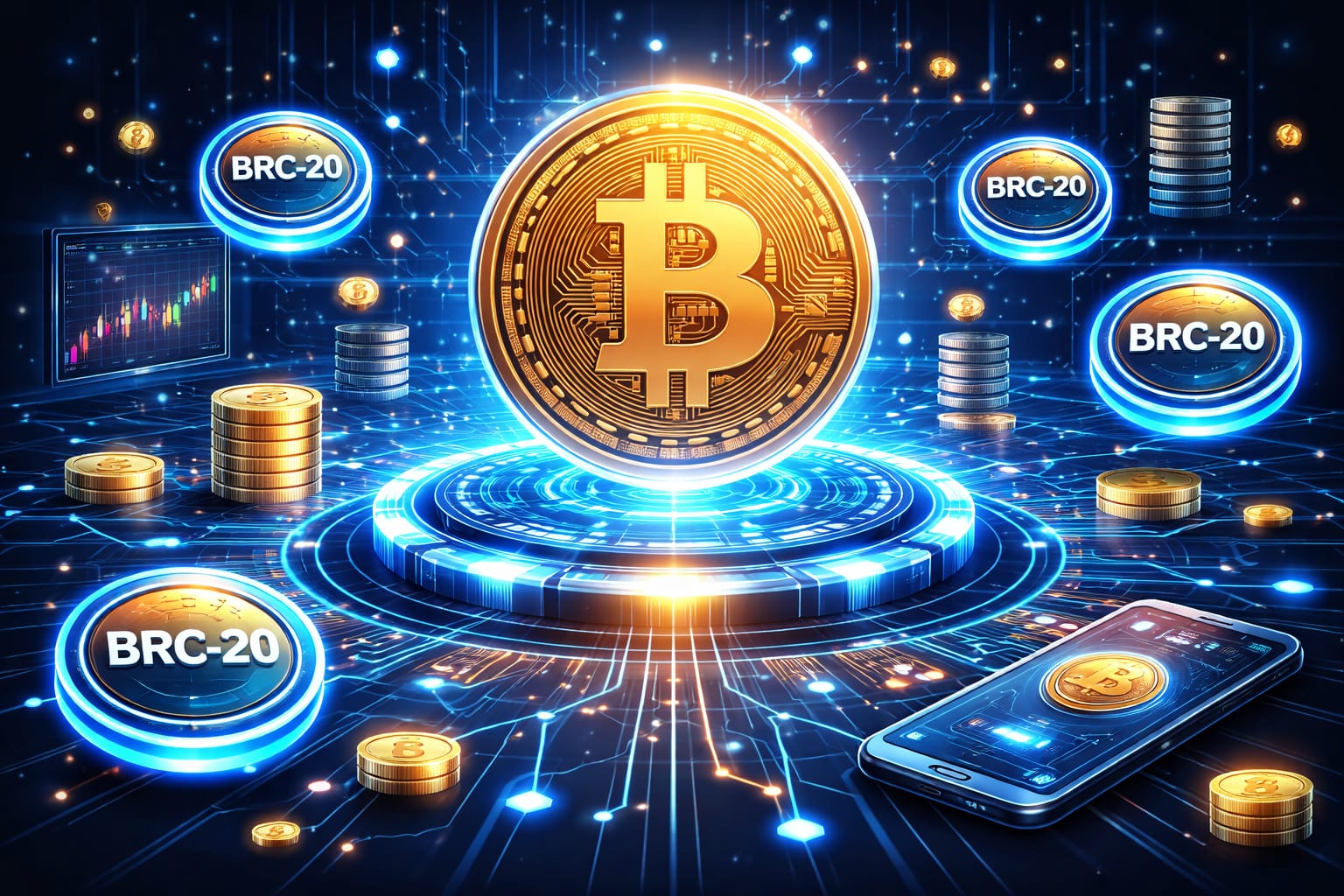
BRC-20 is an experimental token standard built on Bitcoin's Ordinal protocol that allows fungible tokens to be created and traded directly on the Bitcoin blockchain, no smart contracts required, sparking one of the most unexpected and controversial trends in crypto.
Bitcoin has always been the serious one. No flashy features, no programmable tokens, no meme coins. That was Ethereum's territory. And then, almost overnight, a developer had an idea that turned that assumption completely on its head.
BRC-20 tokens arrived in early 2023 and within weeks had generated billions in trading volume, clogged the Bitcoin network, split the community down the middle, and introduced an entirely new way of thinking about what Bitcoin can do. Whether you think they're brilliant or absurd, they're impossible to ignore.
What Are BRC-20 Tokens?
BRC-20 is a token standard for the Bitcoin blockchain, created in March 2023 by an anonymous developer known as Domo. The name is a deliberate nod to Ethereum's ERC-20 standard, the framework that powers most fungible tokens on Ethereum, but the mechanics are completely different.
Where Ethereum uses smart contracts to define and manage tokens, Bitcoin has no native smart contract functionality. BRC-20 gets around this entirely by piggybacking on Ordinal Theory, the system that assigns unique identities to individual satoshis and allows data to be inscribed onto them.
Instead of inscribing an image or a piece of media, BRC-20 inscribes JSON text, a small piece of structured data that defines a token's name, total supply, and minting rules. That's it. No contract, no complex logic, just a text file on a sat.
How Do BRC-20 Tokens Actually Work?
The process involves three types of inscriptions, each serving a specific function.
The deploy inscription creates the token. It sets the ticker name, the maximum total supply, and the limit on how many tokens can be minted per inscription. Think of it as publishing the rulebook.
The mint inscription allows anyone to claim tokens by inscribing the mint data onto a satoshi they own, up to the per-mint limit set at deployment. This continues until the total supply cap is reached.
The transfer inscription is required every time someone wants to send tokens to another wallet. Unlike Ethereum tokens, where a simple transaction moves the balance, BRC-20 transfers require a fresh inscription each time, which has significant implications for fees and speed.
All of this is tracked not by the Bitcoin protocol itself, but by off-chain indexers, third-party services that read the Bitcoin blockchain, interpret these JSON inscriptions, and maintain a ledger of who holds what. The Bitcoin network has no native awareness of BRC-20 tokens at all.
What Made BRC-20 Blow Up?
The first BRC-20 token, named ordi, was deployed in March 2023 almost as a proof of concept. Within weeks it had a market cap in the hundreds of millions. By May 2023, BRC-20 activity had become so intense that Bitcoin transaction fees spiked dramatically and the mempool, the queue of unconfirmed transactions, became severely congested.
Part of the appeal was familiarity. Crypto traders already understood the ERC-20 playbook: find a new token early, ride the hype, exit before it collapses. BRC-20 offered the same game but on Bitcoin, the most trusted and liquid blockchain in the world. That combination of novelty and credibility was irresistible to speculators.
The meme coin angle didn't hurt either. Tokens like pepe and others launched on BRC-20 and saw extraordinary short-term price movements, drawing in retail traders chasing the next big pump.
The Criticism: Is This Really What Bitcoin Is For?
Not everyone was celebrating. A significant portion of the Bitcoin community viewed BRC-20 tokens, and Ordinals more broadly, as a misuse of the network.
The core argument is straightforward: Bitcoin's block space is a finite, valuable resource meant for financial transactions. Filling it with JSON inscriptions for speculative meme tokens drives up fees for everyone, slows the network, and serves no meaningful financial purpose.
Some developers went further, arguing that BRC-20 tokens are technically fragile because they rely entirely on centralised indexers to function. If the indexer goes down or produces inconsistent data, the entire token ledger becomes unreliable. There is no trustless, on-chain source of truth the way there is with Ethereum smart contracts.
Domo himself acknowledged this at launch, describing BRC-20 as an experiment and warning that the tokens were likely worthless.
What's the Current State of BRC-20?
The initial frenzy has cooled, as it tends to in crypto. But BRC-20 hasn't disappeared. A small ecosystem of wallets, marketplaces, and indexers has matured around the standard, and tokens like ordi have maintained listings on major exchanges.
More importantly, BRC-20 opened a conversation that isn't going away: should Bitcoin remain purely a monetary network, or is it a neutral protocol that can support whatever people choose to build on it? That debate has no clean answer, and BRC-20 sits right at the centre of it.
The Bigger Picture
BRC-20 tokens are, at their core, a stress test. They tested Bitcoin's fee market, tested the community's tolerance for experimentation, and tested the assumption that Bitcoin's simplicity was a limitation rather than a feature.
Whether the standard evolves into something more robust, gets superseded by a better approach, or fades out entirely, it proved one thing: where there's a programmable ledger, people will find ways to build on it, whether the purists like it or not.
Disclaimer: This article is for informational purposes only and does not constitute financial or investment advice. Always do your own research before buying, selling, or trading any digital asset.
Frequently Asked Questions
1. Are BRC-20 tokens the same as Ordinals? No, Ordinals are the broader protocol for inscribing data on Bitcoin satoshis, while BRC-20 is one specific use of that protocol to create fungible tokens using JSON inscriptions.
2. Where can I buy and trade BRC-20 tokens? BRC-20 tokens can be traded on dedicated marketplaces like Magic Eden and UniSat, as well as on major centralised exchanges that have listed popular tokens like ordi.
3. Are BRC-20 tokens safe to invest in? They are highly speculative, technically experimental, and dependent on third-party indexers, making them among the riskiest assets in an already volatile market.
4. Why do BRC-20 transactions cost so much in fees? Every mint and transfer requires a new Bitcoin inscription, which takes up block space and competes with regular transactions, driving up fees especially during periods of high demand.
5. Is BRC-20 the future of tokens on Bitcoin? It's too early to say, newer standards and Layer 2 solutions are being developed that may offer more robust and efficient alternatives to BRC-20 on Bitcoin.
Tags: BRC-20, Bitcoin Tokens, Ordinals, Bitcoin, Crypto, Fungible Tokens, BRC20 Explained, ordi, Bitcoin Inscription, Crypto for Beginners