
SpaceX Earnings Miss Expectations as AI Spending Surges After Record-Breaking IPO
Expected Summary: SpaceX reported weaker-than-expected earnings after its record-breaking IPO as the company significantly increased investments in artificial intelligence infrastructure and research. While higher AI spending weighed on short-term profitability, strong revenue growth from satellite internet services, commercial launches, and government contracts highlighted the company's solid business fundamentals. Management believes these AI investments will improve operational efficiency, reduce costs, and strengthen SpaceX's long-term competitive position. Investors are expected to closely monitor future earnings to see whether the company's aggressive AI strategy translates into stronger margins and sustainable growth.
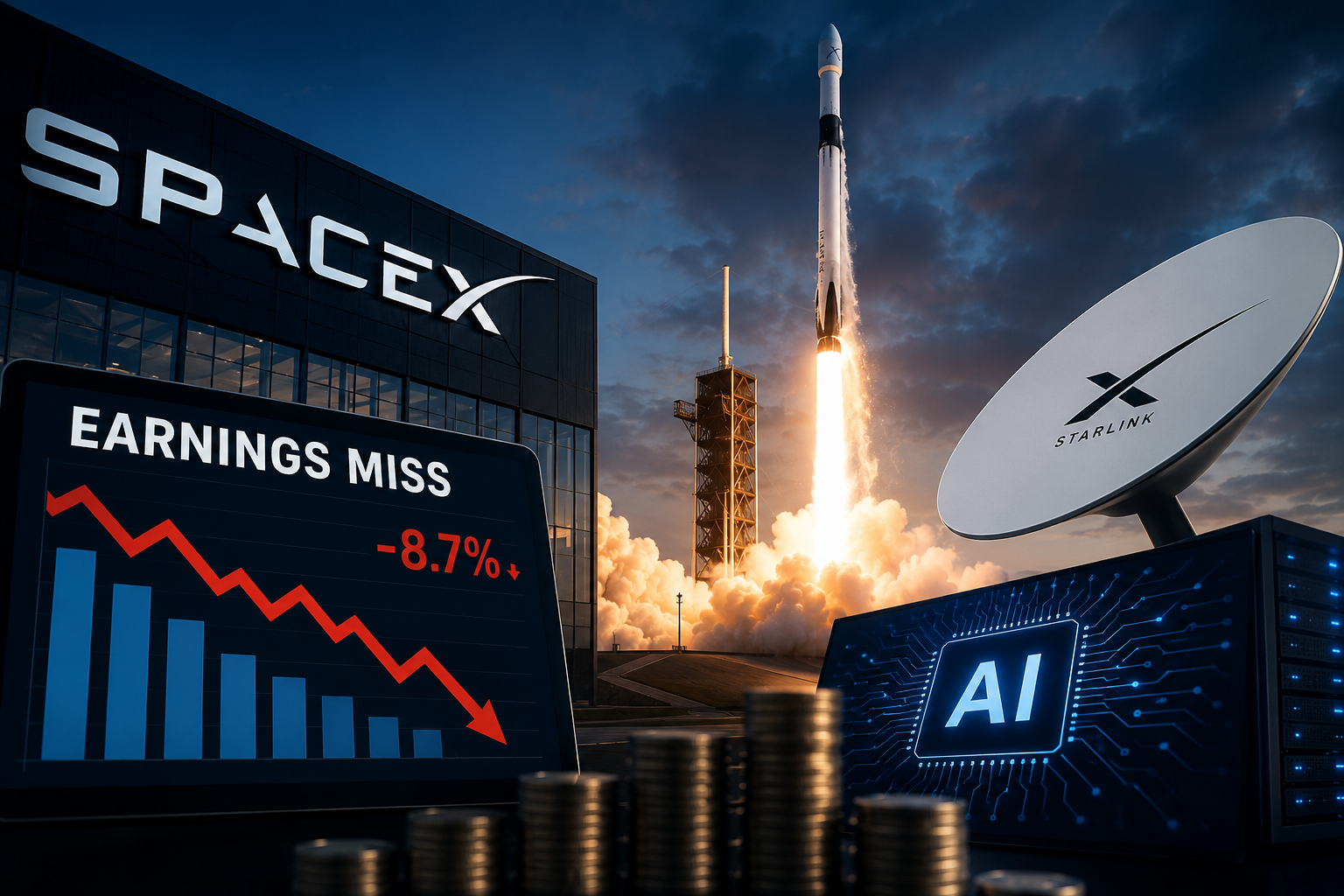
SpaceX's AI Expansion Weighs on First Earnings After Historic IPO
SpaceX reported its first earnings following its record-breaking IPO, but the results fell short of market expectations as the company significantly increased its investment in artificial intelligence infrastructure. While revenue continued to grow across its satellite internet, launch services, and commercial space businesses, rising AI-related expenses reduced overall profitability. Investors are now closely watching whether these aggressive technology investments can deliver stronger long-term returns despite short-term pressure on earnings.
AI Investments Become a Strategic Priority
Artificial intelligence has become a core part of SpaceX's long-term business strategy. The company is investing heavily in AI-powered satellite operations, autonomous mission planning, predictive maintenance, manufacturing automation, and next-generation data processing systems. These initiatives are designed to improve operational efficiency, reduce launch costs, and strengthen SpaceX's competitive advantage in the rapidly evolving aerospace industry.
However, building advanced AI infrastructure requires billions of dollars in capital spending. Higher research and development costs, increased hiring of AI engineers, and investments in specialized computing hardware contributed to lower operating margins during the quarter.
Revenue Growth Remains Strong Despite Profit Pressure
Although earnings missed analyst expectations, SpaceX continued to post healthy revenue growth. Demand remained strong for satellite internet services, commercial launches, and government space contracts. Expanding international partnerships and growing enterprise customers also supported higher sales.
The company's management emphasized that current AI spending represents a strategic investment rather than a sign of weakening business fundamentals. Leadership believes these technologies will enhance productivity, improve mission reliability, and generate stronger cash flows over the coming years.
Investors Focus on Long-Term Growth
The market reaction reflected mixed investor sentiment. Some shareholders were disappointed by lower-than-expected earnings, while long-term investors viewed the increased AI spending as a positive move that could strengthen SpaceX's leadership position.
Technology companies across multiple industries are increasing investments in artificial intelligence to remain competitive. SpaceX's decision aligns with a broader trend in which businesses prioritize innovation even if it temporarily affects quarterly profits.
AI Could Transform Space Operations
Artificial intelligence is expected to play an increasingly important role in the future of the space industry. Advanced machine learning models can optimize launch scheduling, monitor spacecraft health, automate manufacturing processes, improve satellite communication networks, and analyze large volumes of mission data in real time.
If successfully implemented, these AI capabilities could reduce operational costs while improving mission success rates and customer satisfaction.
Market Outlook
Analysts expect investors to closely monitor future earnings reports for signs that SpaceX's AI investments are translating into improved operating efficiency and higher profit margins. Continued revenue growth combined with disciplined cost management could help restore investor confidence.
While near-term earnings may remain under pressure, SpaceX's focus on artificial intelligence, innovation, and commercial expansion positions the company for potential long-term growth in the global aerospace and space technology market.
Conclusion
SpaceX's first earnings report after its historic IPO highlights the balance between short-term financial performance and long-term technological investment. Although rising AI spending weighed on quarterly profits, the company continues to expand its business and invest in technologies that could define the next generation of space exploration and satellite services. For long-term investors, the success of SpaceX's AI strategy may ultimately prove more important than temporary earnings fluctuations.