Franklin Templeton Expands XRP Ledger Tokenization With $150M in sgBENJI Shares
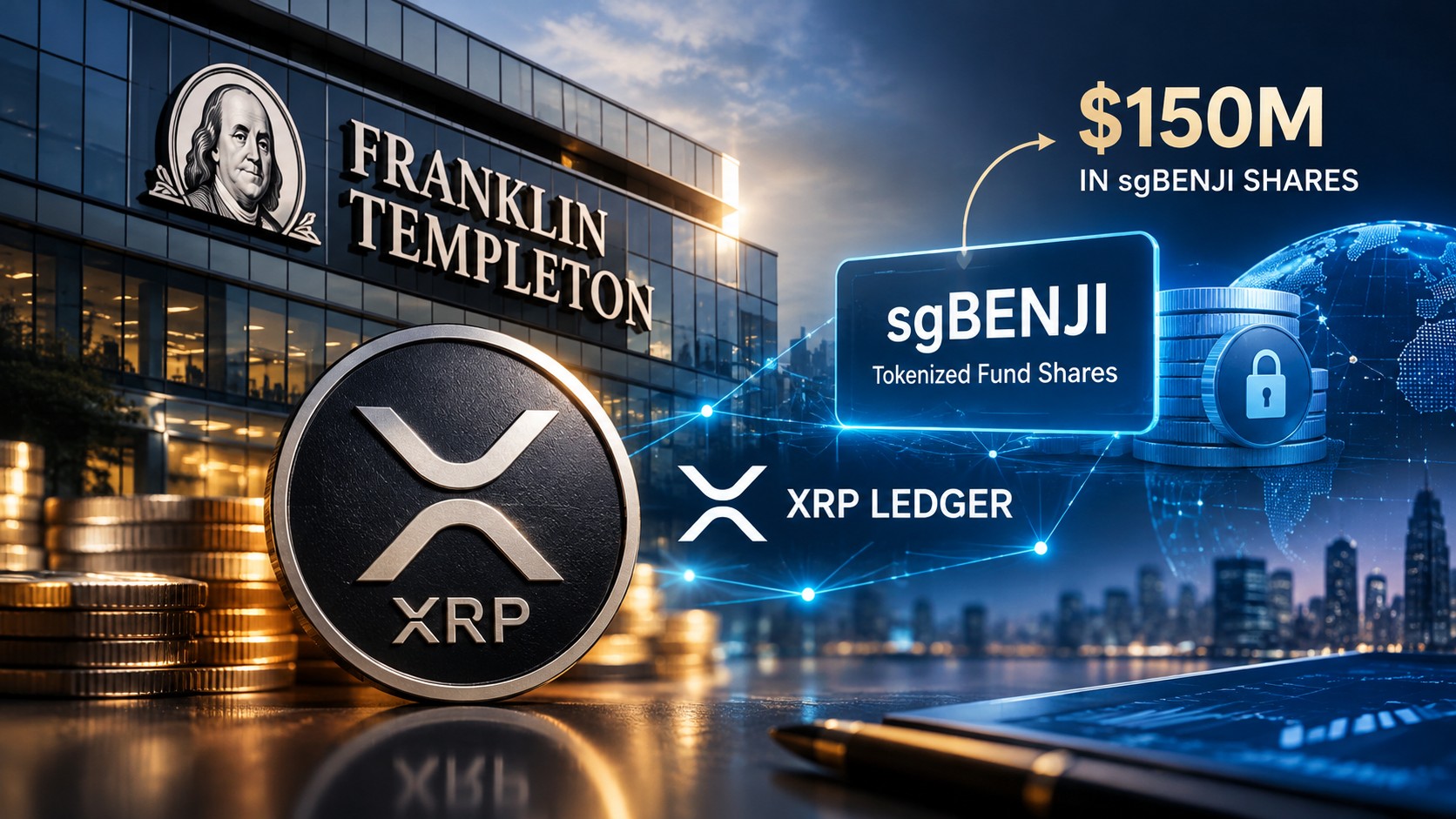
Franklin Templeton’s reported $150 million addition to sgBENJI shares on the XRP Ledger highlights growing interest in tokenized investment products and blockchain-based financial infrastructure.
Franklin Templeton Expands Tokenized Fund Activity on XRP Ledger
Franklin Templeton is drawing attention to the growing intersection of traditional finance and blockchain technology, with a reported $150 million addition in sgBENJI shares to the XRP Ledger (XRPL). The development highlights the continued expansion of real-world asset (RWA) tokenization, a sector focused on representing traditional financial assets through blockchain-based tokens.
The reported move places the XRP Ledger in focus as financial institutions explore blockchain networks for issuing, transferring, and managing tokenized investment products. However, the addition should be distinguished from a direct investment in XRP, the network’s native cryptocurrency.
What Are sgBENJI Shares?
The BENJI token ecosystem is associated with Franklin Templeton’s tokenized money market fund, which provides blockchain-based access to a regulated investment product. The specific sgBENJI designation should be verified against the relevant fund documentation before drawing conclusions about its structure or jurisdiction.
Tokenized fund shares represent interests in an underlying investment product rather than simply functioning as conventional cryptocurrencies. Depending on the fund’s terms, investors may gain access to blockchain-based ownership records and transfer mechanisms while remaining subject to eligibility requirements and applicable regulations.
The reported $150 million addition could therefore be significant for market participants monitoring the adoption of tokenized financial instruments.
Why the XRP Ledger Matters for RWA Tokenization
The XRP Ledger is a blockchain network designed to support payments and the transfer of digital assets. Its transaction capabilities and built-in asset functionality make it a potential platform for financial institutions seeking blockchain-based settlement and asset management solutions.
The expansion of tokenized products on XRPL could help strengthen its position in the real-world asset market. Greater institutional participation may encourage additional development around asset issuance, compliance infrastructure, custody, and secondary-market transfers.
However, the amount of tokenized assets associated with a network does not automatically translate into equivalent demand for its native cryptocurrency. The effect on XRP would depend on actual network usage, transaction activity, and the way these products interact with the broader XRPL ecosystem.
Institutional Interest in Tokenized Financial Assets
Real-world asset tokenization has emerged as an important theme in the digital asset industry. Financial firms are exploring ways to represent money market funds, government securities, private credit, and other traditional assets on blockchain networks.
Potential advantages include more efficient recordkeeping, programmable asset transfers, and improved operational flexibility. Nevertheless, tokenization does not eliminate investment risks, regulatory obligations, liquidity constraints, or the need for secure custody arrangements.
For institutions, the challenge is to combine blockchain efficiency with the investor protections and operational standards expected from traditional financial markets.
Franklin Templeton’s broader involvement in blockchain-based investment products makes its tokenization initiatives relevant to investors tracking institutional crypto adoption. The reported sgBENJI development adds another data point for assessing how traditional asset managers are approaching blockchain infrastructure.
What Could This Mean for XRP and XRPL?
The reported addition of $150 million in sgBENJI shares could reinforce market interest in the XRP Ledger’s role in tokenized finance. If supported by sustained adoption, developments of this kind may contribute to a broader ecosystem of financial applications operating on XRPL.
Three factors will be particularly important to watch:
- Tokenized asset growth: Whether additional investment products and financial institutions expand their presence on XRPL.
- Network activity: Whether tokenization leads to measurable growth in transactions and practical network usage.
- Regulatory clarity: Whether evolving rules allow institutions to expand blockchain-based investment products across more markets.
For XRP holders, the key distinction is between ecosystem growth and direct token demand. Institutional use of XRPL may improve the network’s visibility and utility, but it does not guarantee an increase in XRP’s market price.
Outlook: Tokenization Remains a Key Crypto Market Theme
The reported $150 million sgBENJI addition highlights the importance of tracking institutional tokenization developments alongside conventional crypto market indicators. As financial companies investigate blockchain-based investment infrastructure, networks capable of supporting compliant asset issuance and transfers may attract greater attention.
The longer-term significance for the XRP Ledger will depend on whether reported allocations translate into sustained usage, broader product availability, and measurable institutional activity.
For now, investors should monitor official disclosures from Franklin Templeton and relevant XRP Ledger sources to confirm the transaction details and assess its implications for the real-world asset sector.