
Bitcoin Drops Under $75K as Iran Tensions Shake Crypto Market
Bitcoin slipped below the important $75,000 mark after fresh tensions involving Iran increased uncertainty across global financial markets. The crypto market faced strong selling pressure as investors moved toward safer assets like gold and the US dollar. Rising crude oil prices, fear of wider Middle East conflict, and growing concerns about inflation also affected market sentiment. Along with Bitcoin, several major cryptocurrencies saw sharp declines due to panic selling and leveraged trade liquidations. Analysts believe the market could remain volatile in the coming days as traders monitor geopolitical developments, Federal Reserve signals, and overall risk appetite in global markets.
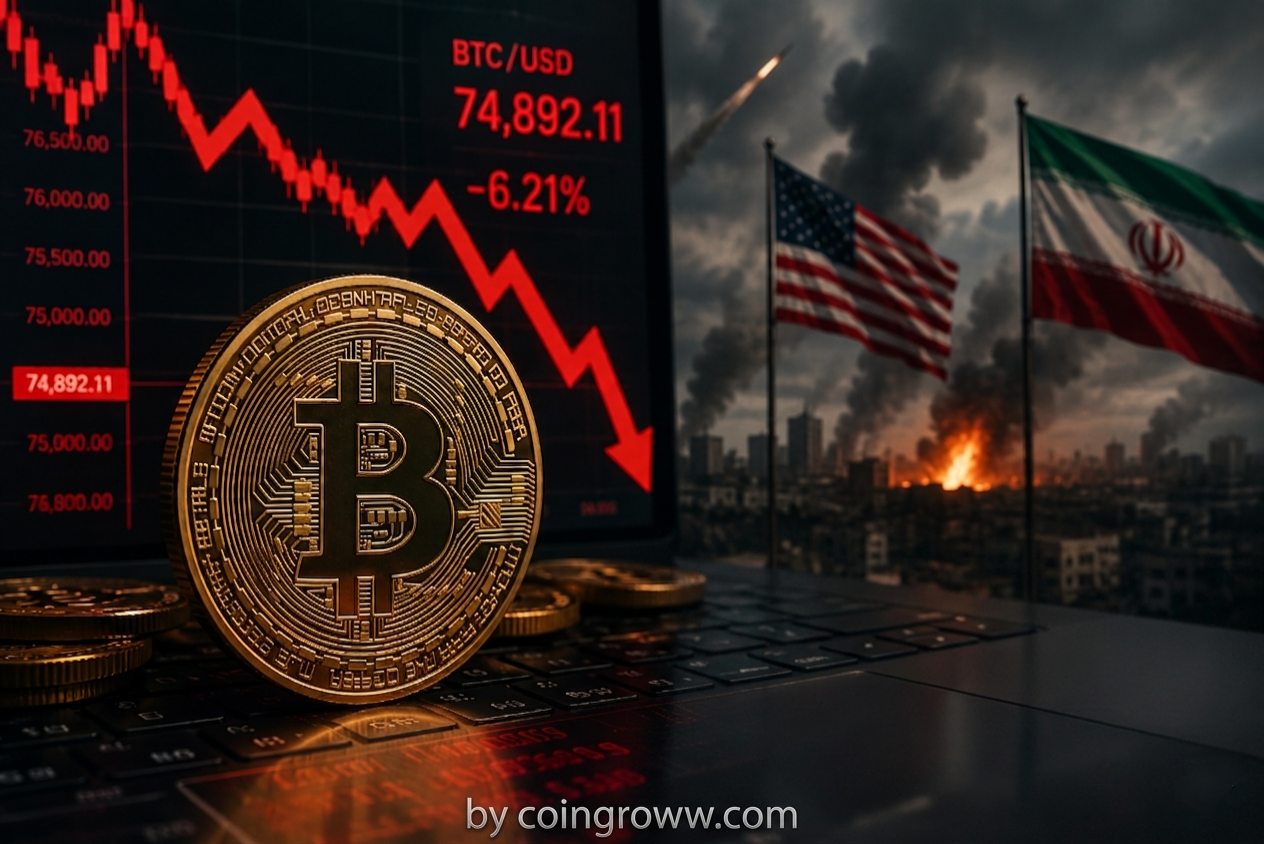
Bitcoin Faces Heavy Selling Pressure Amid Global Uncertainty
Bitcoin has once again fallen below the important $75,000 level, creating panic across the crypto market. The latest drop came as rising tensions between the United States and Iran increased fear in global financial markets. Investors are becoming more cautious as geopolitical risks continue to grow, and risky assets like Bitcoin are facing strong selling pressure.
The crypto market has become highly sensitive to international events in 2026. News related to military strikes, oil supply concerns, and political uncertainty is now directly affecting Bitcoin price movement. As fear spreads across financial markets, traders are moving money away from volatile assets and shifting toward safer investments such as gold, the US dollar, and government bonds.
How the Iran Conflict Is Impacting Financial Markets
The recent conflict in the Middle East has increased concerns about global economic stability. One of the biggest worries is the possibility of disruption in oil supply routes near the Strait of Hormuz. This region is extremely important for global energy transportation. When tensions rise in this area, oil prices usually move higher.
Higher oil prices can increase inflation worldwide. This creates pressure on central banks like the US Federal Reserve to keep interest rates higher for a longer period. High interest rates are generally negative for risk assets, including cryptocurrencies and technology stocks.
As a result, global stock markets, crypto assets, and high-risk investments have started reacting negatively to the ongoing geopolitical situation. Bitcoin, which was recently trading above $80,000, quickly lost momentum as investors reduced exposure to risky markets.
Massive Liquidations Increase Market Fear
Another major reason behind Bitcoin’s sharp fall is the liquidation of leveraged positions. Many traders were using borrowed money to bet on rising crypto prices. When Bitcoin started falling rapidly, exchanges automatically closed these positions, causing even more selling pressure.
Reports suggest that nearly $1 billion worth of crypto positions were liquidated within 24 hours during the latest market crash. Most of these liquidations came from long traders who expected Bitcoin to continue moving higher.
This chain reaction pushed Bitcoin below critical support levels and created panic among short-term investors.
ETF Outflows and Weak Investor Sentiment
Institutional investors are also becoming cautious. Spot Bitcoin ETFs have reportedly seen billions of dollars in outflows over the past two weeks. This indicates that large investors are temporarily reducing ex

posure to crypto markets during the uncertain geopolitical environment.
Weak ETF demand often affects overall market confidence because institutional participation has become an important factor for Bitcoin price growth in recent years.
What Could Happen Next?
Crypto analysts believe Bitcoin may remain highly volatile until geopolitical tensions begin to cool down. If the situation between the US and Iran improves, Bitcoin could recover quickly as investor confidence returns. However, if tensions continue to rise, the market may test lower support zones near $70,000.
Despite the short-term panic, many long-term investors still believe Bitcoin remains strong due to growing global adoption and limited supply. For now, traders are closely watching both geopolitical developments and central bank policies before making major investment decisions.
Disclaimer
This content is for informational purposes only and not financial advice. Cryptocurrency markets are highly volatile and investors should conduct their own research before making decisions