
Morgan Stanley Sets Bull Case for SpaceX Stock at $600 Per Share, Signaling Massive Valuation Upside
Morgan Stanley maintains a $300 base-case target for SpaceX while assigning a $600 bull-case scenario. The optimistic outlook depends on the continued expansion of Starlink and SpaceX’s ability to capture opportunities in AI, computing and next-generation space infrastructure
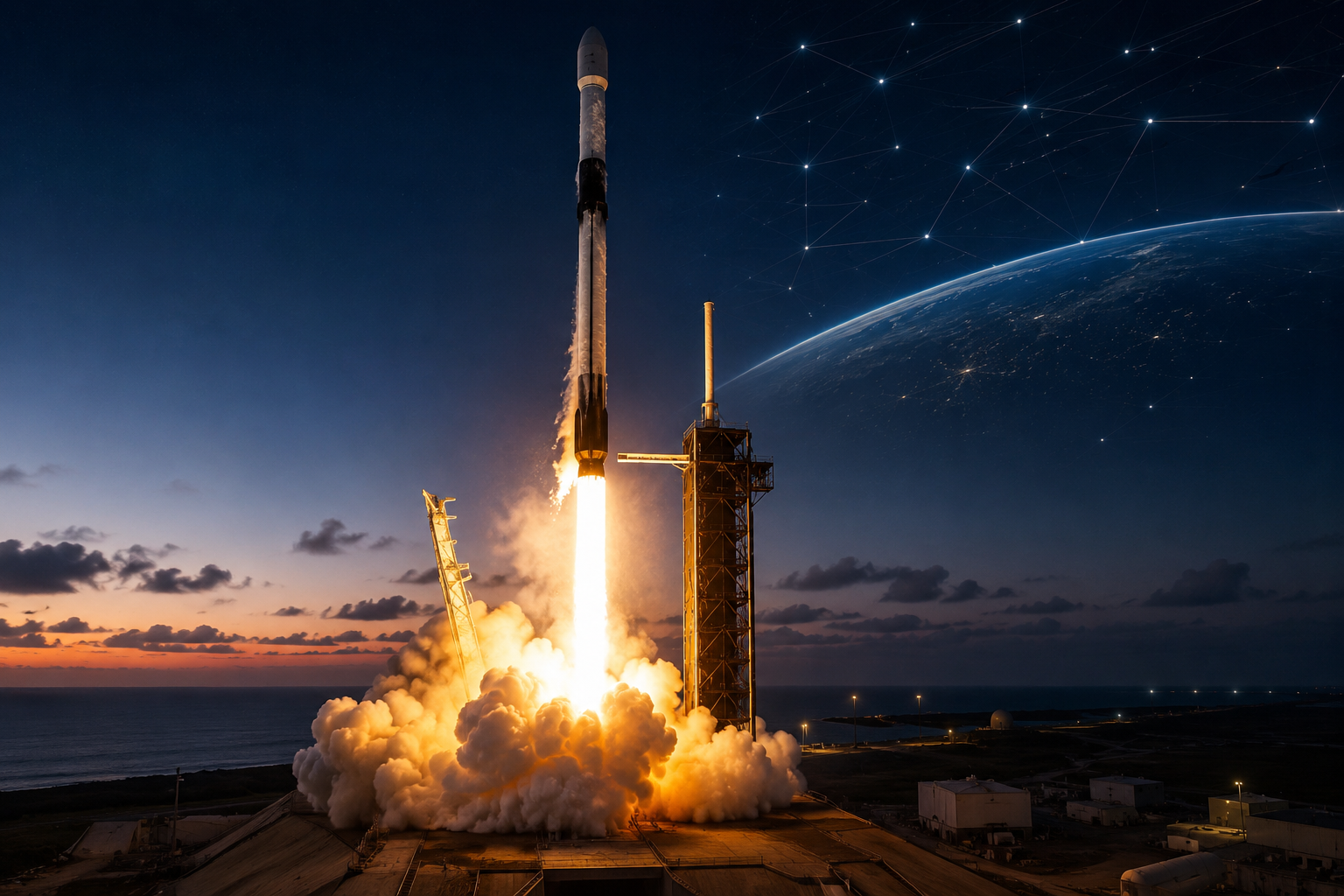
SpaceX stock is back in focus after Morgan Stanley maintained a $300 base-case price target while keeping its bullish scenario at as much as $600 per share. The projection highlights the investment bank’s confidence in SpaceX’s long-term potential across space infrastructure, Starlink, artificial intelligence and computing.
SpaceX has quickly become one of the most closely watched stocks on Wall Street following its public-market debut. The company’s shares have experienced significant volatility since the IPO, but Morgan Stanley’s latest outlook suggests that investors may be underestimating the scale of the opportunity if SpaceX successfully executes its broader technology strategy.
The key figure attracting attention is the $600 SpaceX stock price bull case. That number is not Morgan Stanley’s standard price target. The bank’s base case remains around $300 per share, while its scenario analysis places the bear case near $75 and the bull case at $600.
Why Morgan Stanley Sees More Upside for SpaceX Stock
Morgan Stanley’s bullish thesis extends well beyond SpaceX’s traditional rocket-launch business.
The company has already built a powerful position in commercial space through its launch operations and Starlink satellite internet network. However, the investment case increasingly revolves around how those assets could become part of a much larger technology ecosystem.
Starlink provides SpaceX with a recurring-revenue business, while the company’s launch infrastructure gives it an important advantage in deploying and maintaining satellites. Morgan Stanley believes this combination could provide a foundation for future growth in connectivity, computing and artificial intelligence.
The bank has described SpaceX as having a unique position at the intersection of space infrastructure and AI, with the potential to connect orbital real estate, connectivity and computing capacity into a single platform.
That is an important distinction for investors. A conventional aerospace valuation would not fully capture the potential Morgan Stanley is assigning to SpaceX’s future technology businesses.
Starlink Remains a Major Part of the Investment Case
Among SpaceX’s existing businesses, Starlink remains one of the most important drivers of the company's valuation.
The satellite internet service has expanded rapidly and provides SpaceX with a recurring commercial revenue stream that differs from the company’s launch contracts. Continued subscriber growth, improved satellite capacity and lower deployment costs could strengthen Starlink’s economics over time.
The broader opportunity is also connected to SpaceX’s ability to launch its own satellites. A vertically integrated model allows the company to control important parts of the infrastructure chain, from rocket launches to satellite deployment and connectivity.
For investors evaluating SpaceX stock, Starlink therefore represents one of the more tangible components of the long-term valuation story.
AI Could Become the Bigger Catalyst
The most aggressive part of Morgan Stanley’s SpaceX bull case comes from artificial intelligence and computing.
SpaceX is increasingly being viewed not simply as a rocket company but as a potential infrastructure provider for the next generation of AI. Its access to space, satellite connectivity and computing ambitions could eventually create additional revenue streams that are difficult to capture through traditional aerospace valuation models.
The company’s planned acquisition of AI coding platform Cursor has added another layer to that narrative. Recent reports indicate that Morgan Stanley sees Cursor as potentially important to the broader SpaceX AI thesis, particularly if the business continues expanding its enterprise adoption and recurring revenue.
That development could be particularly important because the $600 bull case depends heavily on SpaceX successfully monetizing businesses beyond its established launch operations.
What Would Have to Happen for SpaceX to Reach $600?
A $600 SpaceX stock price would require considerably more than strong quarterly growth.
Morgan Stanley’s bull-case scenario effectively assumes that SpaceX executes on several major opportunities at the same time. These include continued Starlink expansion, successful development of next-generation launch technology, growth in AI-related infrastructure and stronger monetization of its broader technology ecosystem.
The scale of the forecast explains why Morgan Stanley has such a wide range between its bear and bull cases.
The bank’s $75 bear case reflects significant execution, funding and technology risks, while the $600 bull case assumes SpaceX successfully captures a much larger share of the emerging space and AI markets.
In other words, the $600 figure should not be interpreted as a guaranteed destination for SpaceX shares. It represents an optimistic scenario in which several high-growth businesses develop as expected.
SpaceX Stock Remains Highly Volatile
The market has already demonstrated how quickly sentiment around SpaceX can change.
After initially surging following its IPO, SpaceX stock experienced a substantial correction. More recently, the shares have recovered as investors reassessed the company’s growth prospects and upcoming catalysts.
Recent trading has also been influenced by insider share unlocks and expectations surrounding future company disclosures. SpaceX shares have remained considerably below their post-IPO peak despite the latest recovery.
That volatility is unlikely to disappear soon. Investors are effectively trying to value a company whose most ambitious opportunities may take years to fully develop.
The Bigger Picture for Investors
Morgan Stanley’s SpaceX forecast demonstrates why the company has attracted so much attention from institutional investors.
The $300 base-case price target already represents a strong long-term outlook, but the $600 SpaceX stock bull case shows how much additional value could emerge if the company succeeds in turning its space, connectivity and AI ambitions into large-scale businesses.
At the same time, investors should remember that a bull case is based on assumptions rather than certainty. SpaceX faces execution risks, enormous capital requirements, technology challenges and the possibility that some of its emerging businesses may take longer than expected to generate meaningful profits.
For now, the central question for the market is not simply whether SpaceX can launch more rockets. It is whether the company can transform its existing infrastructure into a much broader technology platform.
If Starlink continues to scale, next-generation space infrastructure reaches commercial maturity and SpaceX successfully expands into AI and computing, Morgan Stanley’s $600 per share bull case could become an important benchmark for the company’s long-term valuation.
But until those businesses mature, SpaceX stock is likely to remain a high-growth, high-risk investment where expectations can move just as quickly as the share price.