
Understanding Ethereum: A Beginner-Friendly Guide to Blockchain Innovation
Ethereum is one of the most important blockchain platforms in the digital finance world. While many people recognize Ethereum for its cryptocurrency, Ether (ETH), the platform itself is much more than a digital coin.
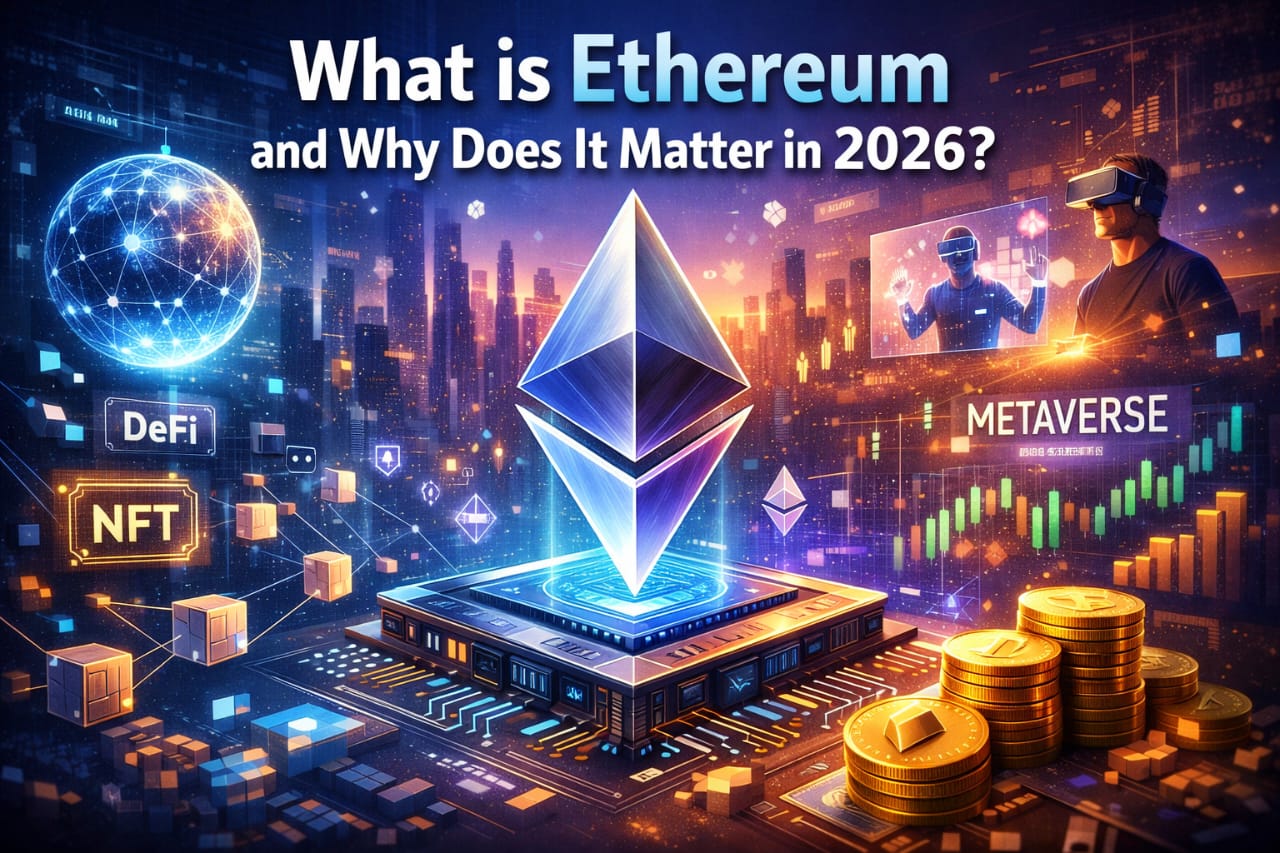
Ethereum is one of the most important blockchain platforms in the digital finance world. While many people recognize Ethereum for its cryptocurrency, Ether (ETH), the platform itself is much more than a digital coin. It is a decentralized, open-source blockchain network that enables smart contracts and decentralized applications.
What Is Ethereum?
Ethereum was launched in 2015 by Vitalik Buterin and a team of developers. Unlike traditional cryptocurrencies that mainly focus on payments, Ethereum was designed to be programmable. This allows developers to build and deploy applications directly on its blockchain network.
Ethereum operates as a decentralized system, meaning no single organization controls it. Thousands of computers worldwide maintain the network, ensuring transparency, security, and reliability.
What Makes Ethereum Different?
The major innovation behind Ethereum is smart contracts. A smart contract is a self-executing digital agreement written in code. When predefined conditions are met, the contract automatically performs the agreed action without requiring intermediaries such as banks or lawyers.
This capability enables Ethereum to support decentralized finance (DeFi) platforms, NFT marketplaces, blockchain-based games, tokenized assets, and decentralized autonomous organizations (DAOs). Because of this flexibility, Ethereum is often described as a decentralized global computer.
Ethereum and Proof of Stake
Ethereum originally operated on a Proof-of-Work (PoW) consensus mechanism. However, it transitioned to Proof-of-Stake (PoS) to improve efficiency and reduce energy consumption. Under Proof-of-Stake, participants stake their ETH to validate transactions and secure the network. In return, they earn rewards for contributing to network security.
This transition significantly reduced energy usage and improved Ethereum’s sustainability.
Why Is Ethereum Important?
Ethereum has become the foundation of much of the Web3 ecosystem, representing the next generation of internet services built on decentralization and user ownership. Developers around the world continue building innovative applications on the Ethereum blockchain.
Key reasons for Ethereum’s importance include innovation, financial inclusion, transparency, and programmability. Anyone with internet access can interact with decentralized applications, and all transactions are recorded on a public blockchain.
Risks and Challenges
Despite its advantages, Ethereum faces challenges such as network congestion, transaction fees (gas fees), regulatory uncertainty, and market volatility. Understanding these risks is essential for anyone exploring blockchain technology.
Conclusion
Ethereum is more than a cryptocurrency; it is a platform enabling innovation in finance, technology, and digital ownership. By introducing smart contracts and decentralized applications, Ethereum has reshaped how digital systems are built and operated.
Educational Disclaimer
This document is intended for educational and informational purposes only. It does not constitute financial, investment, or legal advice. Cryptocurrency and blockchain technologies involve risks, and readers should conduct independent research before making financial decisions.