Real World Assets on the Blockchain: How Tokenisation Is Changing Everything
Summary Real world asset tokenisation is the process of converting ownership of physical and financial assets, from property and bonds to art and commodities, into digital tokens on a blockchain, making traditionally illiquid and inaccessible markets open, programmable, and tradeable around the clock.
Some of the most valuable assets in the world are also the most difficult to access. Commercial real estate requires millions in capital. Fine art sits locked in private collections. Government bonds are distributed through institutional channels that most ordinary investors never touch. Private credit markets are closed to anyone without the right connections.
Tokenisation is the technology quietly dismantling those barriers, and in 2026 it has moved well past the proof-of-concept stage. Trillions of dollars in real world assets are now being migrated onto blockchain infrastructure by some of the largest financial institutions on earth, and the implications for how ownership, liquidity, and investment work are profound.
What Is Real World Asset Tokenisation?
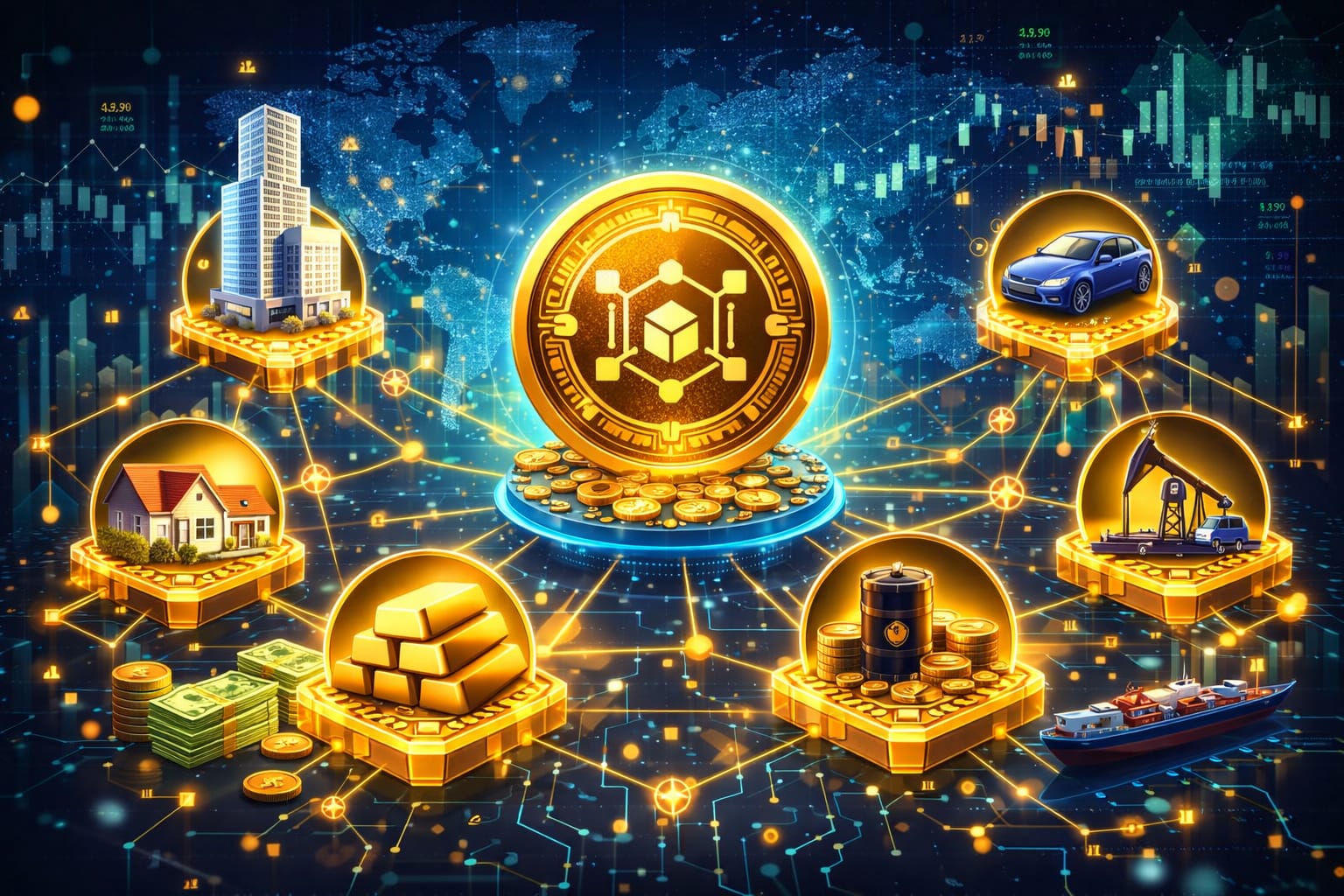
Tokenisation is the process of creating a digital representation of a real world asset on a blockchain. That digital token represents a legal claim to the underlying asset, whether that is a share of a building, a fraction of a government bond, a piece of artwork, a commodity like gold, or a stake in a private credit fund.
Once an asset is tokenised, it can be bought, sold, transferred, and used as collateral on blockchain infrastructure, inheriting all the properties that make blockchain useful: transparency, programmability, near-instant settlement, and accessibility to anyone with an internet connection.
The asset itself does not move. A tokenised property is still a building in the physical world. But ownership of that property, or a fraction of it, can now travel across the world in seconds, be divided into units small enough for any investor to afford, and settle without the weeks of paperwork that traditional transactions require.
Why Is This Happening Now?
The timing of the tokenisation wave is not accidental. Several forces have converged to make 2025 and 2026 the period when real world asset tokenisation moved from experimentation to execution.
Regulatory clarity has improved significantly across major jurisdictions. The European Union's MiCA framework, updated US guidance on digital securities, and clearer rules in Singapore and the UAE have given institutions the legal confidence to move forward with tokenisation programmes that would have been too uncertain to launch three years ago.
Institutional appetite has grown dramatically. BlackRock, the world's largest asset manager, launched its tokenised Treasury fund BUIDL on the Ethereum blockchain in 2024, bringing billions in institutional capital onto chain. Fidelity, Franklin Templeton, and JPMorgan have all launched or expanded tokenised asset products. When firms of that scale move, the infrastructure and confidence follows.
Blockchain infrastructure has matured to the point where it can handle the scale, compliance requirements, and settlement finality that institutional use demands. Layer 2 networks, purpose-built financial blockchains, and improved cross-chain interoperability have addressed many of the technical limitations that made earlier tokenisation attempts impractical.
What Assets Are Being Tokenised?
The range of assets moving onto blockchain infrastructure in 2026 is broader than most people realise.
Government bonds and treasuries have been among the earliest and most successful use cases. Tokenised US Treasury products have attracted billions in assets under management, offering investors yield-bearing instruments that settle instantly and can be used as collateral in DeFi protocols, something physically held bonds cannot do.
Real estate is following closely. Fractional ownership of commercial and residential property through tokenised structures allows investors to gain exposure to property markets with far smaller capital commitments than direct ownership requires. Platforms operating in this space are enabling international investors to hold fractions of properties in markets they could never previously access.
Private credit and debt instruments are being tokenised to open markets that have historically been accessible only to institutional allocators. Tokenised private credit funds allow smaller investors to participate in lending strategies that were previously gated behind million-dollar minimums.
Commodities including gold, silver, and oil are being represented on-chain, offering the price exposure of physical commodity ownership with the transferability and programmability of a digital asset. Tokenised gold products have existed for several years and now hold significant assets under management across multiple platforms.
Art and collectibles represent a more nascent but growing category, with high-value works being fractionalised and offered to investors who could never afford the full piece, while artists and galleries explore new models for distribution and ongoing royalty collection.
What Problems Does Tokenisation Solve?
The case for tokenisation rests on genuine inefficiencies in traditional markets that blockchain infrastructure addresses meaningfully.
Liquidity is the most significant. Many valuable assets, real estate, private equity, fine art, are highly illiquid by nature. Selling a building or a stake in a private fund can take months and involves significant transaction costs. Tokenised versions of these assets can trade on secondary markets around the clock, dramatically improving liquidity for holders who need to exit.
Settlement speed is another major improvement. Traditional securities settlement takes two business days at minimum. Tokenised asset settlement can happen in seconds, reducing counterparty risk and freeing up capital that would otherwise be tied up waiting for transactions to clear.
Accessibility may be the most democratically significant benefit. Assets that required millions in minimum investment or institutional connections can, through tokenisation, be accessed by investors anywhere in the world with capital as small as a few hundred dollars.
Programmability opens entirely new possibilities. Tokenised assets can be embedded with smart contract logic that automates dividend payments, enforces compliance rules, manages governance votes, and integrates with DeFi protocols as collateral, capabilities that paper-based assets simply cannot support.
The Risks That Still Exist
Tokenisation does not eliminate the risks inherent in the underlying assets, and it introduces some new ones that investors need to understand.
Legal and regulatory risk remains significant. The legal frameworks governing tokenised ownership vary across jurisdictions and are still developing. A token representing ownership of a property is only as good as the legal structure underpinning it, and those structures are not yet uniform or universally tested.
Counterparty and custody risk shifts rather than disappears. Someone must hold the underlying asset and maintain the link between the physical world and the on-chain token. The trustworthiness of that counterparty is as important as it has ever been.
Smart contract risk is real. The code governing tokenised assets can contain bugs or vulnerabilities that create unforeseen outcomes. Audits reduce but do not eliminate this risk.
Liquidity risk in tokenised markets remains higher than in established public markets. Secondary markets for many tokenised assets are still thin, and the promise of improved liquidity is not always matched by the reality of available buyers.
The Bigger Picture
Real world asset tokenisation is not a speculative concept. It is happening at scale, driven by some of the most conservative and risk-averse institutions in the global financial system. The fact that BlackRock, JPMorgan, and Franklin Templeton are building tokenised products is not a signal that crypto has won some cultural argument. It is a signal that blockchain infrastructure has become genuinely useful for solving real problems in traditional finance.
The long-term implications are significant. A world where ownership of any asset can be divided, transferred instantly, used as collateral, and accessed by anyone regardless of geography or minimum capital requirements is a structurally different world from the one we currently inhabit. We are in the early chapters of that transition, but the direction is no longer in question.
Disclaimer: This article is for informational purposes only and does not constitute financial or investment advice. Always do your own research before making any investment decisions.
Frequently Asked Questions
1. What is the difference between tokenisation and a cryptocurrency? A cryptocurrency is a native digital asset, while a tokenised asset is a blockchain-based representation of something that exists in the physical or traditional financial world.
2. Is tokenised real estate the same as a REIT? Both offer fractional property exposure, but tokenised real estate settles on blockchain, can trade around the clock, and offers more direct ownership claims than traditional REIT structures.
3. Which blockchain is most used for real world asset tokenisation? Ethereum remains the dominant platform, though purpose-built chains like Polygon, Avalanche, and Stellar are gaining ground for specific institutional use cases.
4. Are tokenised assets regulated? Regulation varies by jurisdiction and asset type, with major markets including the EU, US, Singapore, and UAE developing clearer frameworks, though the legal landscape is still maturing.
5. Can ordinary investors access tokenised real world assets today? Yes, multiple platforms now offer tokenised bonds, property, and commodities to retail investors, though minimum investment requirements and regulatory access vary by platform and region.
Tags: Real World Assets, RWA Tokenisation, Blockchain Finance, Tokenised Bonds, Tokenised Real Estate, BlackRock BUIDL, DeFi RWA, Asset Tokenisation, Blockchain Investment, TradFi on Chain